
I wasn’t sure what to expect of the Falklands. A friend inscribed in a copy of his book, ‘Falkland Islands Shores’ for me thus: ‘Please visit these beautiful islands’. That was before Argentina invaded and occupied the islands in May 1982 and the subsequent war with Britain. 43 years later and I finally get here. Two old acquaintances took part in the conflict with Argentina. One was the author of the above book, who was able to advise on the best landing places for landing craft and troops, having charted the islands from his yacht while posted out here with the Royal Marines. The other was a Royal Engineer, a member of 11 Field Squadron, which helped build and maintain the FOB (Forward Operating Base) for the Harrier jump jets at Port San Carlos, among its many other tasks. 74 days after the start of the war, 649 Argentinians were dead along with 255 British soldiers, sailors and airmen and three Falkland Islanders (civilians). Some of their burial places and memorials are here.
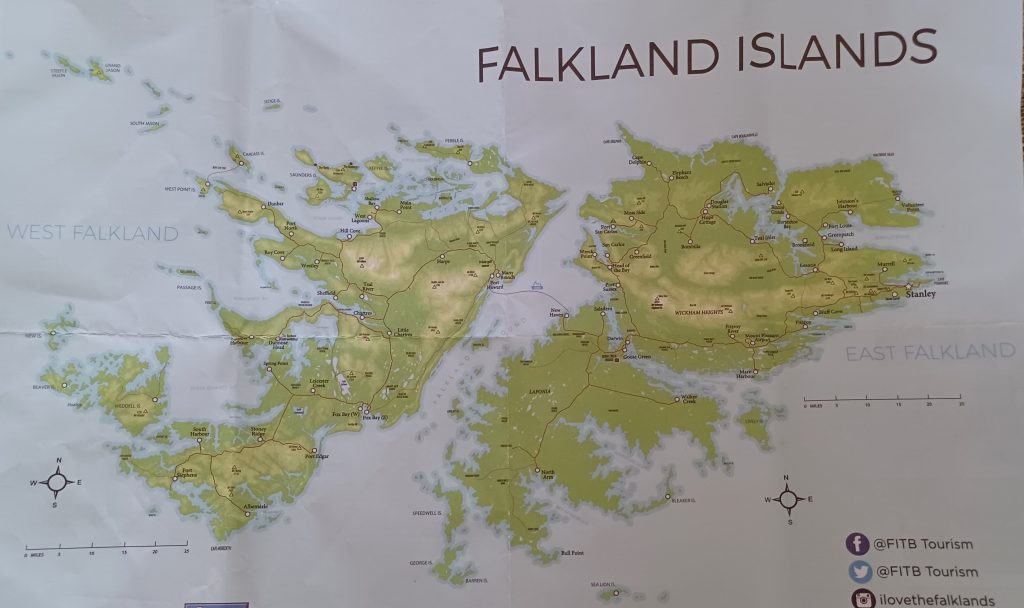
Thus, I wished to visit battlegrounds and war memorials, but also the ‘beautiful islands’, the large landscapes and coastlines with their associated wildlife: penguins, sea lions, dolphins and whales. Birds of all sorts. With only about 3,500 population (plus military), who live in the capital, Port Stanley, one can venture into the countryside and see nobody else. No trees, just, well, pale greenish hills with rocky crags on top and the infamous stone runs, large jagged quartzite boulders formed during the ice age due to constant freeze thaw. These have gradually crept down the hills and look like rivers of stones, some many metres across. Bleakly beautiful.
On arrival at Mount Pleasant Airport, run by the UK Ministry of Defence, I get a Falkland Islands stamp in my passport. Unexpected. May not be welcome in Argentina, should I desire to venture there one of these days. Met at the airport by a coach, which shuttles all new arrivals to their accommodation in Port Stanley. Wait some time as many people are being transported on said coach. Some water is running along the floor of the bus. Source unknown. My laptop backpack, snug on the floor by my feet, gets soaked.
Port Stanley
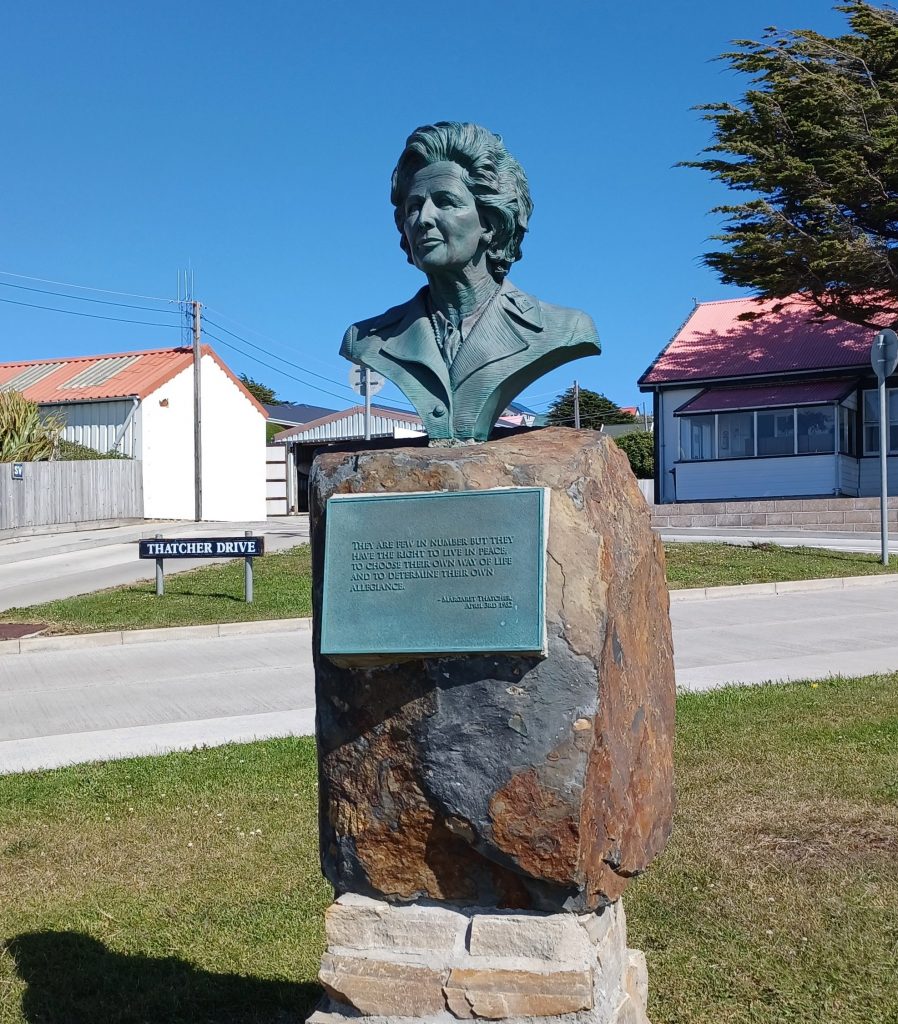
Just before we arrive at my hotel, we pass a driveway, Thatcher Drive, at the seaward end of which is a memorial bust of Margaret Thatcher, without whose drive and determination no task force would have been sent to liberate the islands in 1982. The iron lady who ‘is not for turning’ is highly respected here. On the bronze plaque beneath her are her words: “They are few in number, but they have the right to live in peace, to choose their own way of life and allegiance”. Dated 3rd April, 1982.
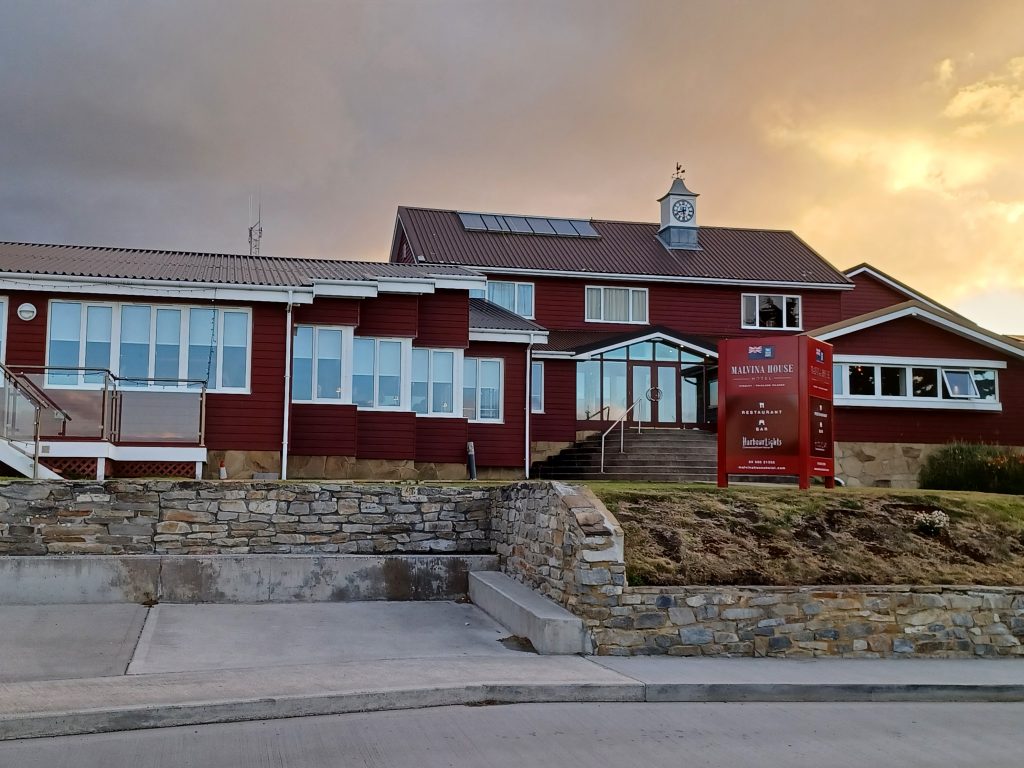
I arrive at Malvina House Hotel. Named after the daughter of a Chelsea pensioner, who built a house on this site in 1880. ‘Malvina’ is an old Scottish name apparently. An unfortunate similarity to the Argentine name for the Falklands, ‘Las Malvinas’. Which actually derives, itself, from the French, ‘Îsles Malouines’, after Frenchmen from St Malo.
Said Frenchmen settled in Port Louis (named after King Louis XV) in East Falkland in 1764 and gave the islands this name. The British named the Falklands after the 5th Viscount Falkland. He it was, who sponsored the expedition of Captain John Strong, who landed on the islands in 1690. But a settlement was not established until Captain John Byron sailed in a year after the French in 1765. He founded Port Egmont. Nobody seems to know whether the two settlements were aware of each other.
Anyway, the French then ceded their claim to the Spanish, who renamed their settlement, Port Soledad. The Argentines claimed the islands after independence from the Spanish in 1816. Thereafter it is all a bit confusing, with various nationalities, including from the USA, fishing here, planting national flags here, claims and counterclaims to the territory. A rather simplified and brief history. Today the islands are a British Overseas Territory, having been inhabited by the British continuously since 1833. They are entirely self-governing but defended by the UK. Under half the current population of 3,500 stem from the original families from 1833, the others being immigrants from St Helena, the Philippines and Chile mostly.
Port Stanley Waterfront
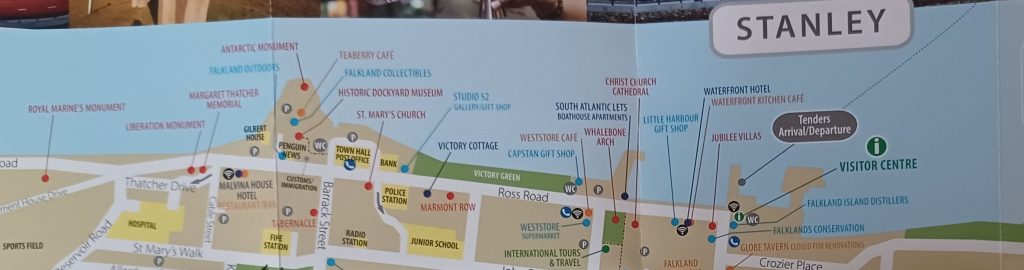
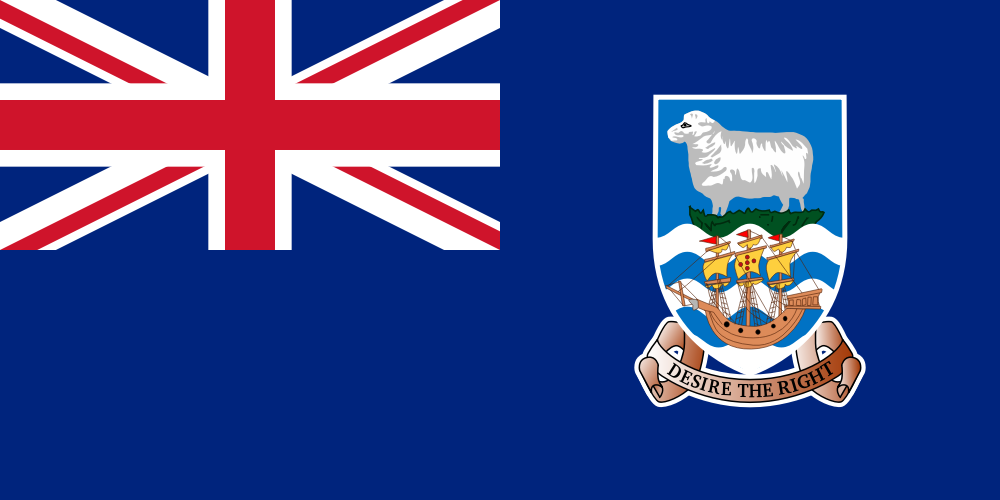
The sea shimmers in front of the hotel, the view from its big windows interrupted only by the Historic Dockland Museum and Gilbert House, the seat of the legislature, lower down. The Falklands flag flies outside the museum. The current flag, adopted in 1999, is a defaced blue ensign with the Union flag in the canton and the Falklands coat of arms in the fly. This depicts a ram on tussac grass over a sailing ship, named ‘Desire’, with the words ‘Desire the Right,’ the islands’ motto, underneath. So named because, apparently, the first sighting of the islands was made by an English navigator on his ship ‘Desire’.
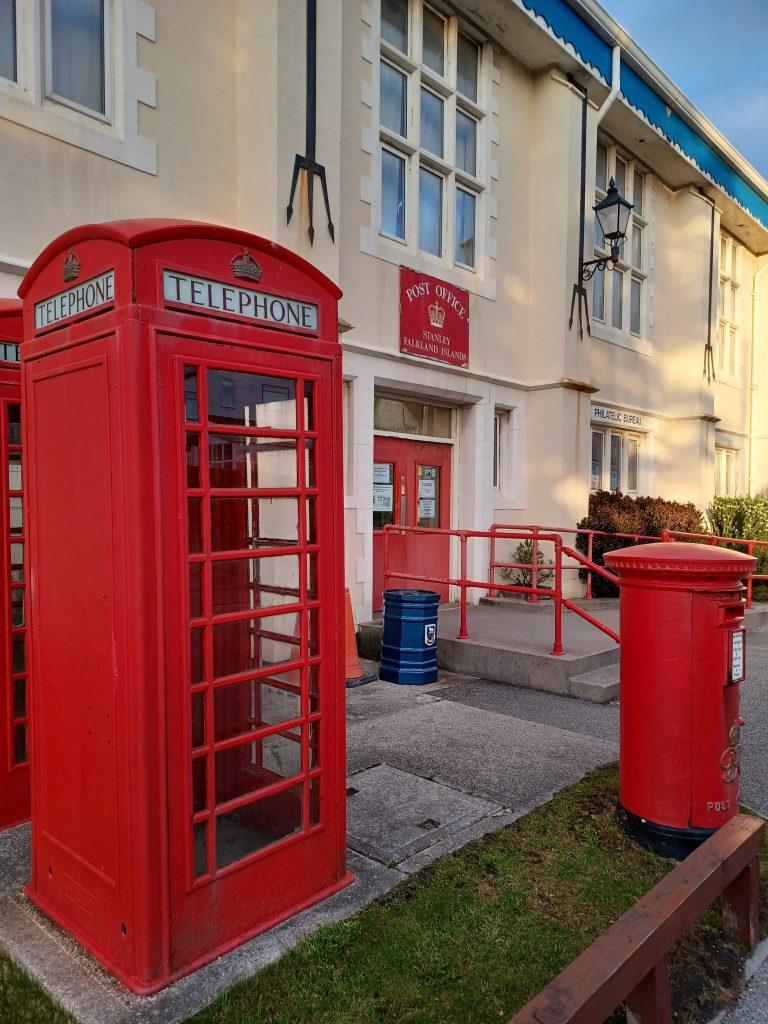
Next door to the museum is the post office with two red telephone boxes and a George VI post box in front of it.
I unpack my kit and shoot out in the glowing light. It is gorgeous out here. The light ripples across the tranquil waters of Stanley Harbour, which is protected to the north by two headlands, Navy Point and Engineer Point, between which vessels pass through. Port Stanley itself is located on the north side of a peninsula and, to the west are the mountains upon which the final battles of the 1982 Falklands War were played out.
For now though, I wander through the outside precincts of the Historic Dockyard Museum to pick up a path eastwards alongside the waterfront, with Victory Green sloping gently upwards the other side of me. The tower of Christ Church Cathedral beckons.
Thus, I amble up to the road. Next to the Cathedral is the Whalebone Arch, a massive archway, 21 feet high. Constructed in 1933 to celebrate one hundred years of British settlement, the arch is made from the jaw bones of two blue whales, the largest whales on the planet. These whales can reach up to one hundred feet long. These two came from the South Shetlands.
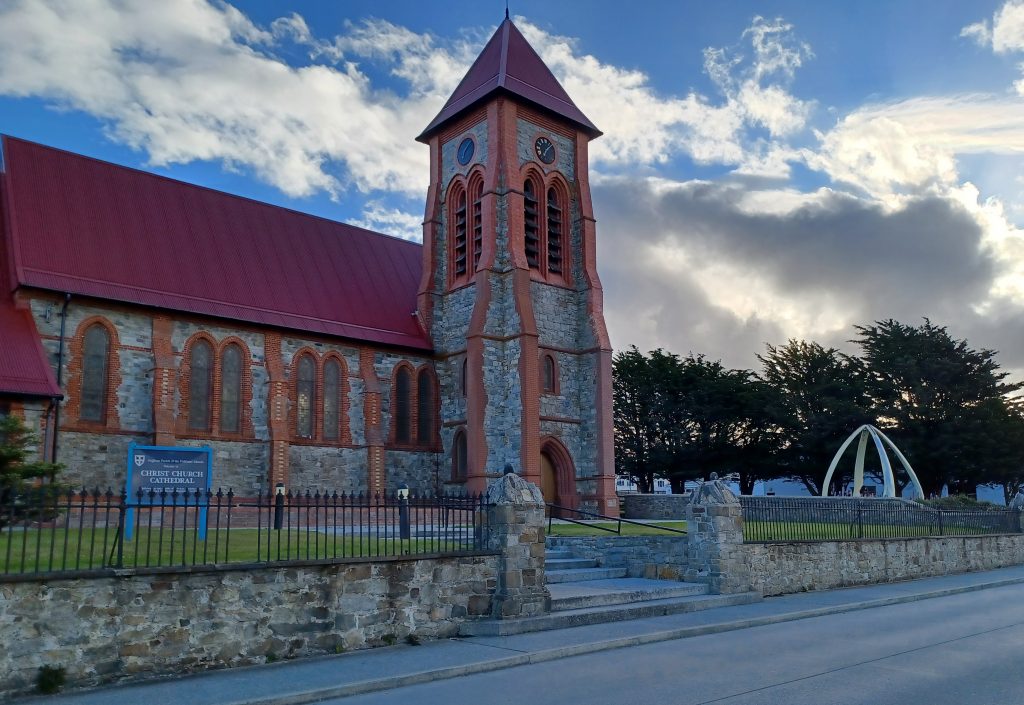
I try the Cathedral door. It is locked but, after all, it is way after 6 pm. Other opportunities to visit will present themselves. Amble a little further and an enticing little waterfront café catches my eye. Enter. Partake of a splendid meal of toothfish and a glass of Chilean Sauvignon Blanc. Have acquired a taste for this nectar since my Chilean adventures (see Chile, Part 1). The waitress is from Paraguay. It seems a lot of the hospitality staff in Stanley are from elsewhere and I learn later that tourism really picked up in the late 1980s. In my hotel, some of the staff are Filipino, some Indian, some Zimbabwean. The manager is from St Helena.
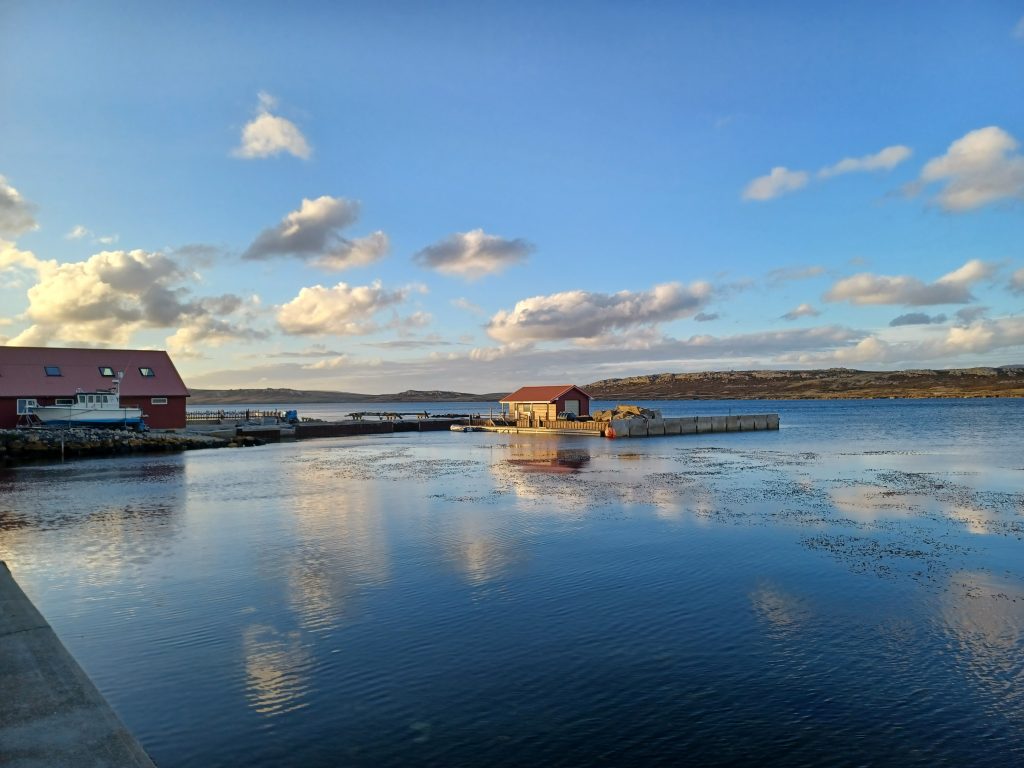
Head back down to the path by the water in the early evening stillness. Birds are perching on the rotting wood of an old jetty. Imperial shags, rock shags and gulls. Opposite, on the hillside, names of Royal Navy patrol vessels, that sailed into Stanley in days gone by, are depicted in white painted stones. I can make out the names: ‘Barracouta’, ‘Protector’ and also Beagle’, upon which a certain Charles Darwin visited the islands. He didn’t get a great impression of the islands, apparently, visiting both times in 1833 and 1834 in the less clement weather of Autumn. Ernest Shackleton’s ‘Endurance’ is another name depicted in white stones. Its namesake, a Royal Navy ice patrol vessel, played a significant role in the retaking of South Georgia before the Falklands war broke out and, in fact, the final surrender was taken aboard her.
A giant petrel swoops into view, flying low. The local name for these greyish birds with their large cream hooked beaks with tubular nostrils is ‘Stinker’. Probably because they scavenge everything from dead seals to sewage outfalls and abattoirs.
Return to the hotel and have a bath. Had requested a bath. Showers simply don’t do it for me. It is jolly cold outside. Warm up. Deep sleep.
Christ Church Cathedral
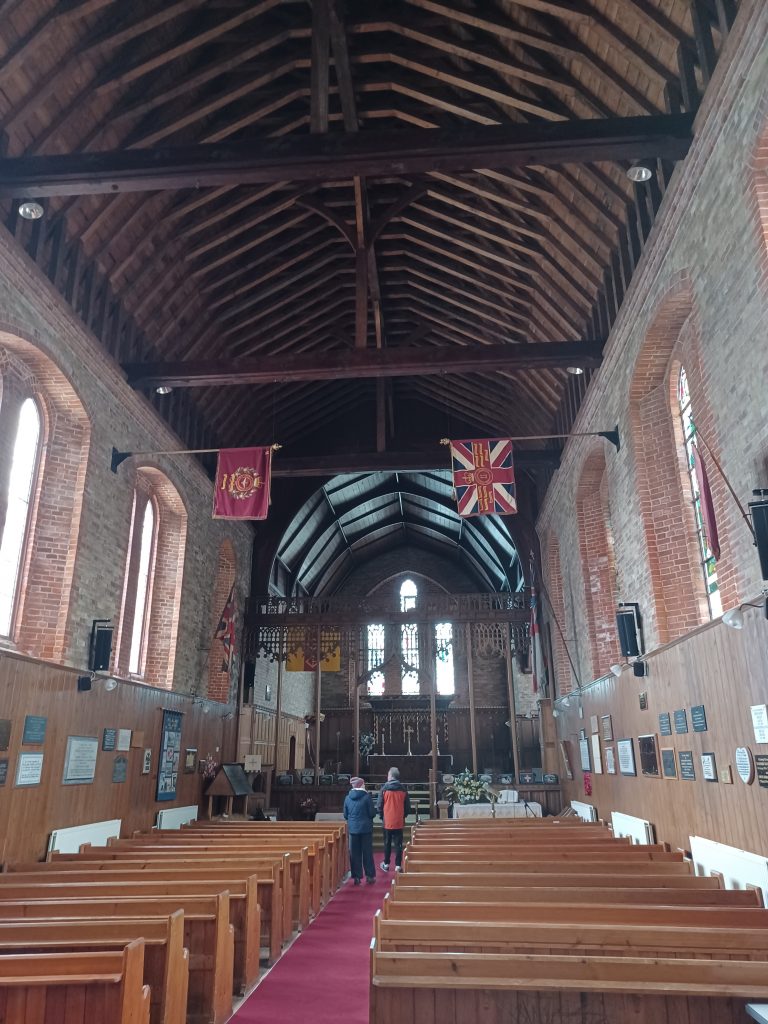
Sunday. 10:00. Have decided to attend the service in the Cathedral. This is the most southerly Anglican cathedral in the world and, as well as the Falkland Islands, it is the parish church of South Georgia and the British Antarctic Territories. Not many worshippers this morning. Soon get to recognise who the regulars are, chatting to each other before the service. Maybe one or two other tourists besides me. I am guessing that most of the great influx of travellers here ‒ from yesterday’s once a week flight from Punta Arenas in southern Chile (aside from the military ‘airbridge’ from UK) ‒ is already gawking at penguins or some such activity. A short service takes place with four hymns. Recognise two of the tunes. Female canon presiding today. Stay afterwards for coffee and cake. Good place to meet some of the locals, including the former harbour master.
I enquire as to the possibility of having a guided tour of the cathedral and am introduced to one of their guides. He gives me the basic history and points out fascinating plaques on the walls. One is an antique cross on a piece of stone from Canterbury Cathedral, after which the present Christ Church Cathedral is named. The office of the Bishop, I am told, is held by the Archbishop of Canterbury, the new female one soon to be inaugurated, who appoints the Bishop ‘for’ the Falklands. Neither live in the Falklands, although the Bishop occasionally visits.
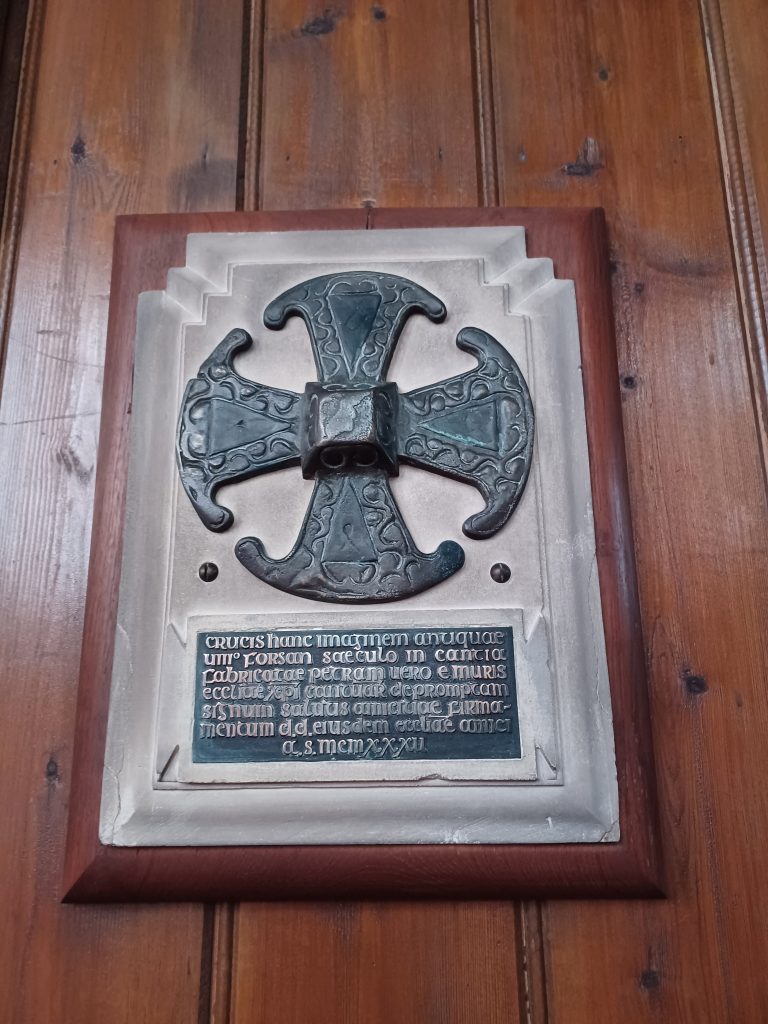
The church is the second on the site, the first (named Holy Trinity Church) having been so badly damaged by a peat slide it had to be demolished. I gather that the capital was first sited in Port Louis, the original French settlement further north on the east coast. But the Royal Navy wanted to build the capital in Stanley because it had a better natural harbour, more accommodating for their ships. The engineer who was supposed to be laying out the plan for Port Louis, then had to lay it out for Port Stanley instead. He warned against building the town on peat but the Royal Navy’s preference held sway. The engineer was right as the unstable peat slid down the steep Stanley slopes.
Anyway, the present cathedral, consecrated in 1892, could do with a bit of maintenance. The UK does not contribute at all to the Cathedral’s upkeep, I understand. One stained glass window is not flush with the wall, for example. Looks a bit skewed. And apparently some of the bricks used in its construction had been under water when the vessel carrying them sank. But they were used, despite their sojourn in the sea. The salt is oozing out, visible in the interior. The bell tower is too dangerous to ascend. Shame. There is no peal of bells as such. There is a ring of five bells but they are hung dead, which means that the clapper is moved by ropes rather than the bells themselves being moved.
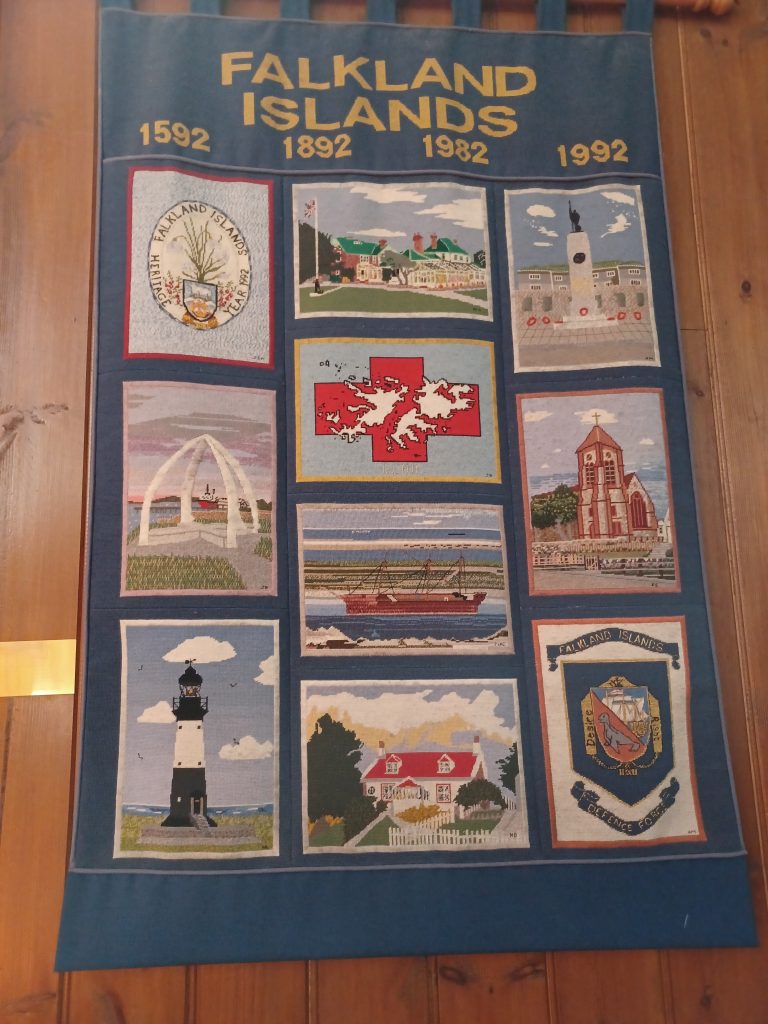
Anyway, some interesting décor adorns the interior including an intricate tapestry, stitched by local folk, commemorating some significant dates: 1592, 1892, 1982, 1992. And some hassocks depicting scenes from the islands. Wooden pews. Wooden beams in the nave like I saw in St Paul’s Cathedral in Valparaiso. Soothing sacred space.
Stanley Harbour
Far beyond the call of duty, the guide and his wife offer to drive me around Stanley Harbour. How nice. Invited to take the front seat of their 4×4. Everybody drives a 4×4 here.
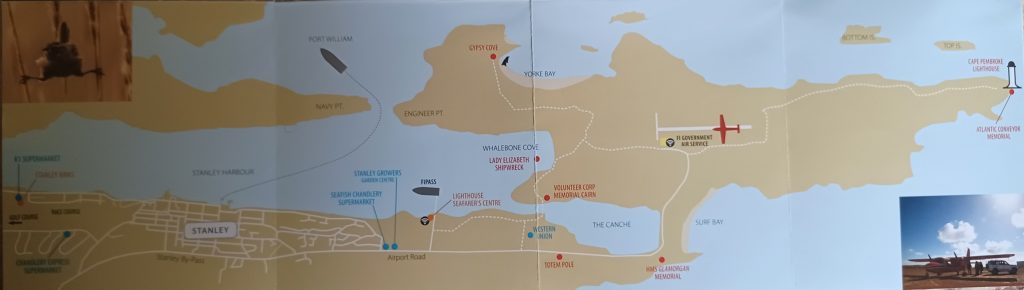
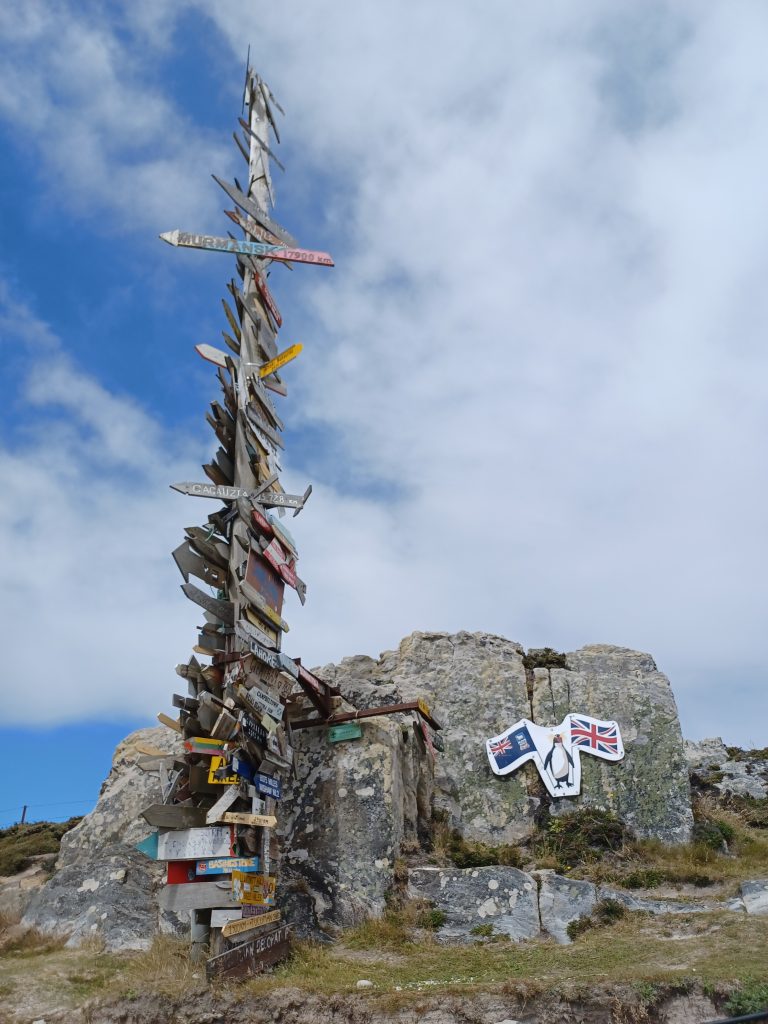
First stop: the ATM, the only one in Port Stanley. I need some cash. It is a bit of a hike from the centre and up a steep hill on the outskirts, so I am pleased to have a ride. Taken then on a circular route around the harbour. Pass the Totem pole, as it has been nicknamed: a jumble of signposts pointing to various places, put up by the Royal Engineers, I gather. Next, the Memorial to HMS Glamorgan, which was damaged in the conflict and lost some of her crew. Survived an Exocet missile strike though. Repaired afterwards and lived to sail another day.
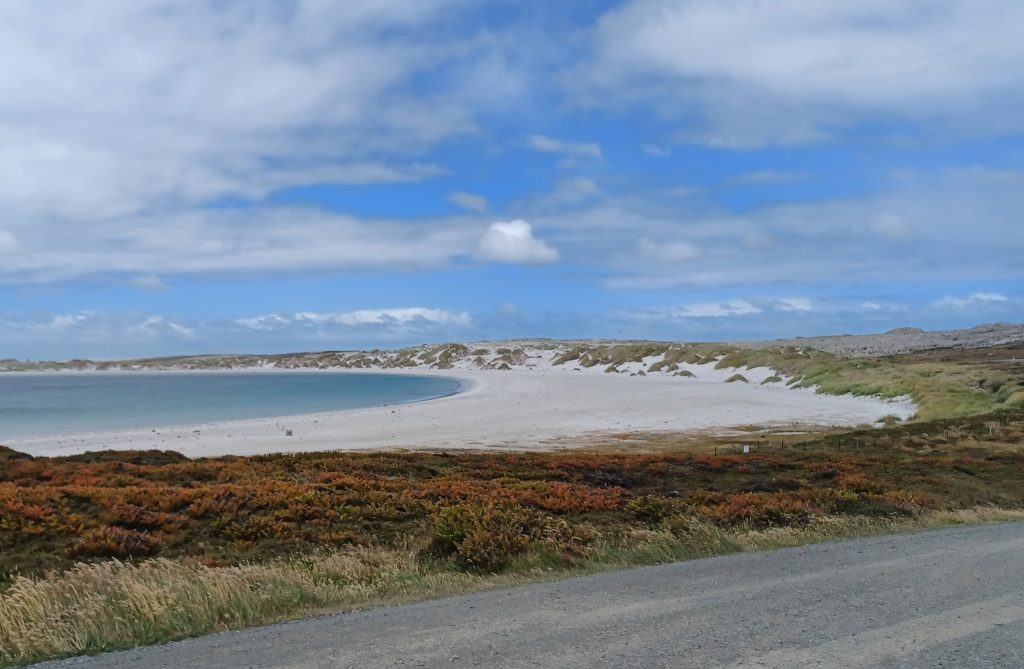
Surf Bay on our right as we head across the north peninsula. Good for surfers, then. Then continue past the local airport to the pretty little beach of Yorke Bay with its white sand and still waters. I thought for a moment there was a snow covering on the beach here but it is a very white sand. Backed by grasses and orangey coloured tall fern. Four or five penguins are fooling about on the beach. Looking like stick men from here. My first glimpse of these flightless birds, but not the last. The beach was once a fine playground for the local population, but the Argentines mined it. Only recently have all the mines been cleared around here by experts from Zimbabwe. Interesting. Some of them stayed afterwards.
Thence, make our way back and observe the Lady Elizabeth shipwreck in Whalebone Cove, on the east end of Stanley harbour. A three masted ship, on the way from Vancouver in 1912, she was damaged off Cape Horn, then hit a rock. Limping into Port Stanley for repairs, she was then condemned. She drifted into her present position. Lack of funds have stalled any plans to salvage her, so there she sits, a rusty old hulk. Part of history though and part of the view. Much photographed.
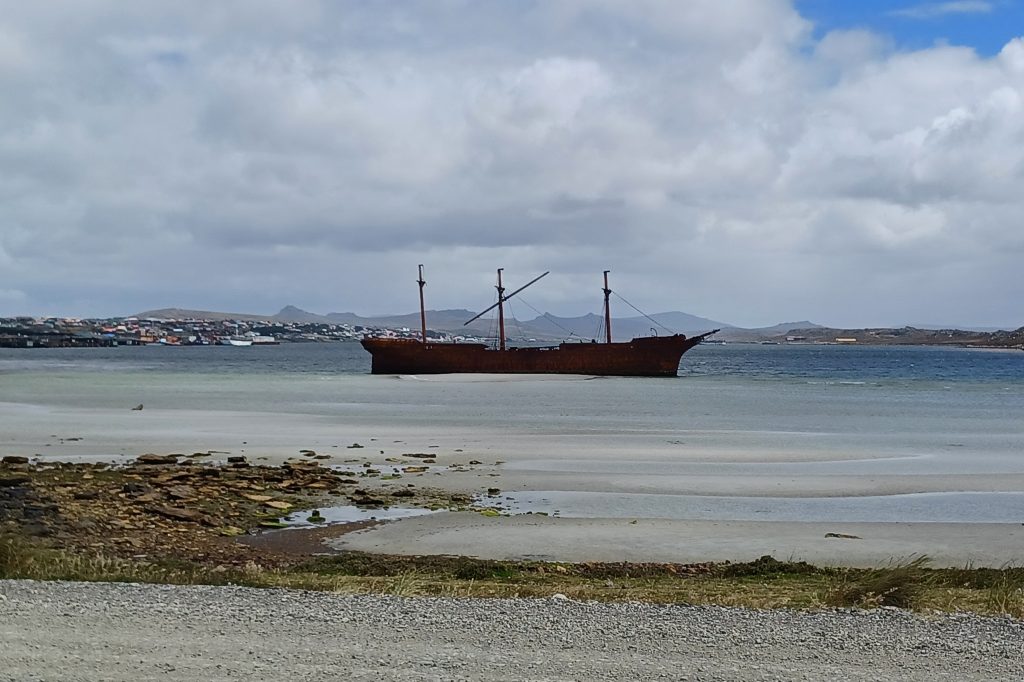
One can see the hills behind the shipwreck upon which several battles were fought, such as Two Sisters, visible between the mainmast and foremast of the wreck. As we cross the bridge back into Stanley itself, more wooden boats are lying beached and rotting and one or two handsome yachts. There are several jiggers, boats that fish for squid, in the harbour. My ‘guide’ informs me that said squid make a lot of mess when they are fished out, spurting ink everywhere so that the ships’ topsides have to be repainted frequently. Fishing licences are sold to the squid fishermen, who come from South Korea and other far eastern countries, by the authorities. Mini tour is now over. I thank my hosts profusely and am dropped back at the hotel.
Historic Dockyard Museum
Spend the remainder of the afternoon, until I am kicked out at closing time, at the Historic Dockyard Museum. All very interesting. In its precincts sits a large anchor, and a memorial plaque unveiled by Major General Nick Vaux (Commander 42 Commando Royal Marines during the conflict) to commemorate the 40th anniversary of the end of the Falklands War.
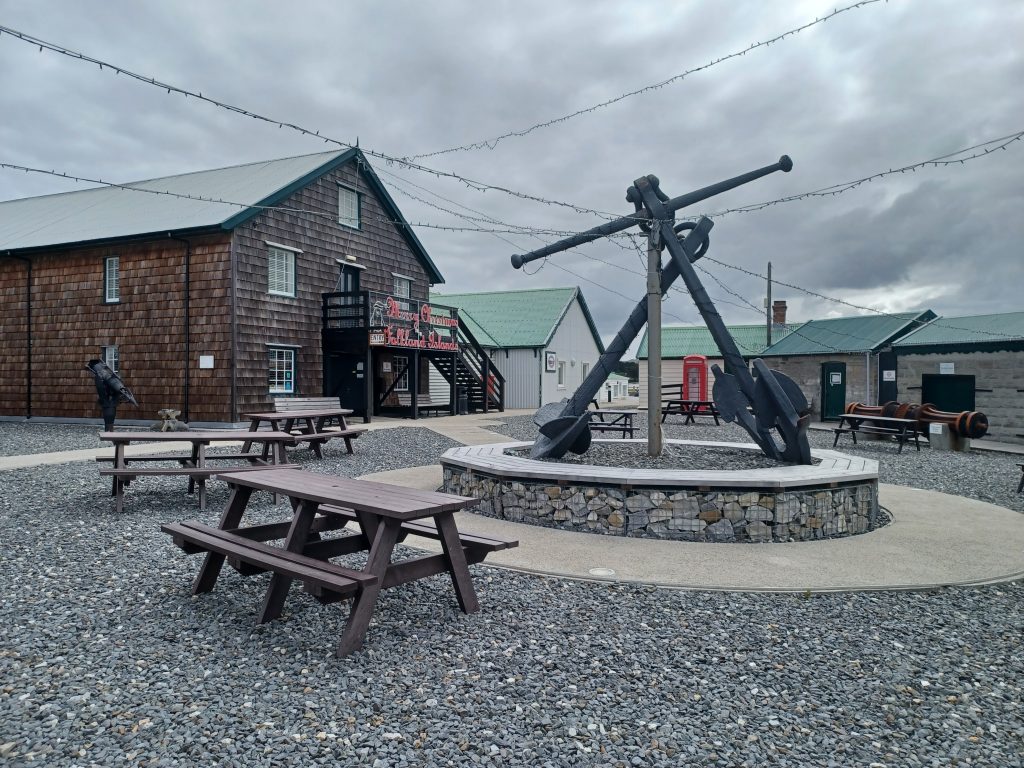
A few outside benches and tables squat ready for the hordes of visitors who descend into town from cruise ships. No tea rooms open right now. No cruise ship. The entrance to the museum still sports a ‘Merry Christmas’ sign over it. I enter. First I watch a short video about the children who witnessed the Falklands conflict in 1982, their feelings at the time and how it affected them. Moving. One room is dedicated to those members of the British armed forces who died, with all their names and units. Then I move on to read about the islands’ maritime history, followed by a mooch about a taxidermy display. This display includes stuffed versions of all the five penguins living on the Falklands, albatrosses, Falklands thrush, and caracaras. Just enjoying myself when I am turfed out.
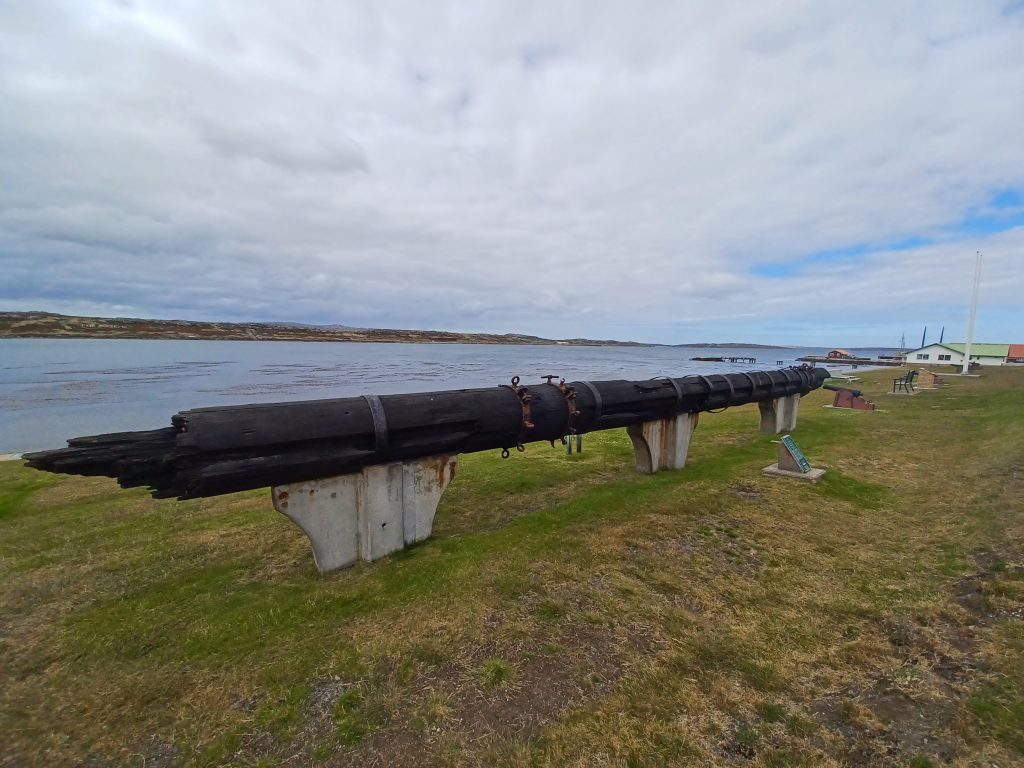
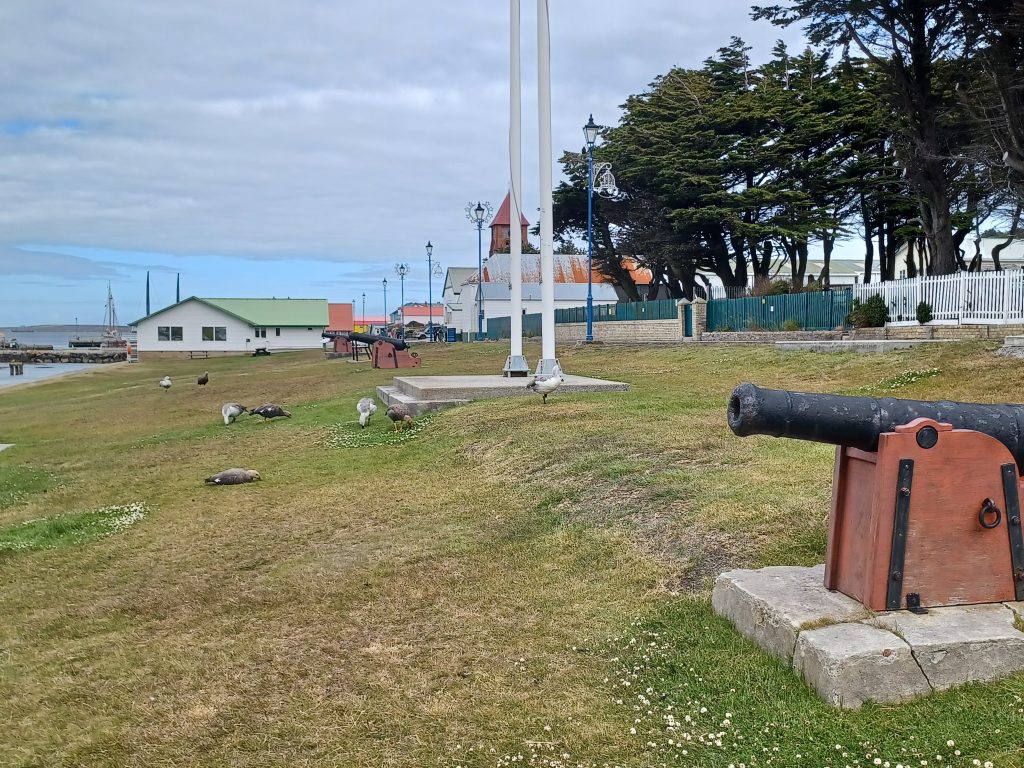
Wander over to Victory Green, where lies a section of mizzen mast belonging to SS Great Western, built by Isambard Kingdom Brunel. Said vessel languished here for eighty years, until eventually towed to Bristol in 1970 and restored. Now a major attraction in Bristol’s dockyard. Also on Victory Green is a seat commemorating 45 Commando, along with some upland geese and their ubiquitous droppings.
Volunteer Point
Today I am off to Volunteer Point to view its king penguins and other wildlife. Have managed to join a tour here with a couple of others. The guide picks us up at the hotel in his 4×4 and off we go.
Much commentary as we drive. The land everywhere outside Port Stanley is known as ‘camp’ from the Spanish word ‘campo’, for countryside. Some of the route over the camp is on surfaced or crushed stone roads but the last hour and a half to Volunteer Point headland is off-piste on a non-existent track. The route has been redefined on several occasions by our guide and others due to wet weather or overload of convoys from cruise ships making the way untenable. Peat overlies much of the Falklands and can be soft and boggy. The vehicle tosses and turns over diddle-dee and tall fern and spongy moss, edging slowly into ditches and out the other side.
Eventually arrive at the house where the warden of the place lives for a few months per year. There is a basic hut here too for visitors and the usual facilities. Tread in foot baths of some kind of disinfectant to prevent bringing in diseases, then sortie off into today’s ferocious wind to be greeted by a rookery of king penguins, hundreds of them, baying and flapping.
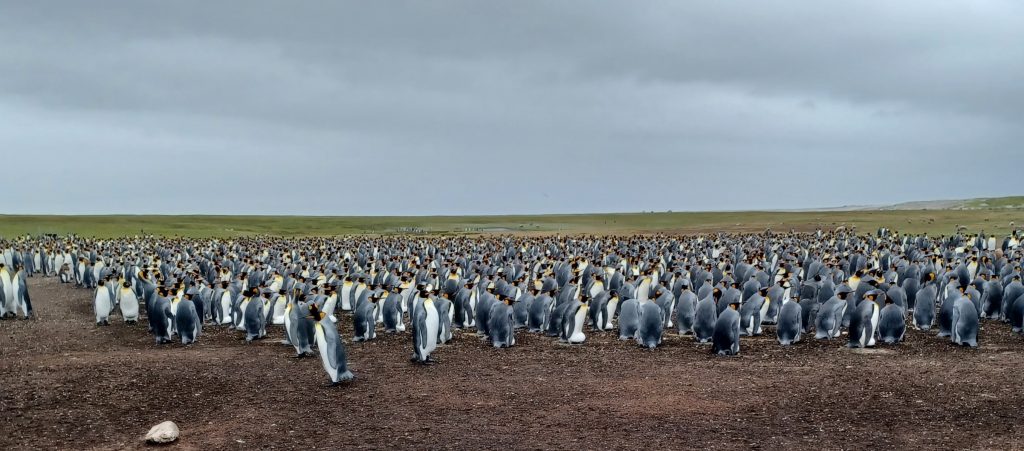
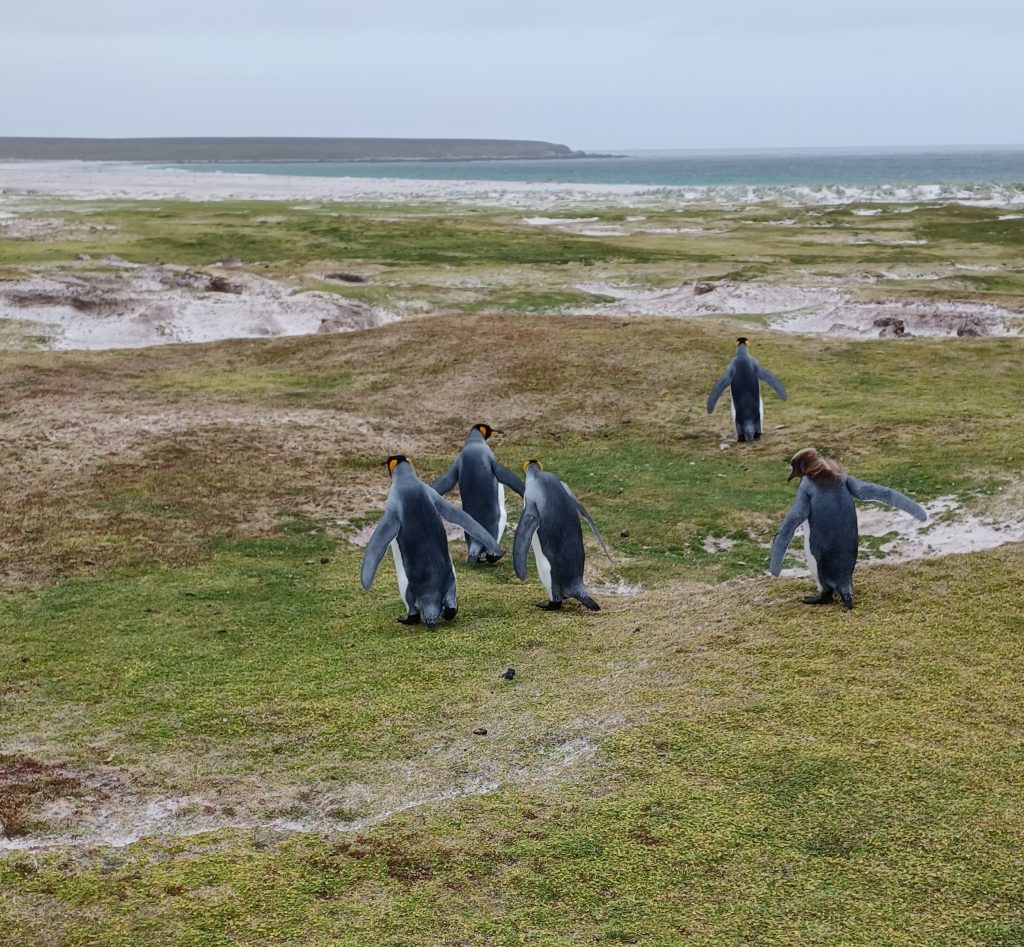
Royal they look too with their yellow prominent patches. The second largest penguin after the emperor, but the largest here in the Falklands. Some kings are mucking about in a stream thick with mud along with a couple of chicks, highly visible with their brown down. Some are at the half and half stage, shedding their down and becoming black and smooth. It takes two years for juvenile kings to moult and acquire their adult plumage.
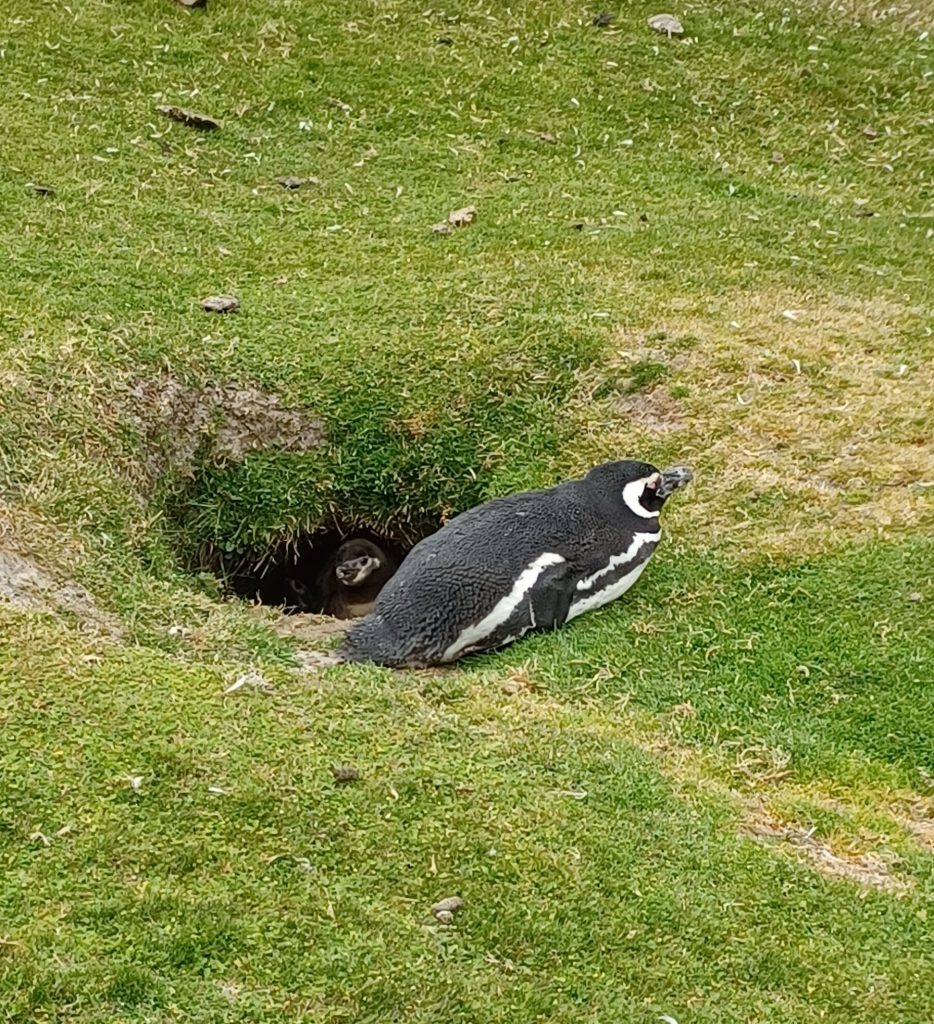
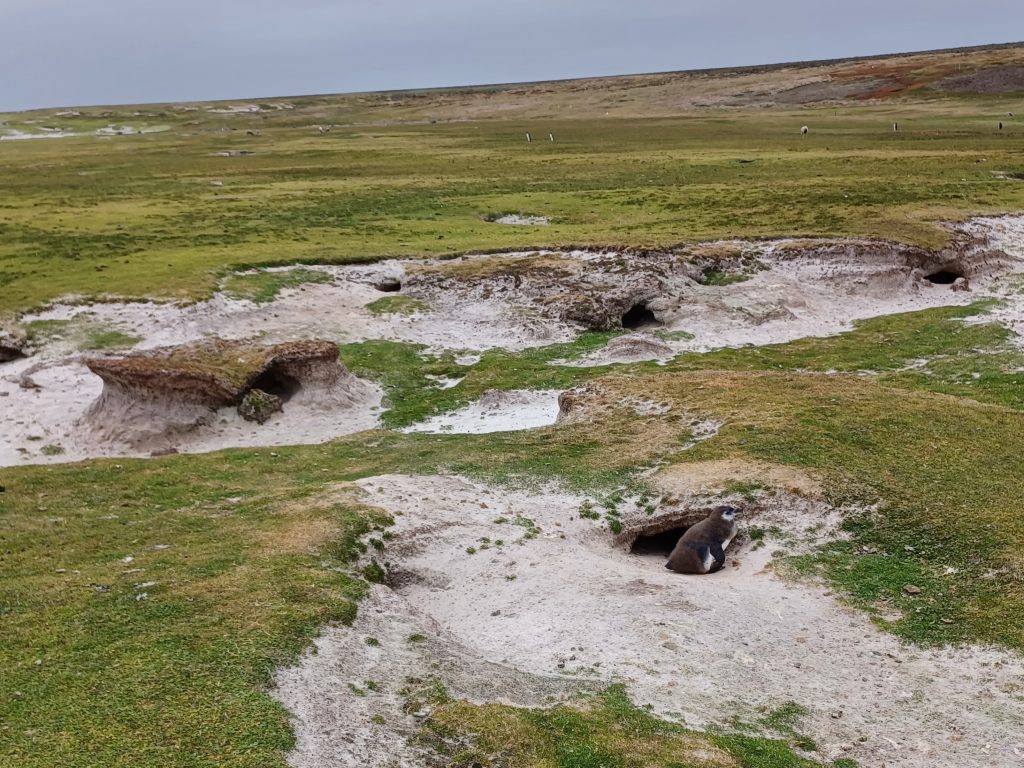
From the hundreds of them, I head towards the long beach of white sand and the white capped wild and restless sea. Pass burrows of magellanic penguins, one young chick crouching in a burrow entrance. These penguins have a white crescent behind the face and two black bands across the chest.
A few kings waddle down to the beach companionably to take the waters. I follow. The wind is so strong it blows sand in my face and ears. Pull down woolly hat and endeavour to put windproof over it. Not very successful.
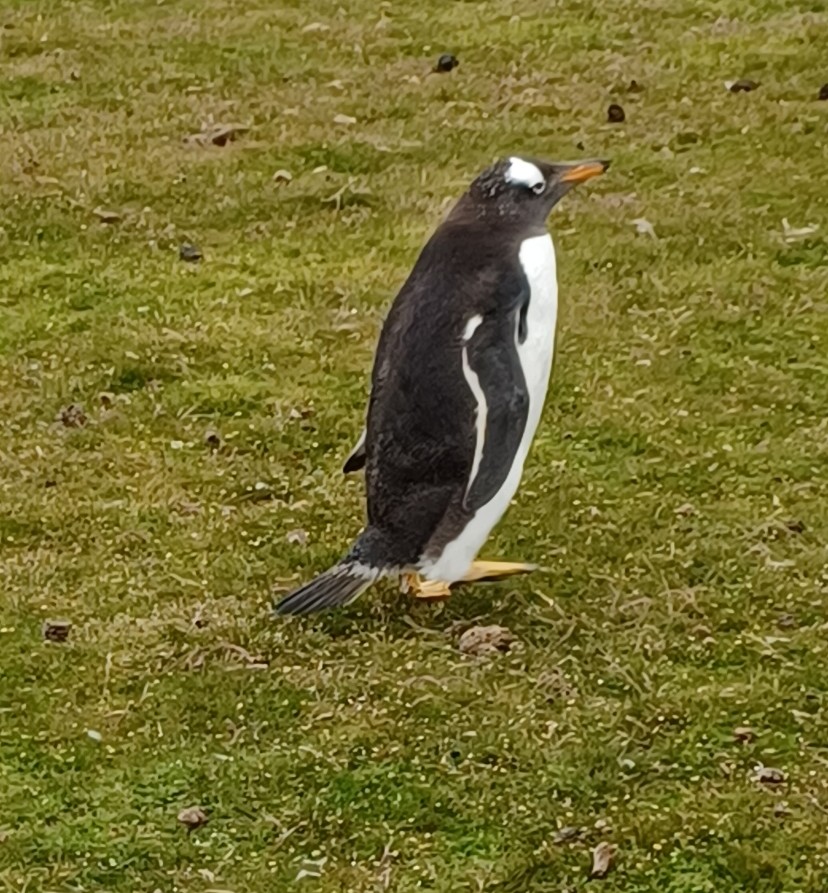
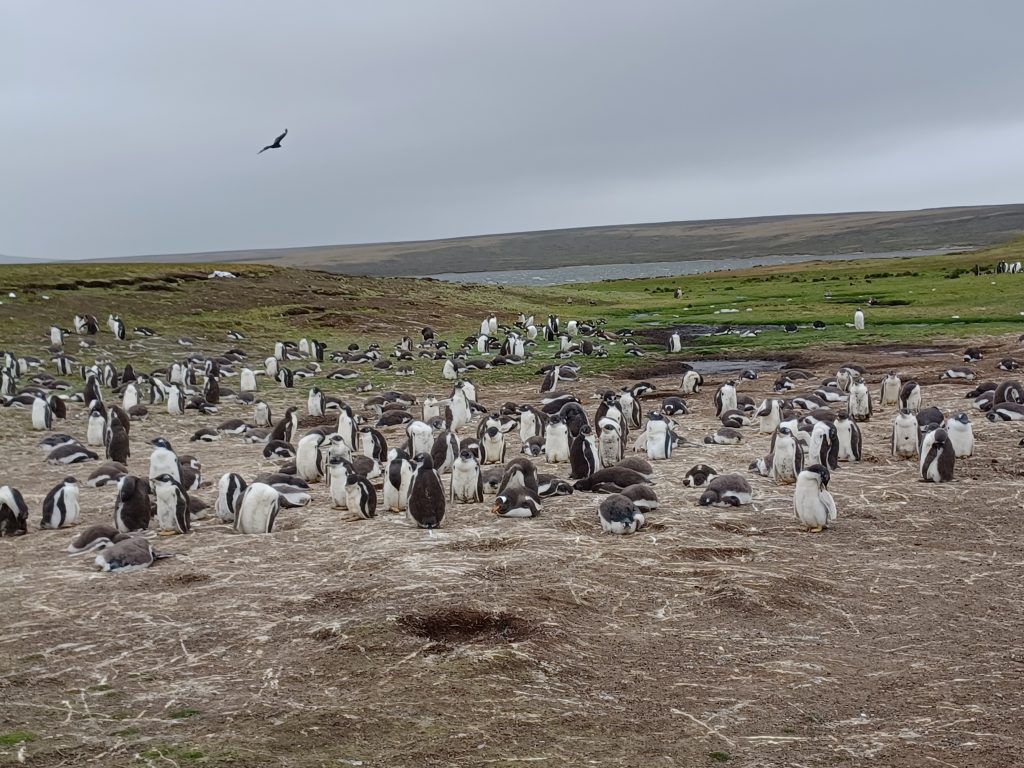
Blown back up the beach to a couple of ponds with Chiloe wigeon swimming about and a few other yellow beaked ducks. Speckled Teal, I think. Thence to the gentoo penguin colony. These are the third largest penguin and differ from the kings, sporting bright orange and black beaks and a white patch above the eye. No royal yellow. A healthy stink emanates from the colony and guano is streaked everywhere. Known as Jackasses, due to their baying croaks, they also have the longest tail of any penguin. They don’t seem to mind sharing their space with sheep, happily minding their own business.
A Falkland skua swoops down in an attempt to take a chick but mama gentoo is having none of it. Flaps her flippers and scolds said skua and drives it away. Three turkey vultures also hover on the edges of the colony and await their chance. They are big black birds with bare red skin around creamish coloured beaks. Plenty of those in Stanley Harbour too. Good job penguins huddle in large colonies. Safety in numbers, as well as providing each other with warmth.
The penguins used to be predated, killed for their skins and oils. Sealers would drive the birds into corrals and club them to death. Now forbidden, although some eggs of gentoo penguins can be collected under licence, we are told.
Am cold, so make a beeline now into the hut, which is warm and glowing with some Argentinian tourists and their guides drinking coffee and perusing their photos. Stay awhile. Not enthusiastic about going out into that gale force wind again. The other two on our tour soon appear and we head to the vehicle and pile in, to begin the hour and a half cross country chug to the road. The guide pulls out some markers that he has laid before, and puts others in new places. To aid his bearings next time. How he navigates over this terrain I can only guess. I suppose he looks for features such as edges of estuaries or a point on a headland.
As we venture in and out of ditches, I notice giant petrels soaring over the hills and the odd caracara. Known locally as Johnny Rook. Some small birds are disturbed as we spoil their day. Long-tailed meadow larks with their scarlet breasts, black throated finches and siskins rise up and flit out of harm’s way. And a magellanic snipe zooms erratically out of the diddle-dee, before diving back to ground again. Bird watcher’s paradise here.
Every now and then we come to a fence and a fence gate of wire, which our guide unhooks, taking care to replace it before continuing the route. Finally reach the road. Un-tarmacked but a road. Deep joy.
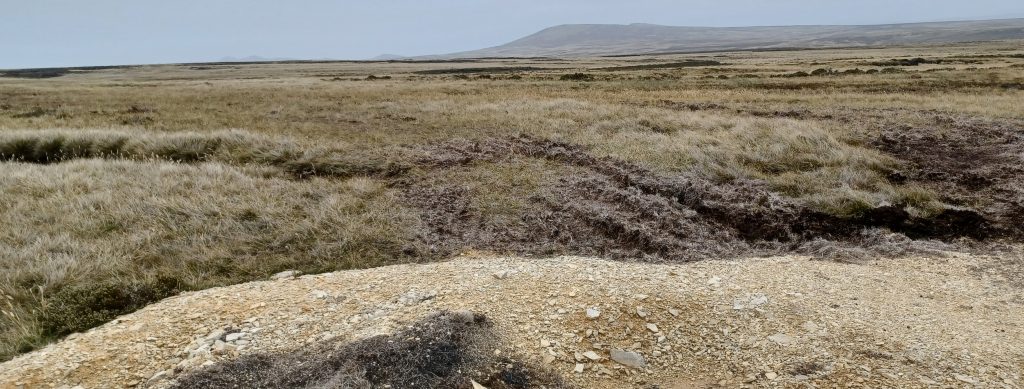
He switches from 4 wheel drive into normal mode and accelerates. Max speed is 40 mph in the Falklands, though with better tarmac roads, the speed limit is expected to increase.
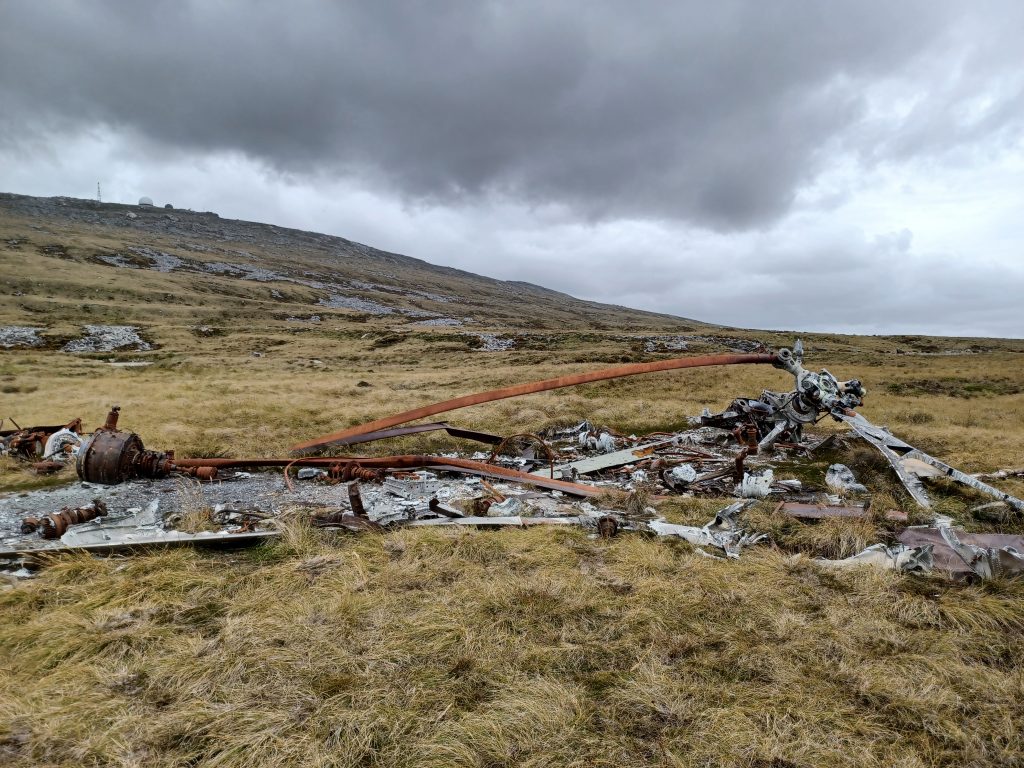
As we return to Stanley, we pass the sombre remains of an Argentine Chinook helicopter on the north slope of Mount Kent. It was shot down by an RAF Harrier on 21st May, 1982. We alight to survey the wreckage. Not much left of it. Mount Kent now has a radar station sitting atop it: RRH Mount Kent. Its full name is the Remote Radar Head of the British forces South Atlantic Isles (BFSAI), an early warning and airspace control site.
The road continues south with Two Sisters to our left, beyond which is Mount Longdon, and ahead of us the three hills of Mount Challenger, Wall Mountain and Mount Harriet. All of these mountain tops were the scenes of battles between the British and the Argentine forces in the war. Some battlefield tours follow in the tracks of the Commandos and Paras over these hill tops. One needs to be fit to participate in these tours. Doubt my fitness is adequate for such. Anyway, I am now well primed for our battlefield tour tomorrow.
Leave a Reply