
So Chile is the destination for my winter excursion from UK. One excellent reason for this choice is that the country’s territory includes Easter Island (Rapa Nui), located about 2,240 miles west of the mainland in the South Pacific. And those enigmatic moai heads on the island are reachable only from Santiago de Chile, the capital. And of course, getting acquainted with a bit of mainland Chile with its myriad and varied landscapes and climates is another sound justification to visit.
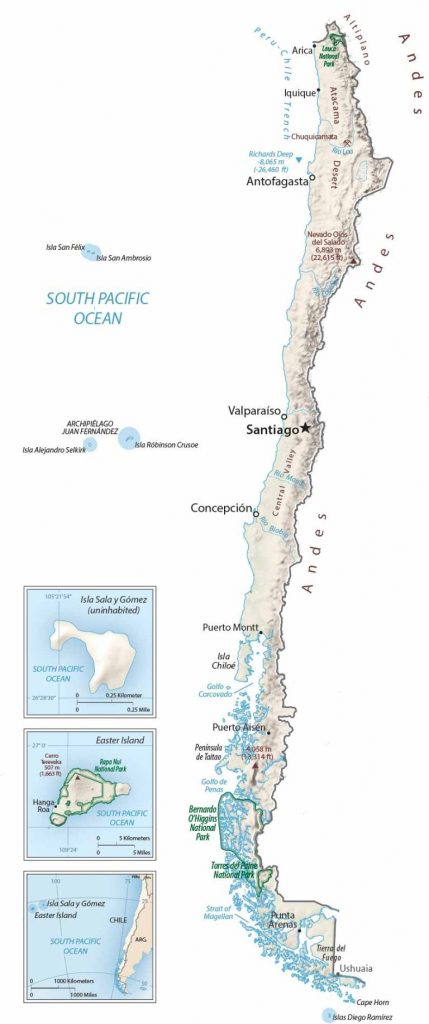
Chile is the longest skinniest country in the world stretching north to south with a distance of about 2,700 miles, from the Atacama desert to the glacial and mountainous landscapes of Tierra del Fuego. The southernmost land comprises the Diego Ramirez islands, an island group off the south-west coast. That being said, Cape Horn, 56 degrees south, is usually cited as holding that particular distinction. And the early 16th century navigators were keen to be the first to sail around it. West to east is a distance of only 110 miles, Chile’s eastern border comprising the Andes, a high mountainous natural border with Argentina.
Chile is very prone to earthquakes due to the Nazca tectonic plate, which is moving underneath the main continental plate of South America. The most recent major earthquake was in 2010, which caused significant damage in the capital and elsewhere. There are also many active volcanos in the Andes range.
The Portuguese navigator, Ferdinand Magellan, was the first to ‘discover’ Chile in 1520. He it was who was first to round Cape Horn. And the strait between the mainland and the island of Tierra del Fuego (Land of Fire) was named after him. Soon afterwards came the Spanish conquistadors, who conquered the country in the 16th century. Many clashes between them and the indigenous peoples ensued. The country was subsequently raided by many others, including the English.
Independence from the Spanish came in 1818. Since then, despite ups and downs and, especially, having a rough time under the Pinochet dictatorship during part of the 20th century, it can now be confidently asserted that Chile is a stable country with a thriving economy.
Flying from Madrid, it is a long twelve hours over the Atlantic and across the southern part of the South American continent. When the chap sitting in the window seat finally pulls up the blind, we are flying through the spectacular jagged peaks of the Andes mountain range, cast in shadow by the early morning sun behind them. They appear to be higher than the aircraft. Not surprising perhaps, as Chile’s highest mountain, Mount Aconcagua, is just north of the capital, Santiago, at 22,831 feet high. Must be passing south of it. Anyway, we soon come in to land in Santiago, which is situated between the Andes and a coastal range of mountains. It is hot when I emerge into the daylight. My taxi awaits.
Santiago
Plaza de Armas
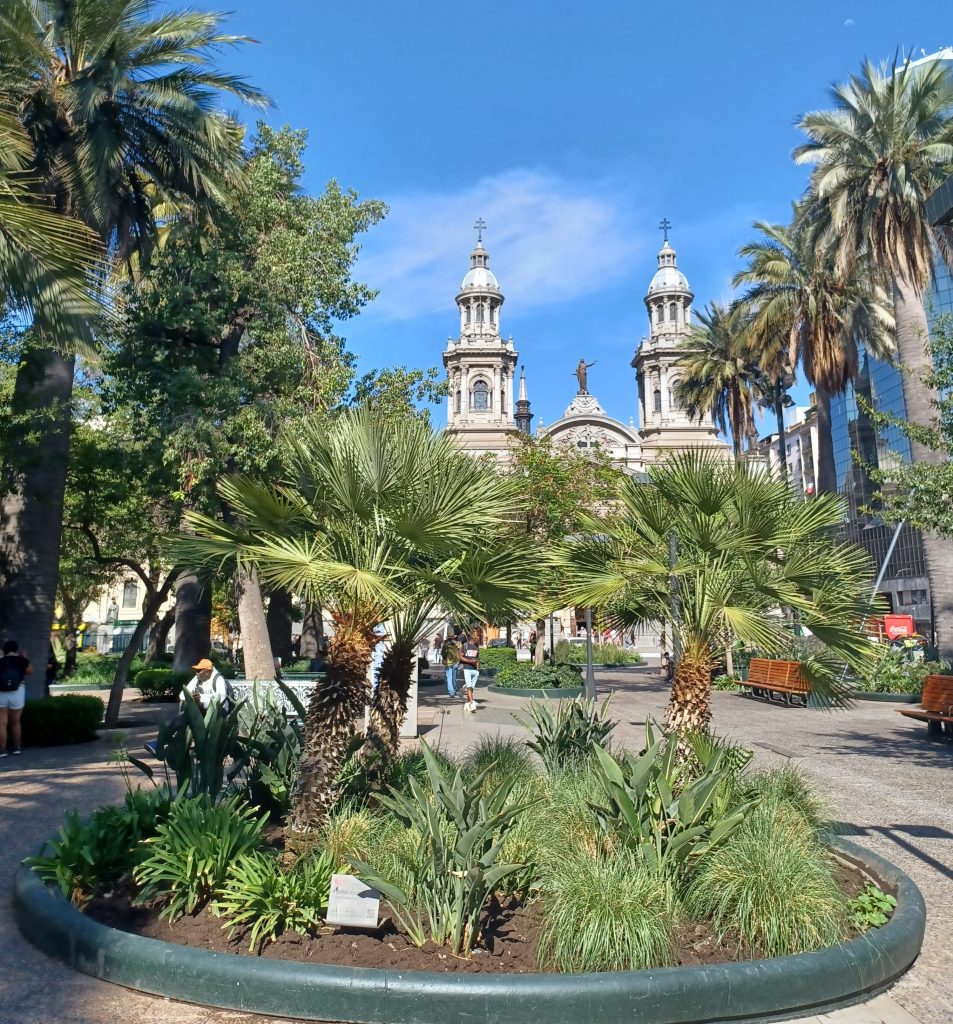
It is not far from my hotel to the Plaza de Armas, the centre of the city. Ground zero in fact, the point from which all distances are measured to Chile’s other cities. Singapore has a ground zero too (see Singapore). Anyway, I behold a leafy square, within which people are lazing on benches amongst the palm trees. Splendid buildings surround it. The Plaza would have been used for military parades back in the day.
Catedral Metropolitana
I head to the west side of the Plaza where stands the Catedral Metropolitana, a Catholic cathedral, consecrated in 1775 and the seat of the Archbishop of Santiago. It is the fifth cathedral built on the site, owing to earthquakes and fire damage. Décor consists of a mixture of styles due to building and re-building. For example, there are Neoclassical and Roman elements to the façade with two imposing bell towers on top rising each side of a central dome.
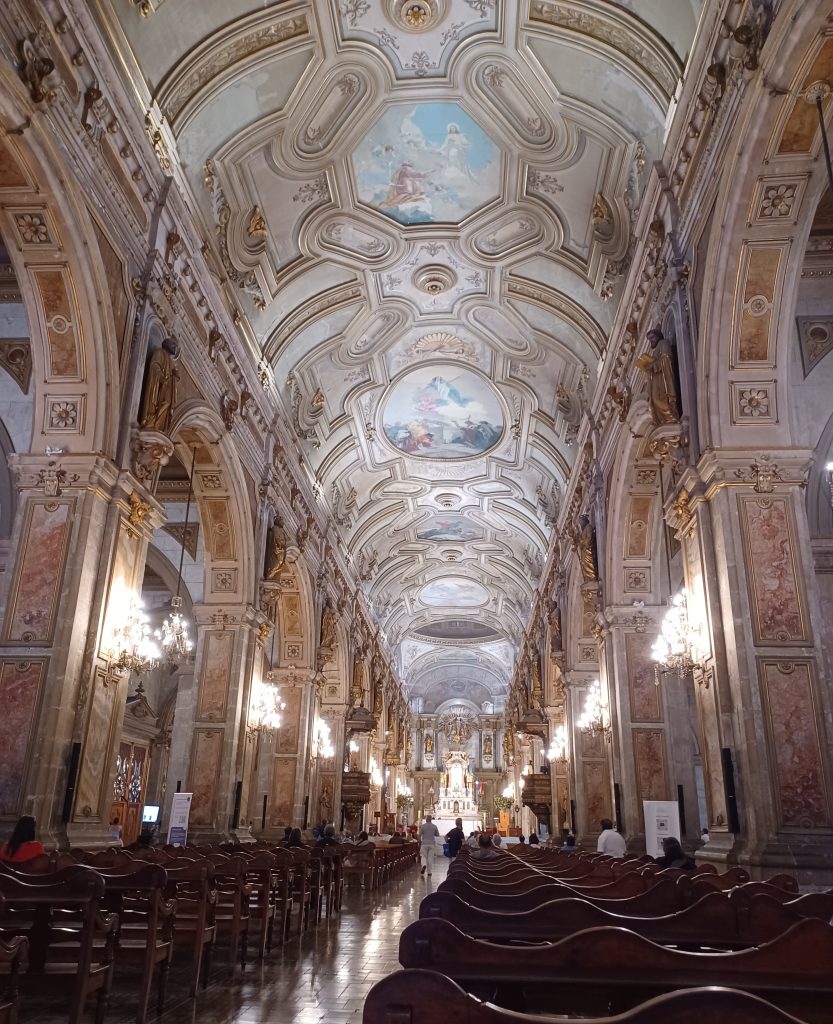
I enter. Focus my gaze along the central nave from the west end to the high altar, admiring the gilt statues in the spandrels (between the arches) and paintings on the ceiling. Then walk up to sit in the front row near the white marble altar, the spiritual heart of the Cathedral. Suddenly loud chords sound on the organ, which was brought here from London, incidentally, and a man starts to sing from the quire. I realise that I am stuck in the front pew at the start of the mass. It is 1230. Two be-robed men file towards the holy area. Everyone in the front pews stands up. Follow suit.
I don’t like to walk out from my visible position up front, so stay to listen to some prayers and responses, all in Spanish of course. I recognise some of them, being similar to those in the Anglican church. A priest in snowy surplice preaches to the multitude. After this sermon, delivered with some vim but which, needless to say, I didn’t understand, the priest about turns. And, seeing as some visitors are totally insensitive to the service and are taking video clips on their phones right in front of me, I take my cue from them and execute a quick sneak into the south nave and disappear to the rear. There to mooch about perusing more of the décor, including statues and memorials before exiting into the heat.
Phew. It is very hot. That sort of sweaty humid heat that induces perspiration to dribble down ones back. Not quite used to this yet after the chilly climes of the UK. Refreshment calls. Find a café on one side of the Plaza de Armas and order a sizeable cinnamon bun and tea. A fan blows cool air. Relax a while before heading into the Plaza once more.
Pedro de Valdivia and Bernardo O’Higgins
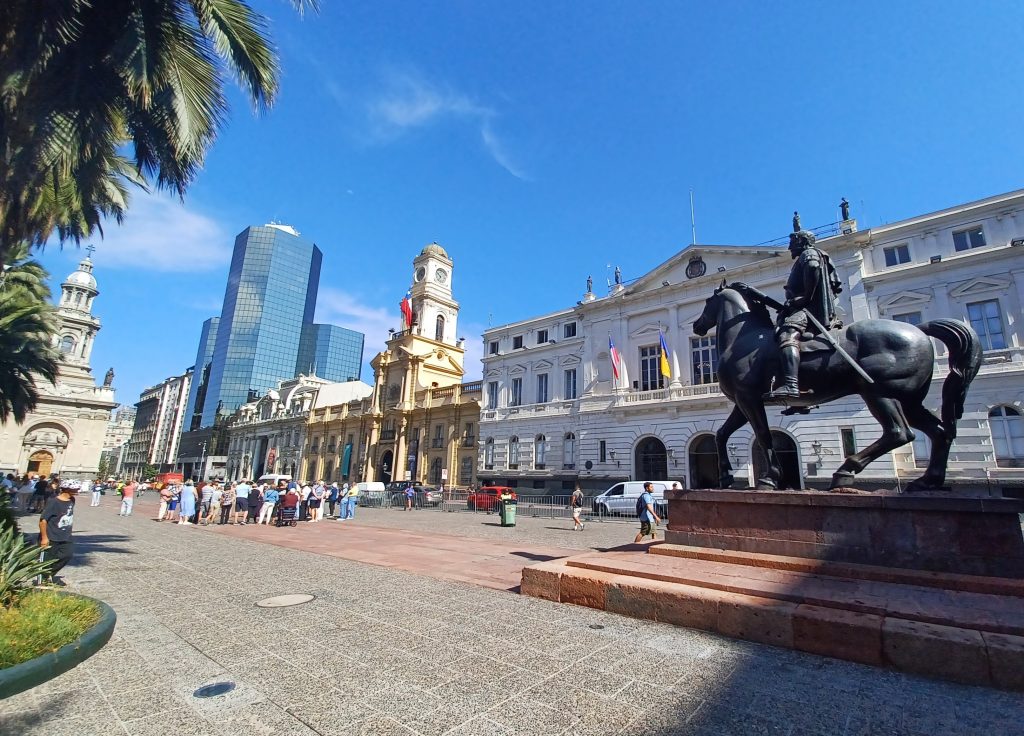
Survey the other buildings around it. They are much restored and rebuilt, because the original ones, as with the Cathedral, were damaged in earthquakes and other natural events. On the north side is the old Central Post Office building, the Correo Central, renovated with a renaissance type façade in 1908. This was once the residence of Pedro de Valdivia, the Spanish conquistador, who founded Santiago in 1541. His equestrian statue, which shows him holding a large scroll, the founding document, in one hand and a sword in the other, stands in front of the Municipalidad de Santiago, the Santiago Municipality building.
Between the Municipalidad and the Correo Central is the Palacio de la Real Audiencia, where the offices of Chile’s first president, the Libertador Bernardo O’Higgins were located. He, the liberator Bernardo, was an independence leader, who fought for Chile’s freedom from Spanish rule and became the first Chilean head of state in 1817. The building houses the National History Museum currently.
Monument to the Indigenous People
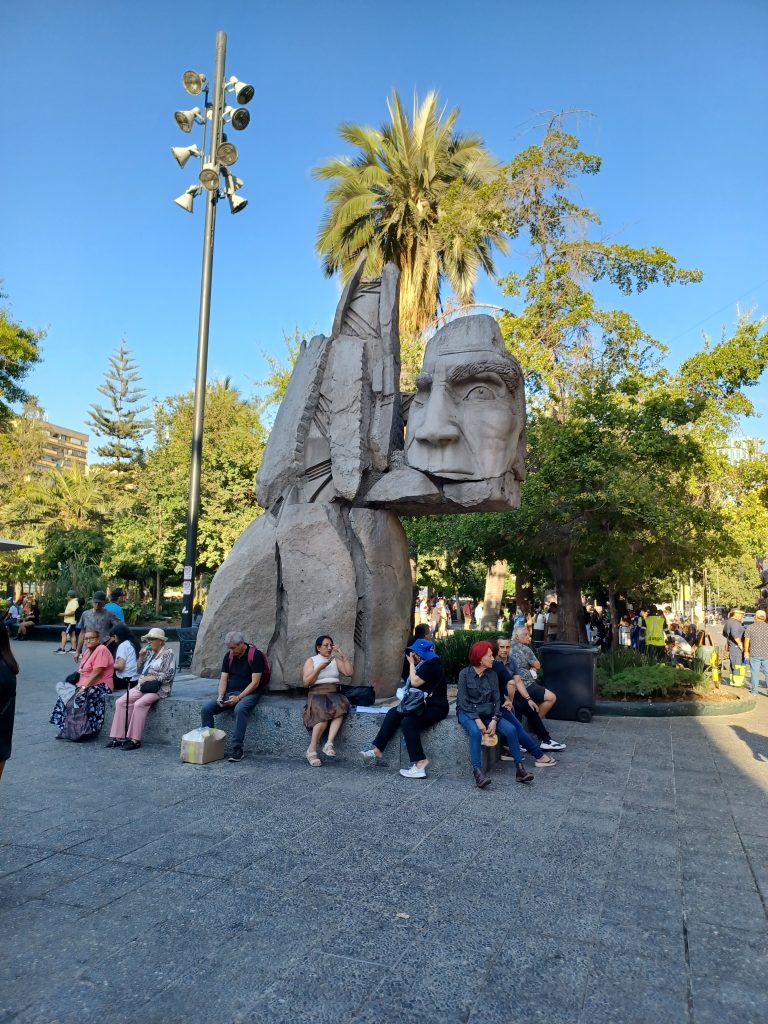
I cross the Plaza and stand in front of a weird artwork. Seems like an abstract body of a person with a detached broken head. It is entitled ‘Monumento a los Pueblos Indígenas’, built to honour the Mapuche indigenous people’s bravery in their struggles against the Conquistadors. Despite this worthy intention, the statue turned out to be somewhat controversial. Some see the broken head as a rather crass portrayal of a Mapuche man, while others see it as a symbol of resilience against injustice. The Mapuche have not been treated particularly well by the Spanish/Chileans over the centuries. Anyway, people sit in restful postures around the monument on its stone platform.
Museum of Pre-Columbian Art
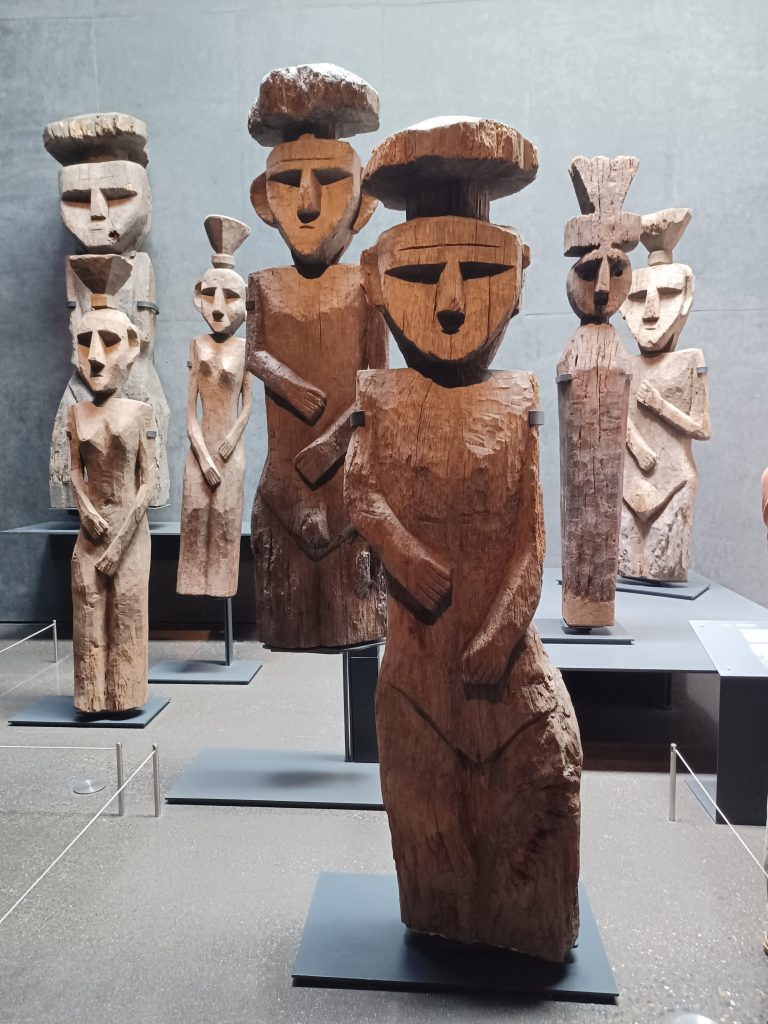
Much has been written about the Museum of pre-Columbian Art, a place recommended in the guide books. Thus, I leave the Mapuche monument and wander up the street towards the museum and enter its precincts. Wonderful collections within delving deep into Chile’s heritage and identity. Proceed to view the exhibits of these same Mapuche people. There is an array of carved wooden figures here, which would have been placed atop the tombs in their cemeteries. These represented the spirits of those buried and assisted their journey into the afterlife, according to the information alongside.
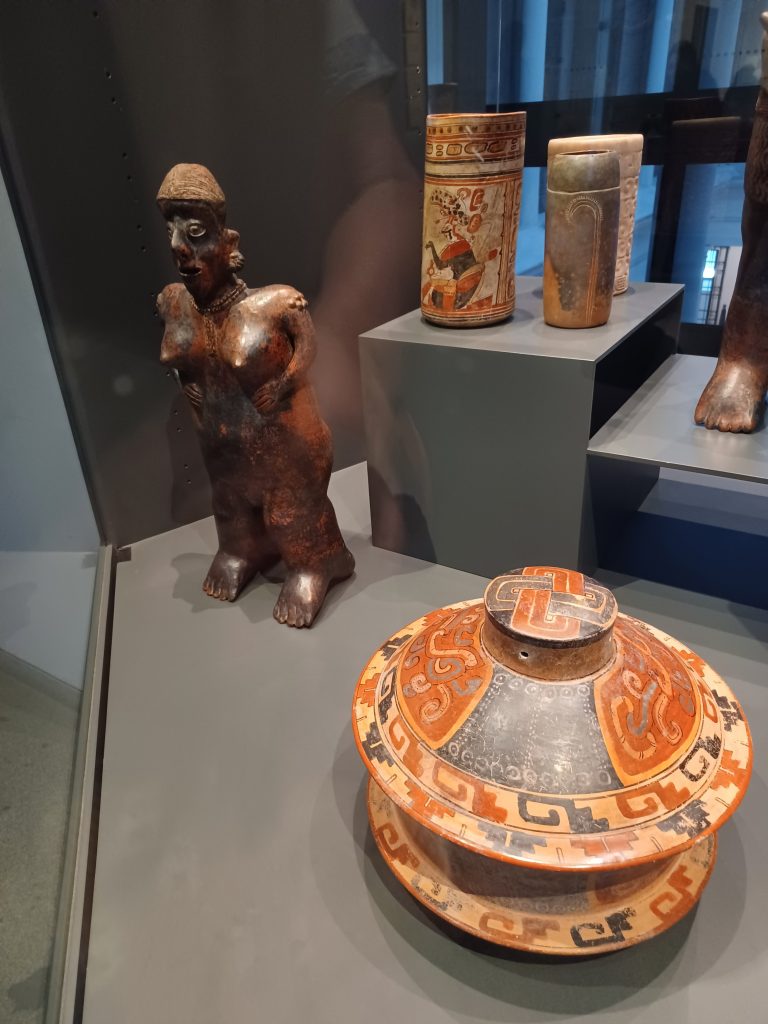
Other objects from cultures in Central America, such as the Maya, are displayed, as well as some of the Inca people of Peru. All sorts of ceramics, textiles, metalwork and stone carvings. (Note to self: I haven’t been to any of these places yet).
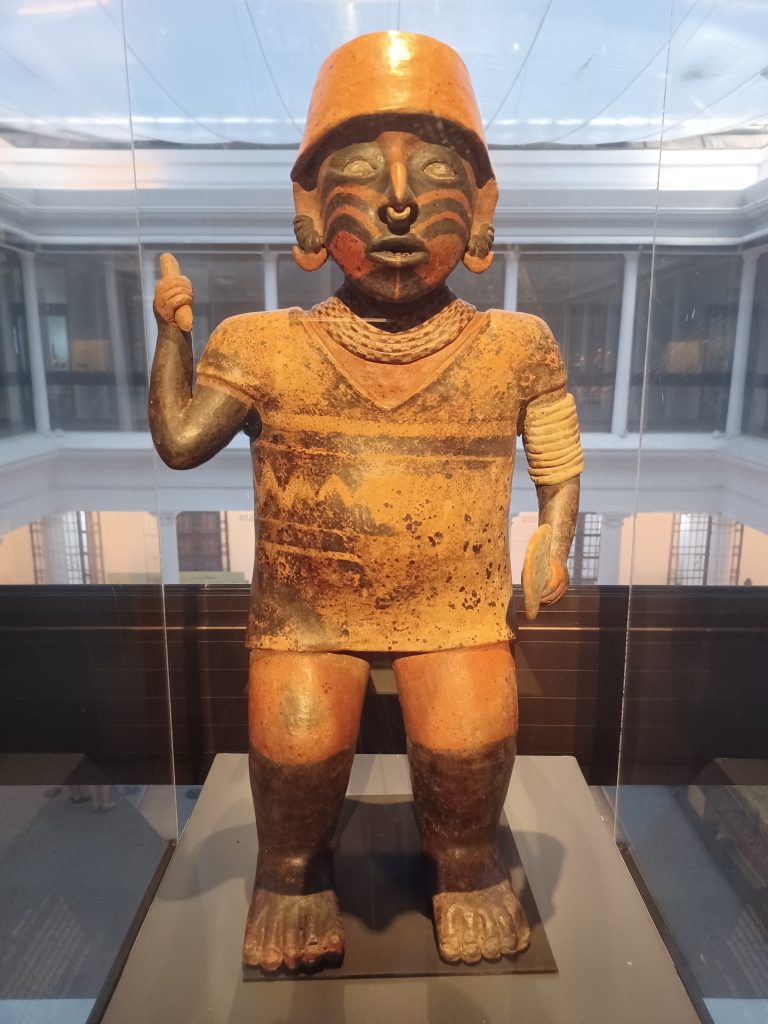
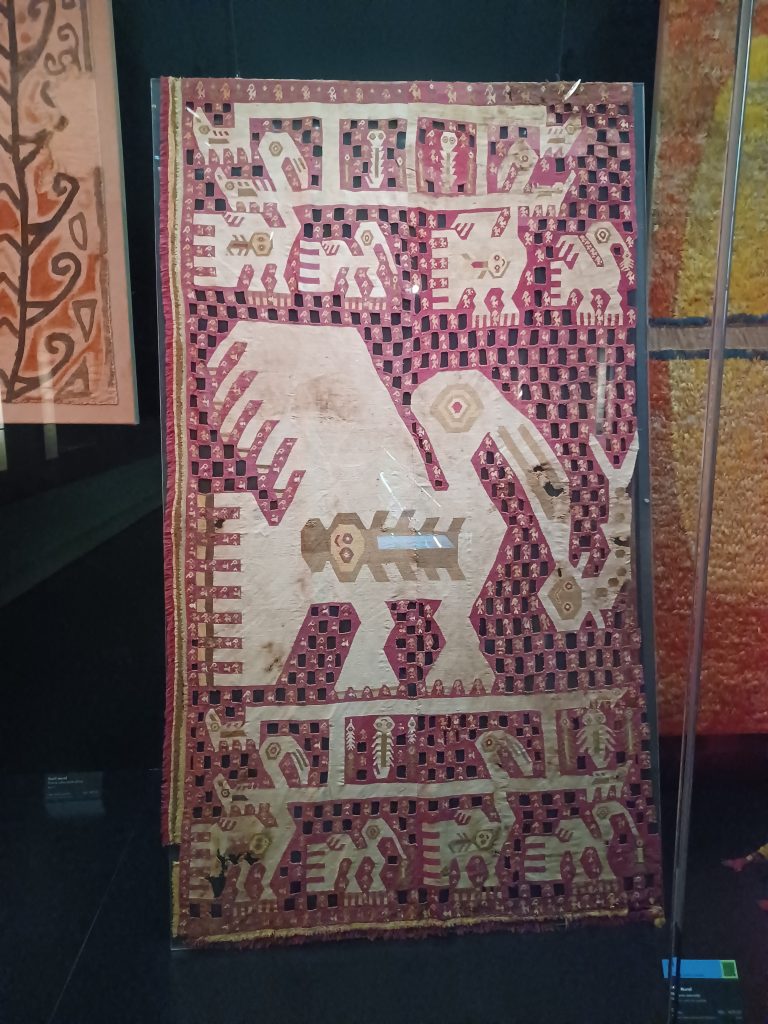
Ex Congreso Nacional
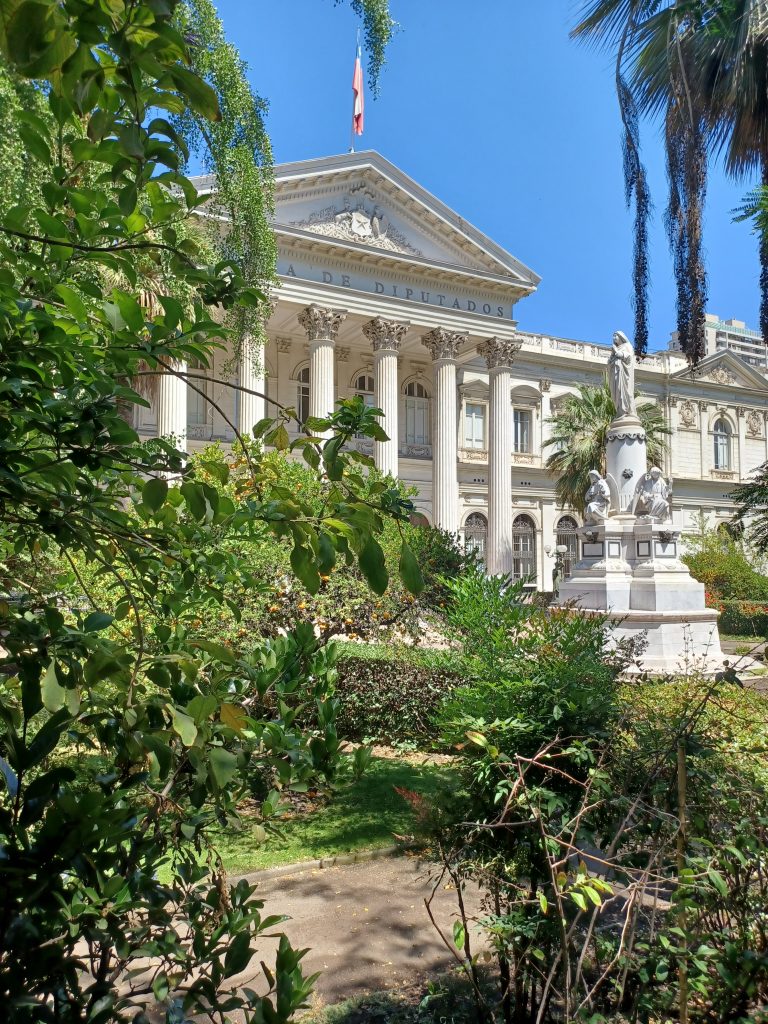
Brain suitably stretched, I exit the museum and walk a block or two to see the Ex Congreso Nacional, in which are the offices of the Senate and the Chamber of Deputies. Completed in 1876 but rebuilt after a fire. All very magnificent with Neoclassical columns adorning the frontage and lovely lush gardens with a statue of the Virgin therein. I take a photo between the rails of the wrought iron railings. Congressional sessions were out of favour with the dictator, Augusto Pinochet, from 1973, the year when the democratically elected President Salvador Allende was overthrown in a coup. He, Allende, was succeeded by a military junta with Pinochet in the top job until 1989.
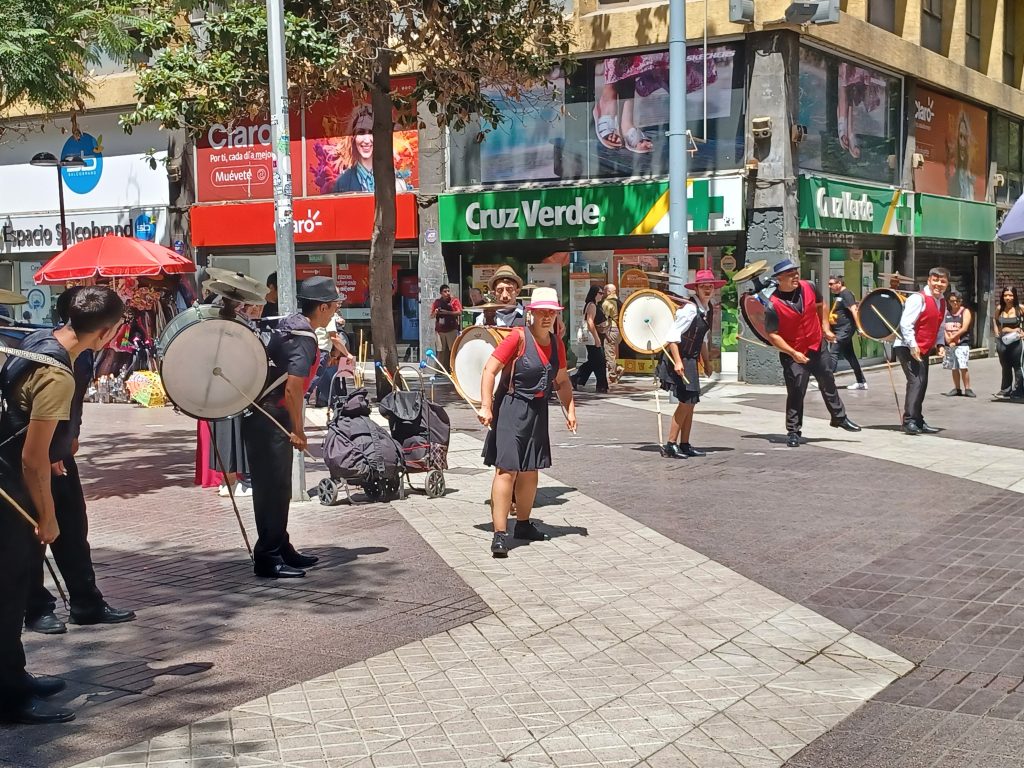
Amble off again to a sudden deafening din of a dozen or so drummers hammering huge drums, which are placed on their backs. They remind me of Bert, the chimney sweep in Mary Poppins. Bang bang, thump thump. Not sure what this entertainment is for until I spy a pot placed in front of them to collect donations for their musical efforts.
Palacio de la Moneda
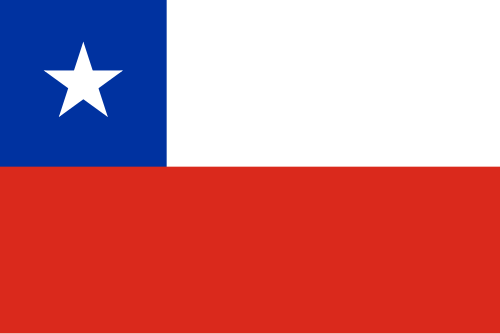
Am on my way to the centre of things Chilean, the Palacio de la Moneda, the Government HQ and official residence of the President. Another 19th century Neoclassical building, it used to house the mint, hence the name. A huge flag is here flying on a massive flag pole. It is known as La Estrella Solitaria (the lone star) due to the lone five pointed star in the upper blue canton. Some say the star represents Venus, a deity significant to the Mapuche, others that it represents progress, while the blue colour stands for the Pacific Ocean and the sky, the white for the snow on the Andes, and the red, for the blood spilled in the struggle for independence. Adopted in 1817.
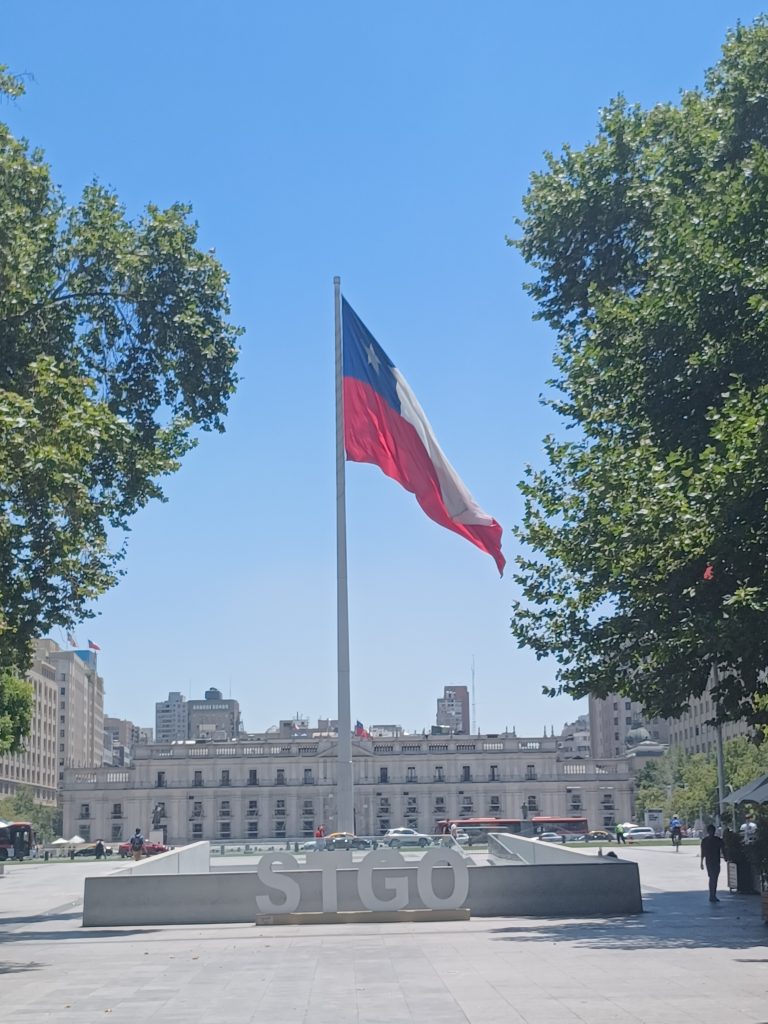
Cerro Santa Lucia
Eastwards I now head, along the main avenue of Libertador Bernardo O’Higgins. Am aiming for the St Lucia Hill, Cerro Santa Lucia, rising above the streets. This is the spot where Pedro de Valdivia founded the city, and another statue of him, not mounted on his steed this time, greets you at the bottom of an elaborate staircase, called the Neptune staircase. I ascend the staircase. Impressive balustrades. Large flat area at the top, the Neptune Terrace, with a fountain and statuary.
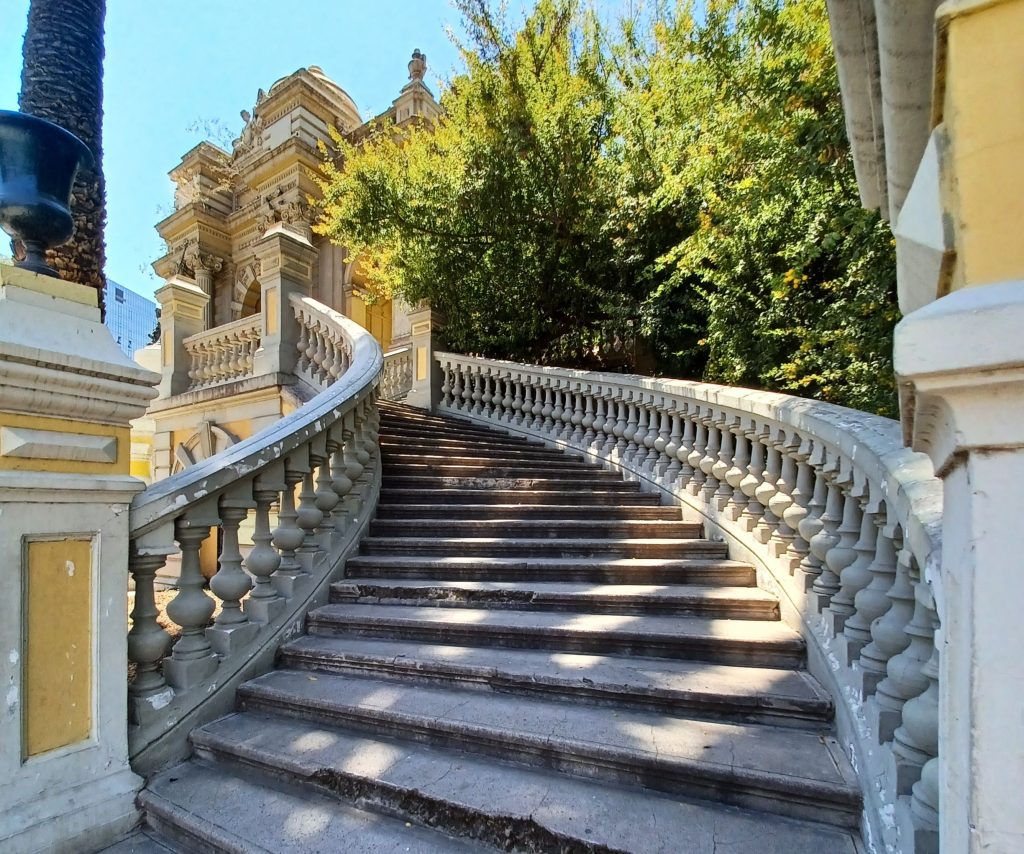
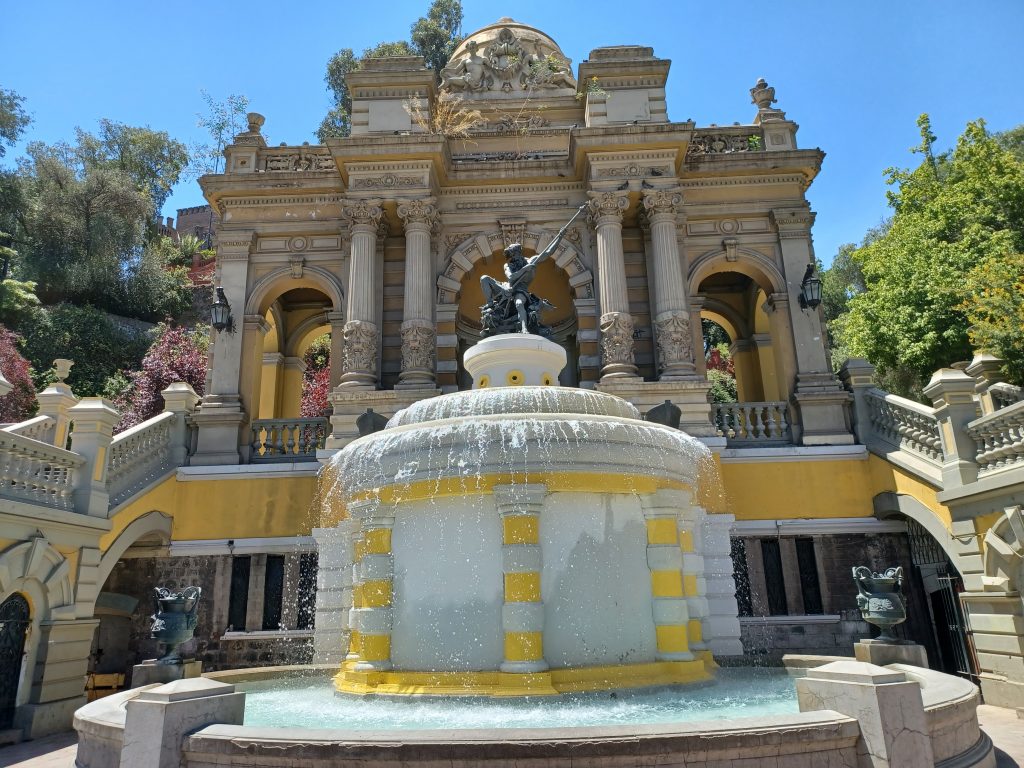
Keep ascending steps, some very worn with iron railings. Reach a cobbled road and walk along until I find another set of steps. Supposed to lead to the castle, Castillo Hidalgo, on the top. Keep thinking I have reached the top but no, it is an illusion. Yet another set of steps. See a lady descending and hail her. “Not far” says she. “Worth it”. Go up and up and up. Pass an old church. Still more steps. Hmm. Get there eventually. Take a breather.
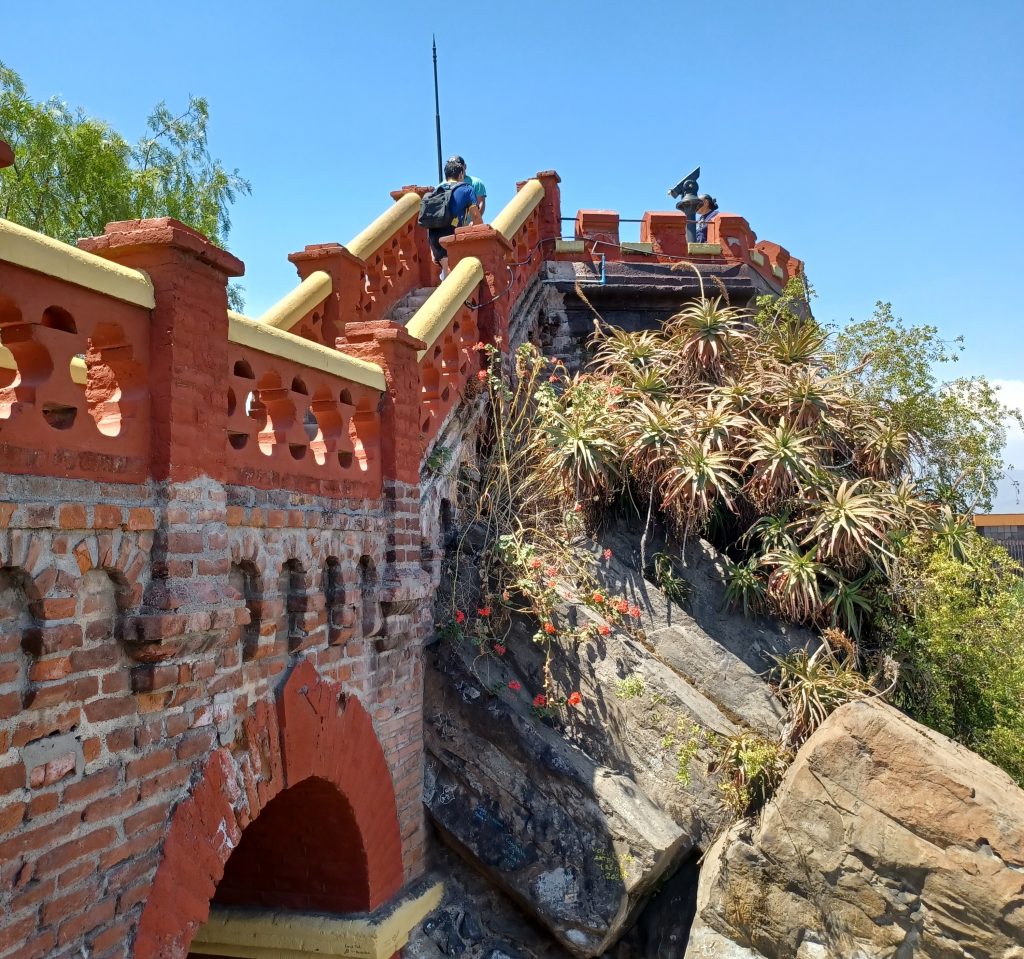
There is a fine view from the rusty coloured battlements of the castle across to the hill to the north east, Cerro San Cristóbal, with a funicular going up to the top. Make a mental note to visit. Until then, that is enough climbing and clambering for the day. Hot and thirsty. Time to meander back to my hotel and take supper in its roof top restaurant. Take it early before the hordes fill it up. Sparkling glass of Sauvignon Blanc, accompanied by crab meat in a cheesy type sauce. Delicious. And the last lazy rays of sun drift down behind the hill.
Viña del Mar
Today I am taking a tour with a local company. Picked up at my hotel at 0740 in a minibus. Last passenger. A happy smiling young guy with earrings greets us. He turns out to be a masterpiece of good fun, an entertaining and erudite tour guide.
Head north-west and, as we approach the coast from the hills, it is drizzling and foggy. Down there are the twin cities of Viña del Mar and Chile’s main port, Valparaiso, which, we are informed, means valley of Paradise. An anecdote follows. The gist being that the first English colonists who came here in 1802 referred to it as always being ‘bad weather’ there. The words were spanishised to ‘vaguada’. ‘Vaguada’ echo the occupants of the minibus. Much cooler here than in the capital. At least 10 degrees cooler actually. The Humboldt cold current flows north along the coast of Chile here and as the cold current meets the hot land, so the fog forms. Anyway pleasant temperature.
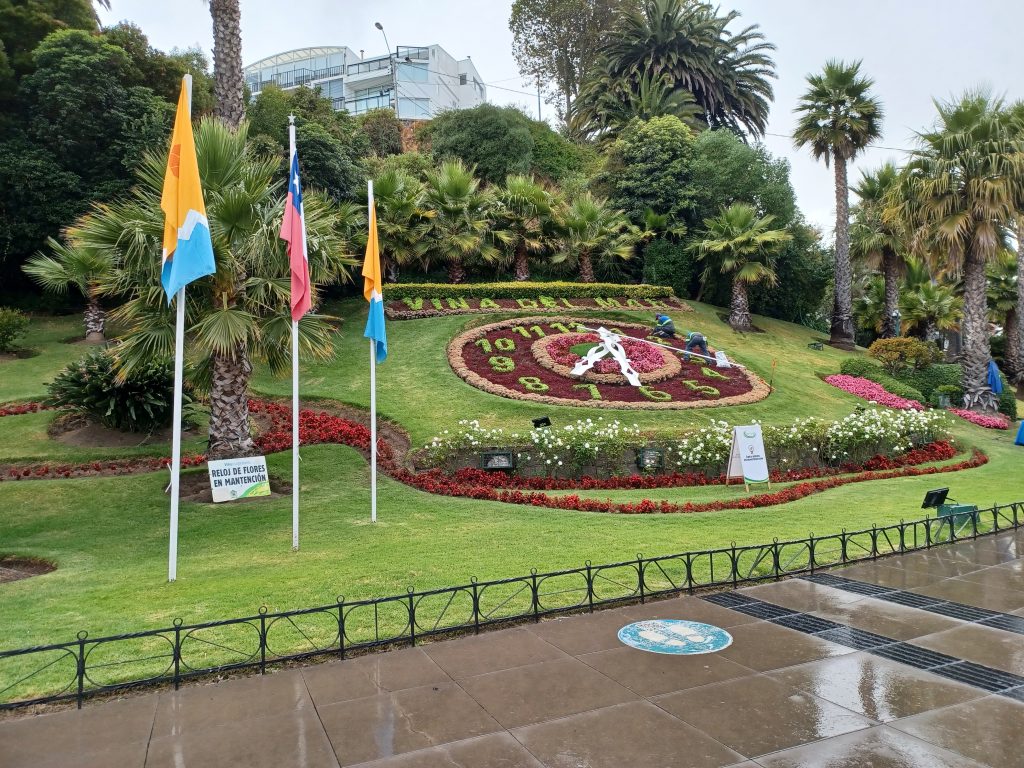
We stop in Viña del Mar first and alight to view a flower clock, made in Switzerland but refitted with Mexican working parts when the clock packed up. Doesn’t seem to be working now either as it most certainly is not 0730. Some gardeners are doing things with plants right now. Wet plants. And rain splashes on the paving. Very pretty the clock is with a background of rich green foliage and a trio of flags to the left. A road leading uphill to the right of the flower clock displays a warning notice at the bottom of it: evacuation route in the event of a tsunami.
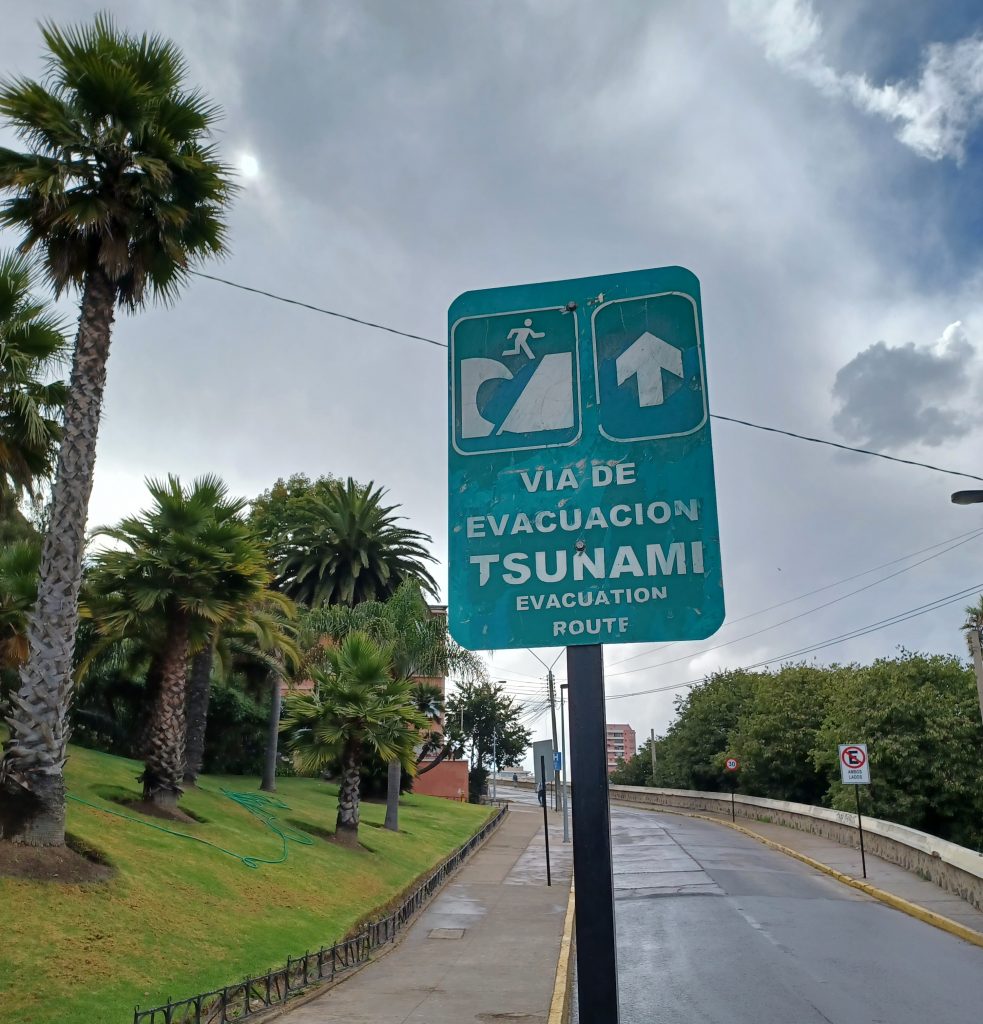
There have been several tsunamis. The first settlers built their houses down by the water until said tsunamis sent them heading for the hills instead. The richer folk were higher up and the poorer ones in more vulnerable places, according to our guide.
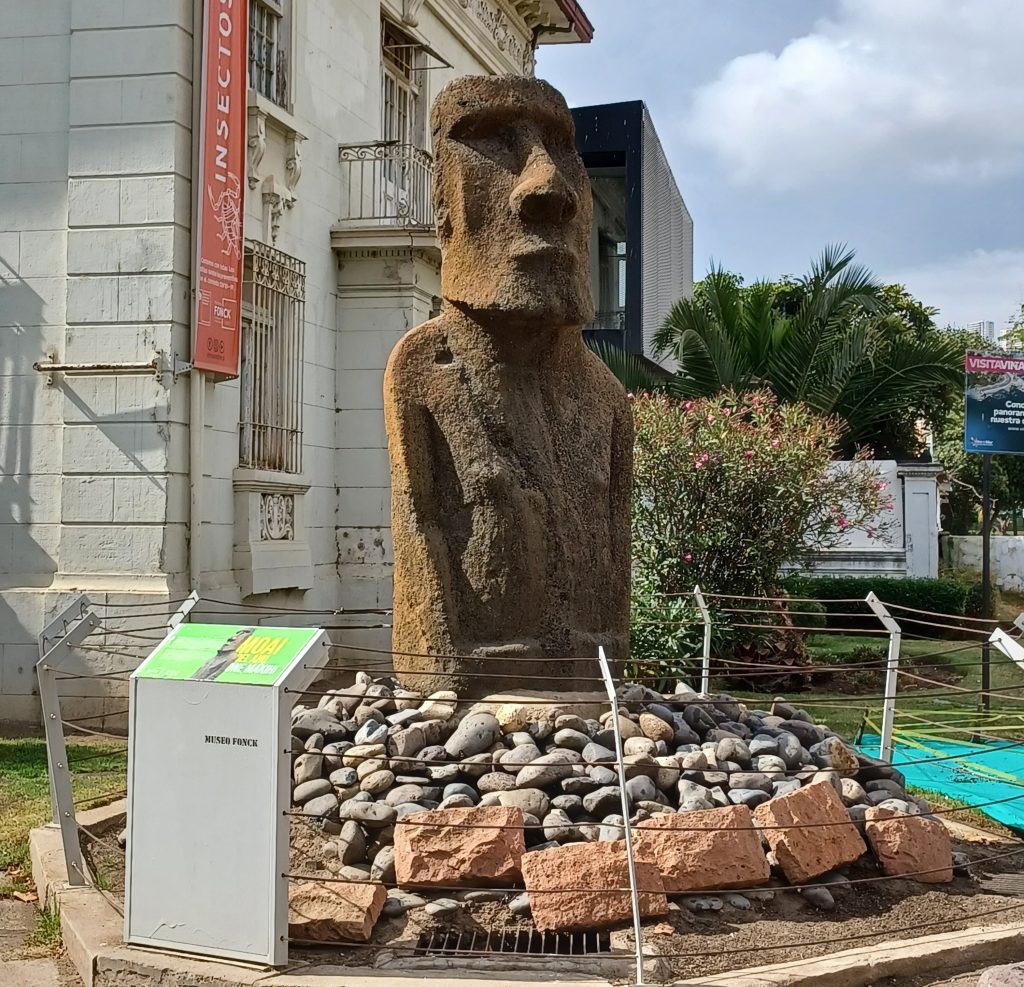
Also in Viña del Mar is an original moai from Easter Island. Received as a gift perhaps, or otherwise removed in 1951 in order to indicate the entrance to the Museo Fonck, which houses an archaeological collection relating to the island. Appears a bit out of his comfort zone here methinks. Not his usual surroundings at all, those being the greenish volcanic slopes to which I shall be heading in a few days. Would have been interesting to view the artifacts inside the museum though.
Valparaiso
Back on the bus for the now short trip to Valparaiso itself. The bus parks up on the promenade, the other side of which is a beach. On the beach and lining the pier jutting into the Pacific are hundreds of gulls. “They are Dominican gulls” says our guide gleefully, holding up a photo on his phone of the black and white cassocks of the Dominican monks. Uncanny resemblance…
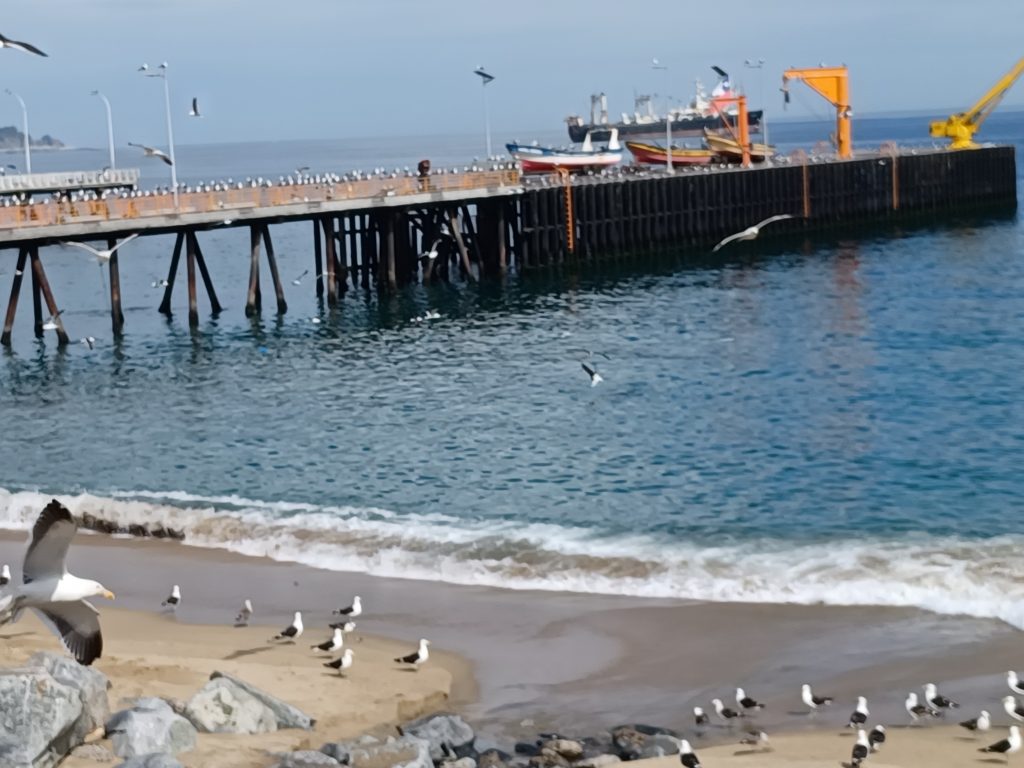
I can make out a pelican on the rock in the water too. Gulls dart everywhere. My peaked cap saves me from a spattering of gull guano. Some ladies in our party are not so lucky.
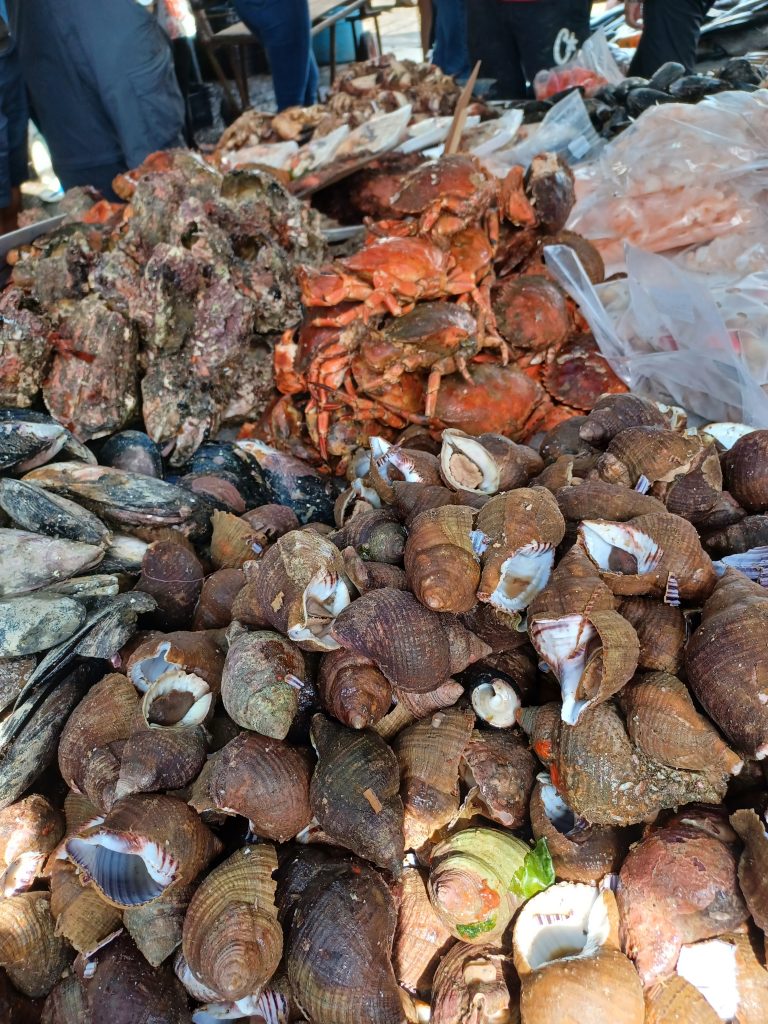
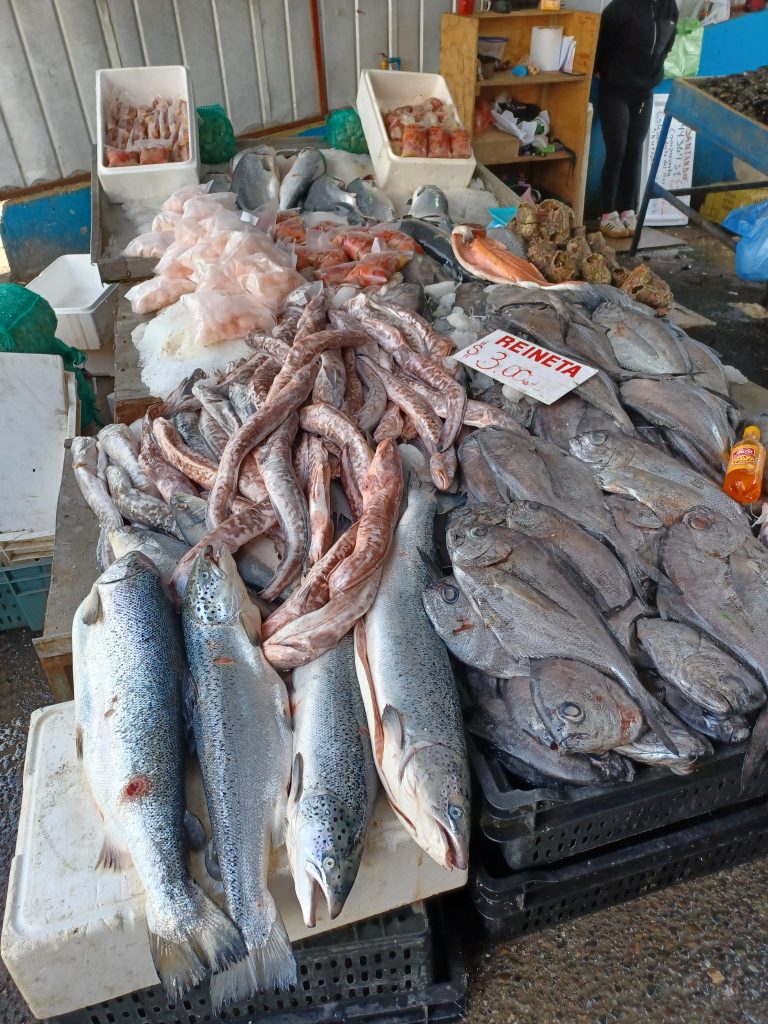
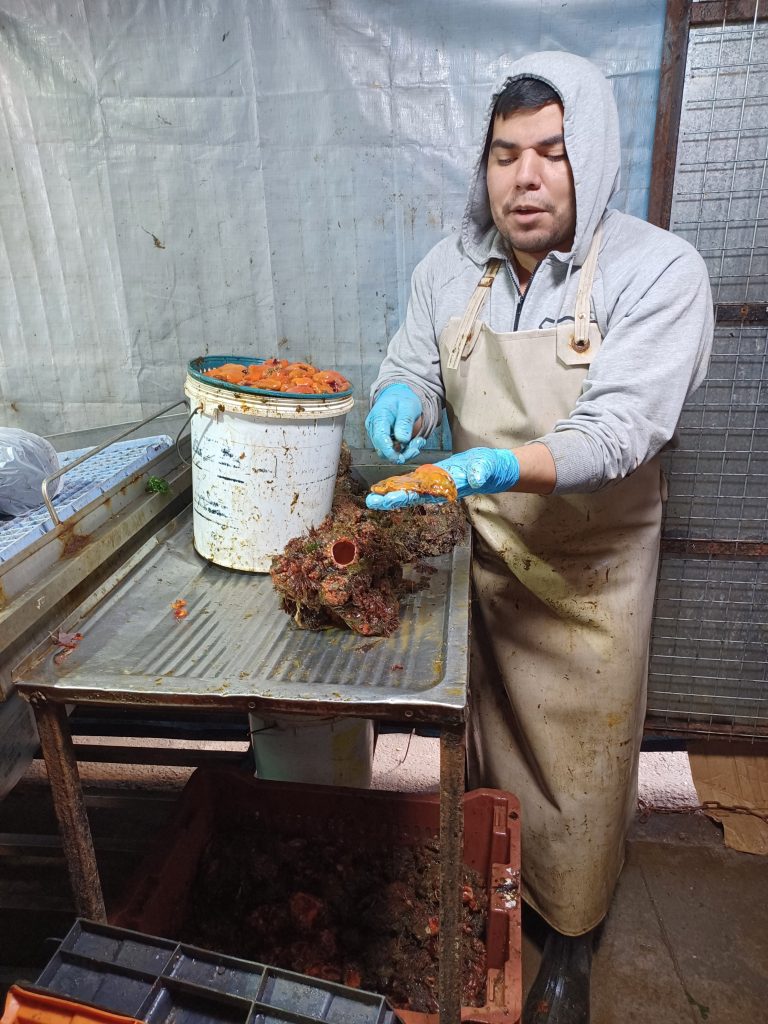
Now to the fish market. A stinky experience our guide warns. OK. We are come here to experience the taste of the pieru shellfish and witness the day’s catch. Wonderful specimens of fish, crustaceans, molluscs all over the place. Merchants compete in the shouting stakes to attract buyers. Are then led to meet a fisherman who is demonstrating how to extract the pieru shellfish out of its shell. He is clutching what seems to be a clump of shellfish clustered together. They are grown on ropes near the shore, I gather. Takes some while to remove the flesh from the shells. Therefore, says he, it costs far more to buy them shelled than in a heap to deshell them oneself at home.
I am offered a taste. “Like an oyster but stronger,” we are told somewhat proudly. Bit deficient in my appreciation of raw shellfish but give it a go. Wince a bit. Wasted on me really. I am sure shellfish aficionados would enjoy it infinitely more than I.
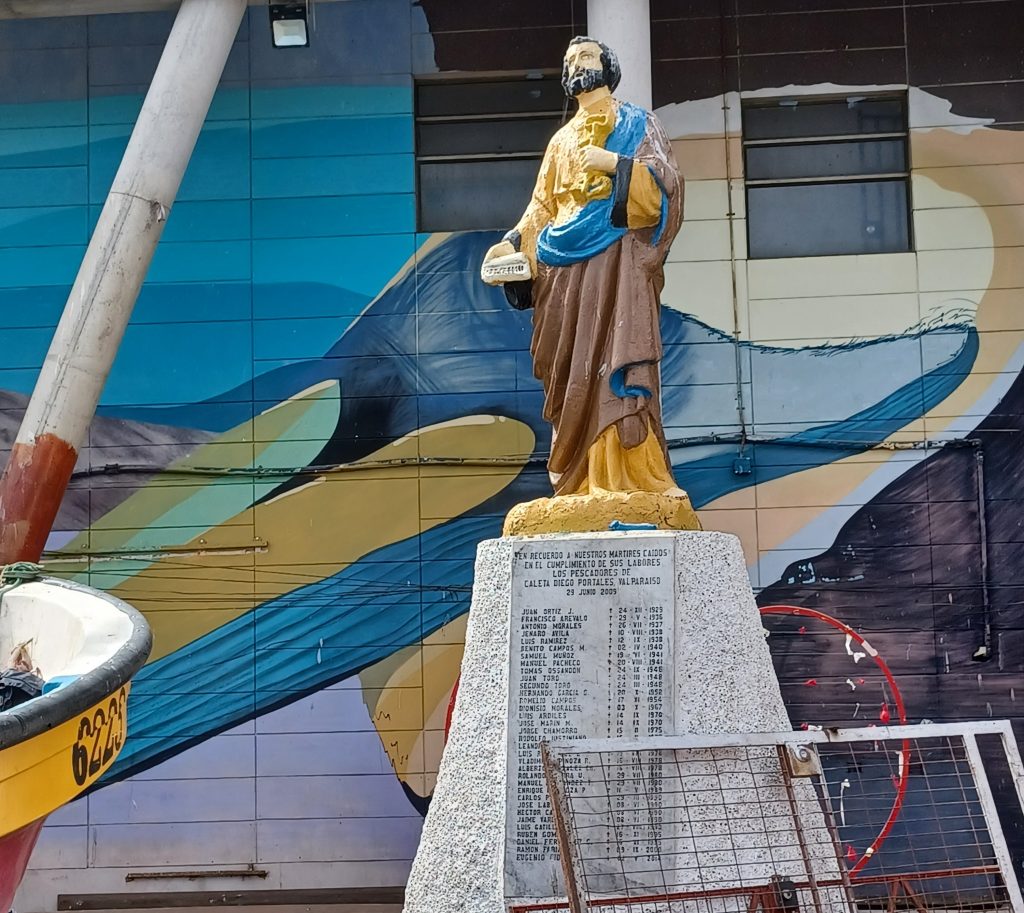
Retreating from the pieru tasting and the pungent fishy odours, we pass a statue of St Peter holding the keys to heaven. Patron Saint of fishermen, I believe. He is there because there was a catastrophe a few years back when many local fishermen lost their lives. There is a long list of names on the pedestal beneath. A few boats and bits of fishing equipment and other stuff lie around and about.
Queen Victoria Funicular
Valparaiso spreads over 42 hills, each with a specific name, rising steeply from the port. So now we are heading towards one of the city’s funiculars in order to ascend one of these hills. Somewhat surprised when we reach it that it was named after Queen Victoria, the ‘Ascensor Reina Victoria,’ in 1902. “Because Chile had very good relations with the English”. Oh good. Valparaiso attracted many immigrants in the 19th century, such as Italians, British and Germans. Scores of British ships anchored in the port. Relations may have been good at that time but in 1578, Sir Francis Drake, sailing in on his ship, Golden Hind, sacked the city and, moreover, says our guide, grabbed a shipload of Chilean wine! Dastardly indeed.
Half of us step into the funicular car and trundle up the hill, with its 52 degrees gradient, to the top. Only room for seven of us within, so the next batch follow afterwards. It is rather fun. There are seven such lifts in the city, far fewer than there used to be at one time because they are expensive to maintain, we are told. They used to be operated with counterweights but now use motors. All were built in the late 19th/early 20th centuries.
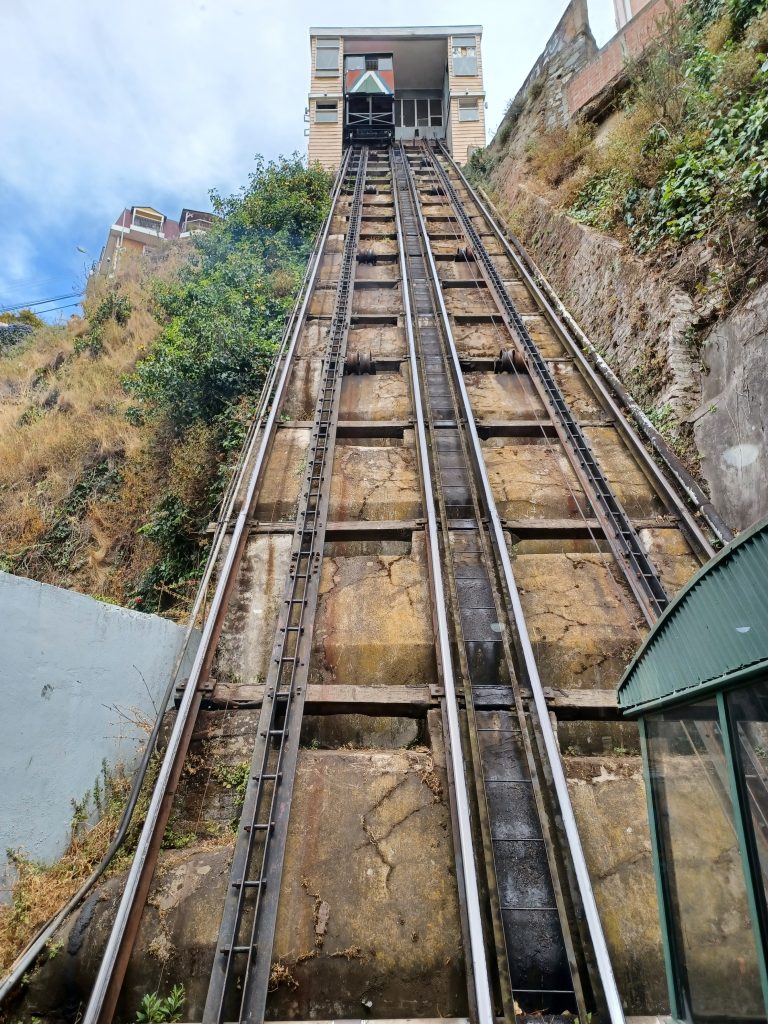
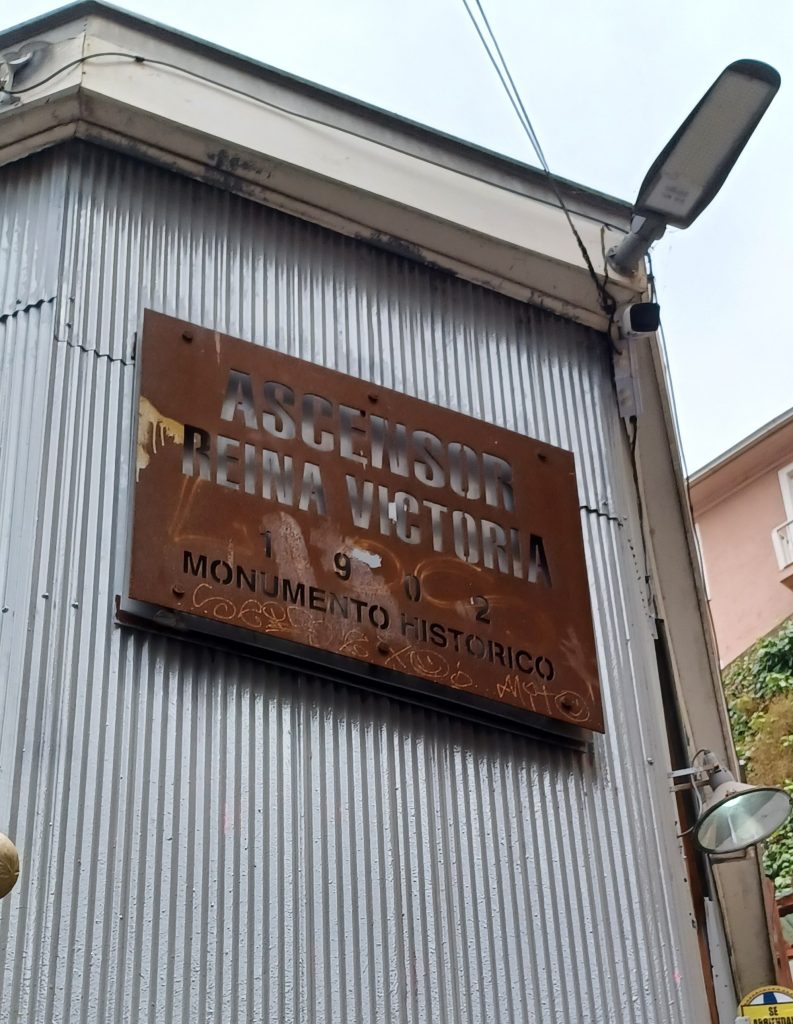
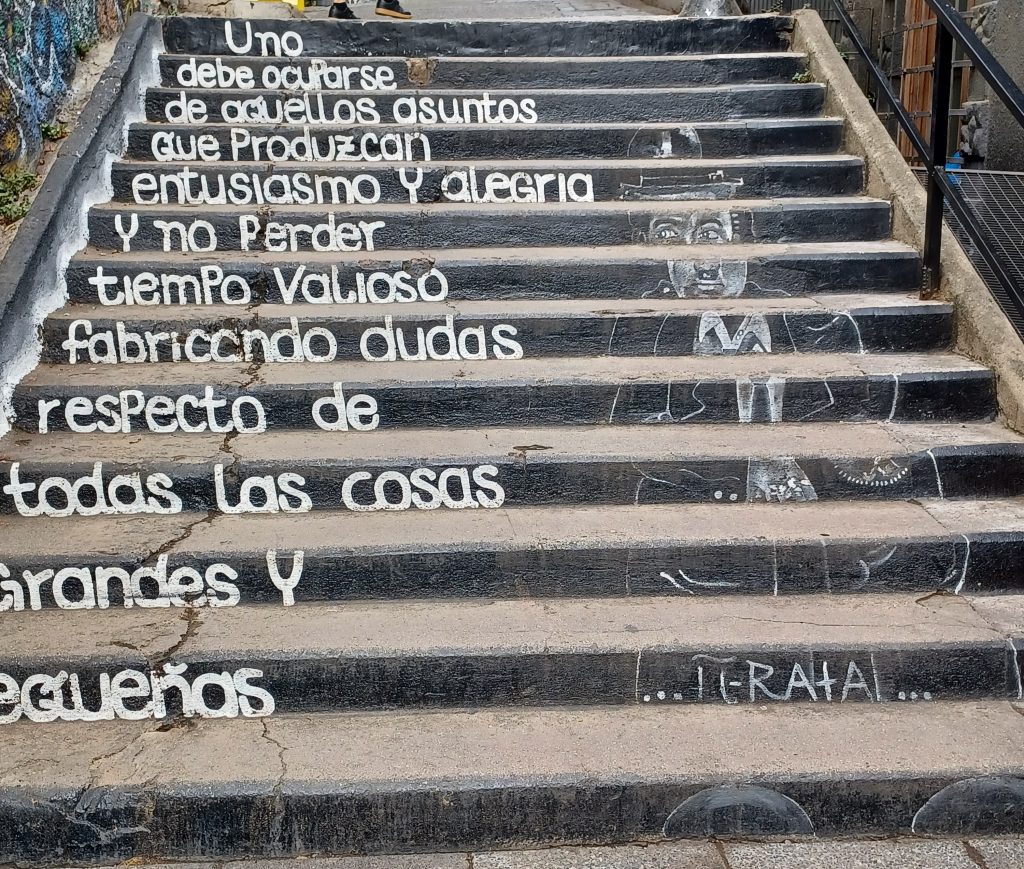
We emerge to admire the vistas from the hilltop. Then head along the path past pretty murals and trees and delightful colourful buildings, views over the harbour and the Lutheran church. Ascend steps upon which is painted Charlie Chaplin’s image. Wonder why.
St Paul’s Anglican Cathedral
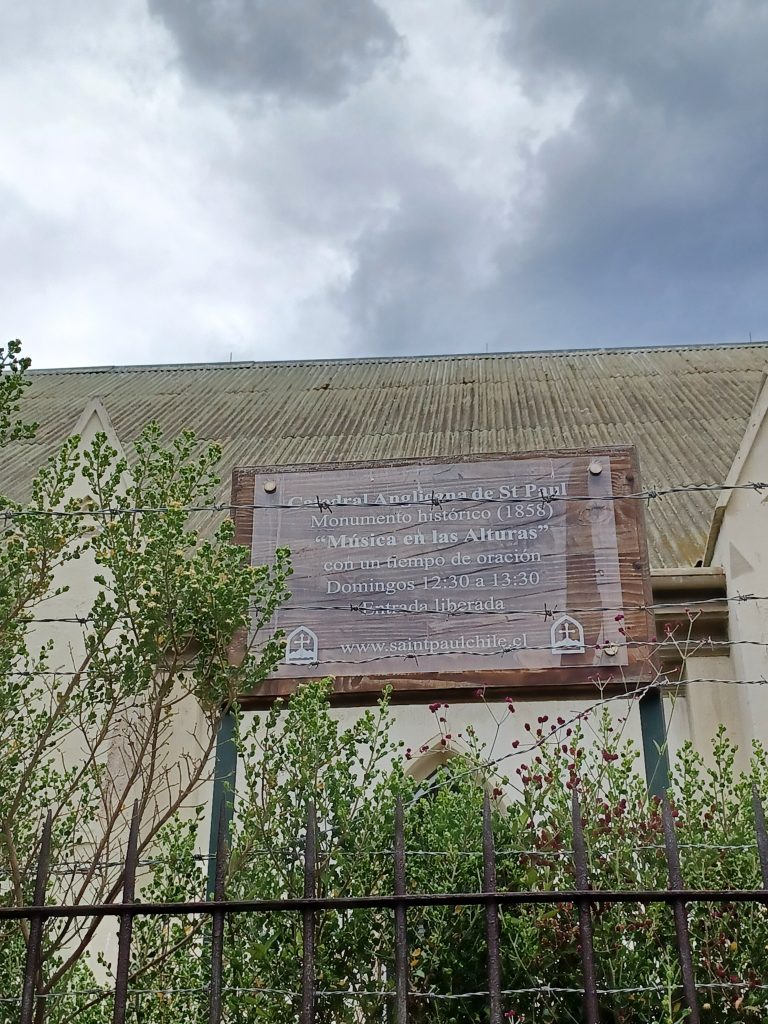
Another surprise awaits. Atop the hill, Cerro Concepción, is St Paul’s Anglican Cathedral. OK. So what is an Anglican church doing here? Our guide explains that when Valparaiso was a thriving port there was a small English expat community which had established itself here in the 1840s. This pocket of Protestantism wanted its own church. But the law forbade any religion but Catholicism. However, in 1857, the Catholic Church permitted a church to be built on Cerro Concepción (Conception Hill), “so long as it didn’t look too much like a church”. So it sports no spire, nor belfry nor cross on the exterior. The area where the altar is located also looks like a house from the outside. In fact, the building looks more like a warehouse with its corrugated roof. That is until you go inside.
First one enters the nave, striking with its upturned boat shaped roof beams (hence nave (Latin for ship)). From here one can see the rood screen separating the nave from the choir. The engineer in its construction was William Lloyd and it was completed in 1858. The church became a Cathedral in 2016.
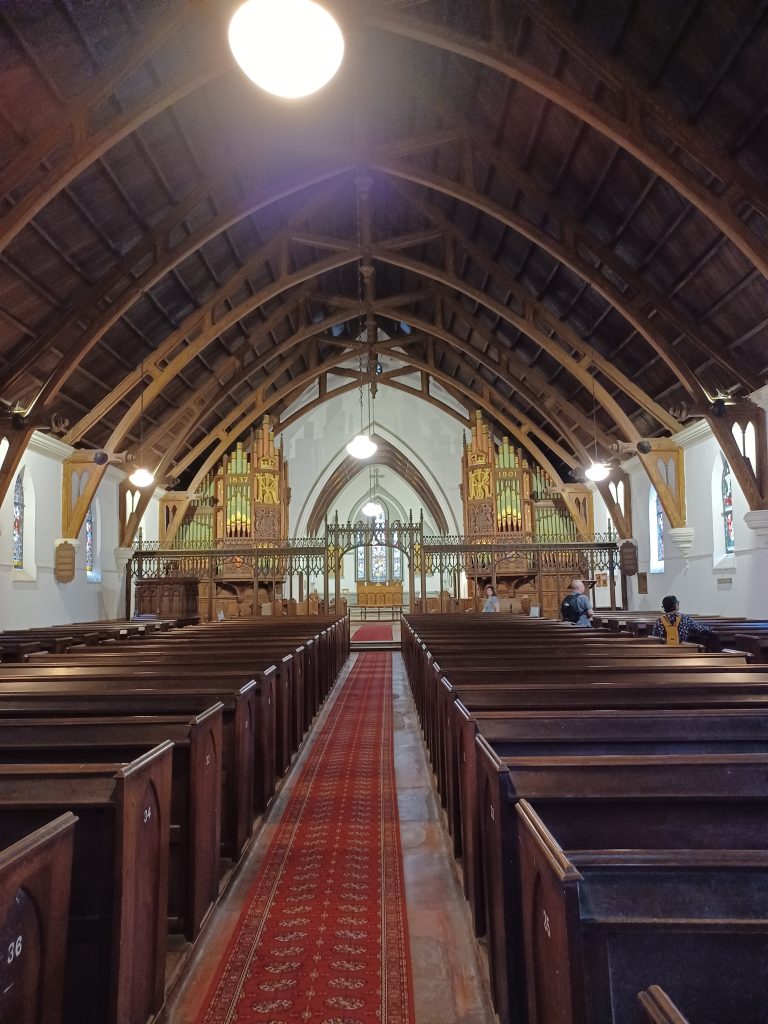
There is an organ memorial to Queen Victoria in the choir and beautiful organ pipes, which bear the dates of her reign from 1837 to 1901. Illustrious visitors have included her great grandson, Edward VIII, in 1925 and Prince Phillip, the Duke of Edinburgh, in 1962. The ten Commandments, from the Book of Exodus, are displayed on plaques either side of the stained glass windows, imported from the UK. These depict stories from St Paul’s life.
Exit to ramble further on, and view some cemeteries on the hill opposite. One is known as the Dissidents Cemetery, so-called because it was the only place in the whole of Chile at the time where Protestants could be buried. Built before the church in fact.
Valparaiso’s murals
Time for refreshments now, in a restaurant overlooking the bay. Splendid lunch with the tour participants follows. I opt for grilled fish and vegetables and a glass of Chilean Sauvignon Blanc. After which, we are led on a tour of the murals, for which Valparaiso is famous. Like an urban art gallery. Bohemian. It seems that artists ask owners of walls if they can paint their murals and then that patch is theirs for keeps. All sorts of would-be muralists from all over the world have come here. Not usually an admirer of street art but some of this is stunning. Sometimes political, sometimes celebrating particular people or customs. World Heritage Site. Street art was banned under the Pinochet regime, in that such artwork may become a means for political dissent. It was legalised in 1990.
We descend the piano steps, painted like piano keys, next to a house once owned by a Jew called Beethoven, and approach a hotel, the Atkinson Hotel, named after its onetime English owner. On the façade of said hotel are depicted a female dancer and a male musician with a drum on his back. Remember those drummers in Santiago. At this juncture, our guide decides to demonstrate a traditional dance in front of the hotel. With some agility, does his paces. Applause.
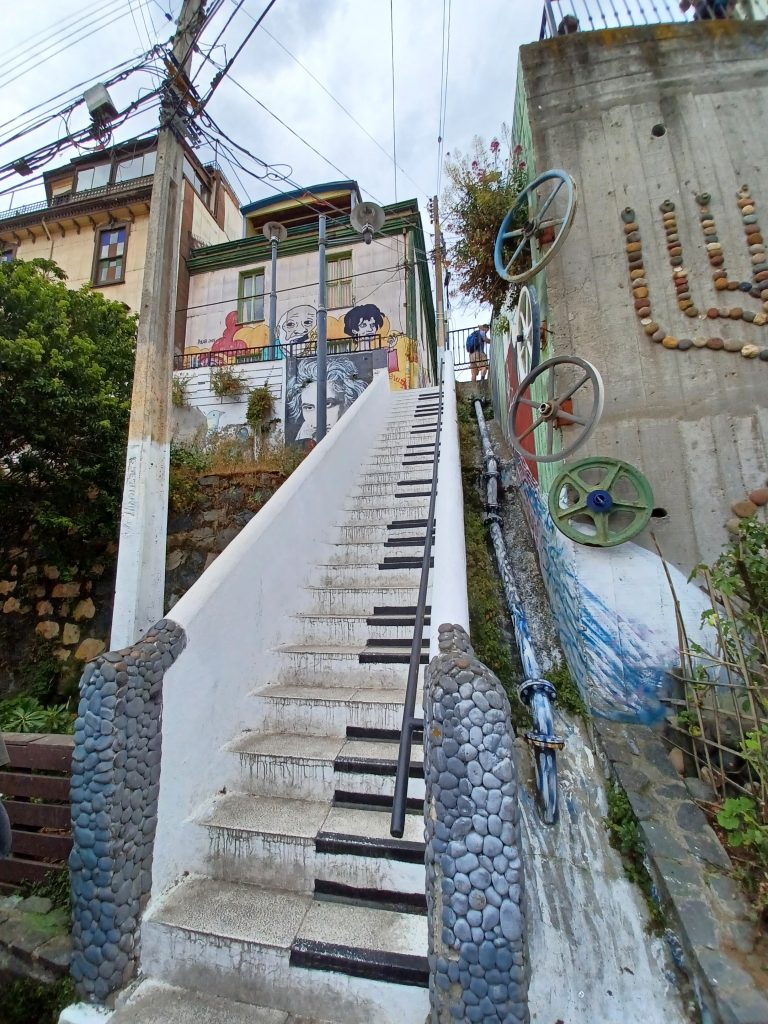
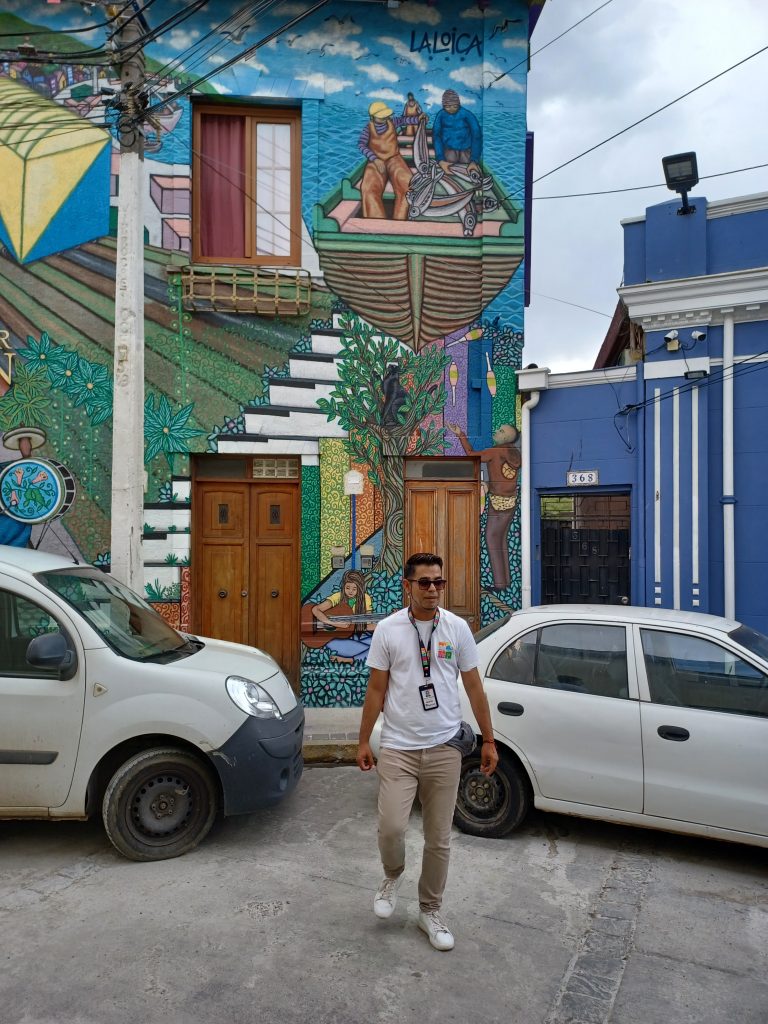
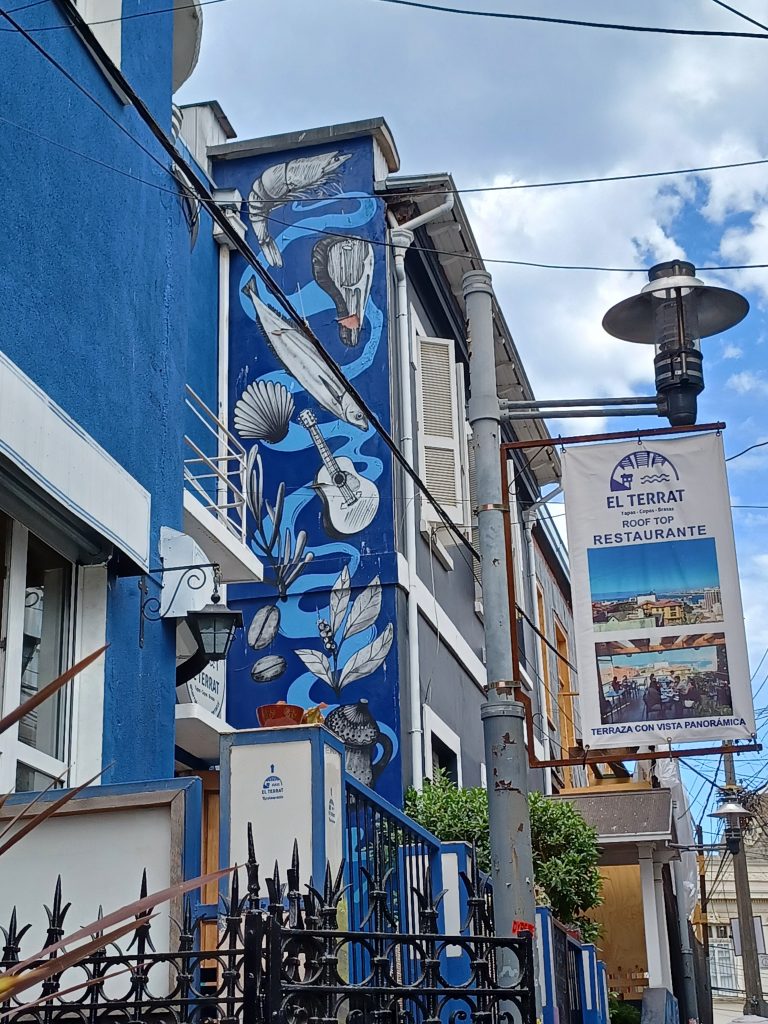
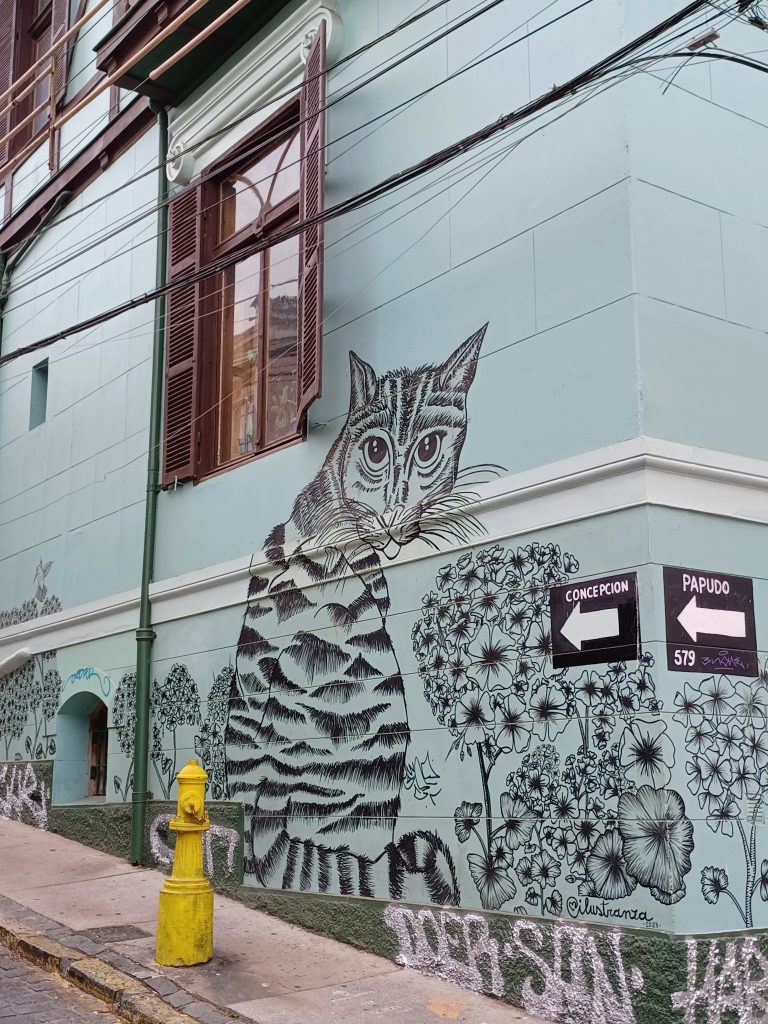
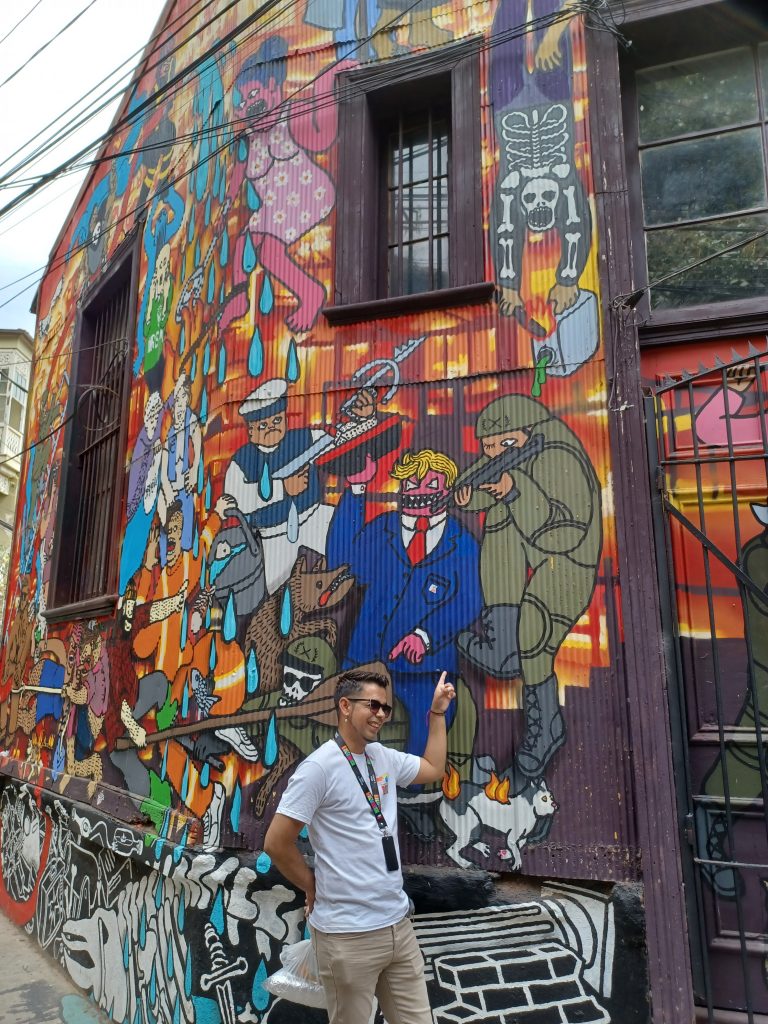
Lots more art work to see. A captivating canvas. A large cat appears on a corner of one house; a political mural depicting President Trump during his first term in office, I understand, on another, and a girl playing some kind of hopscotch game on some steps, all form part of the landscape here overlooking the old port. Even the rubbish bins have murals painted on them. All vibrantly bright and, combined with the cheerful colourful houses and luscious foliage, makes for an appealing place. Plenty of bars and eateries and ice-cream booths too to tempt the unwary. The older houses, our guide informs us, were originally built of adobe brick (mud and straw), some of which have since been covered with corrugated iron.
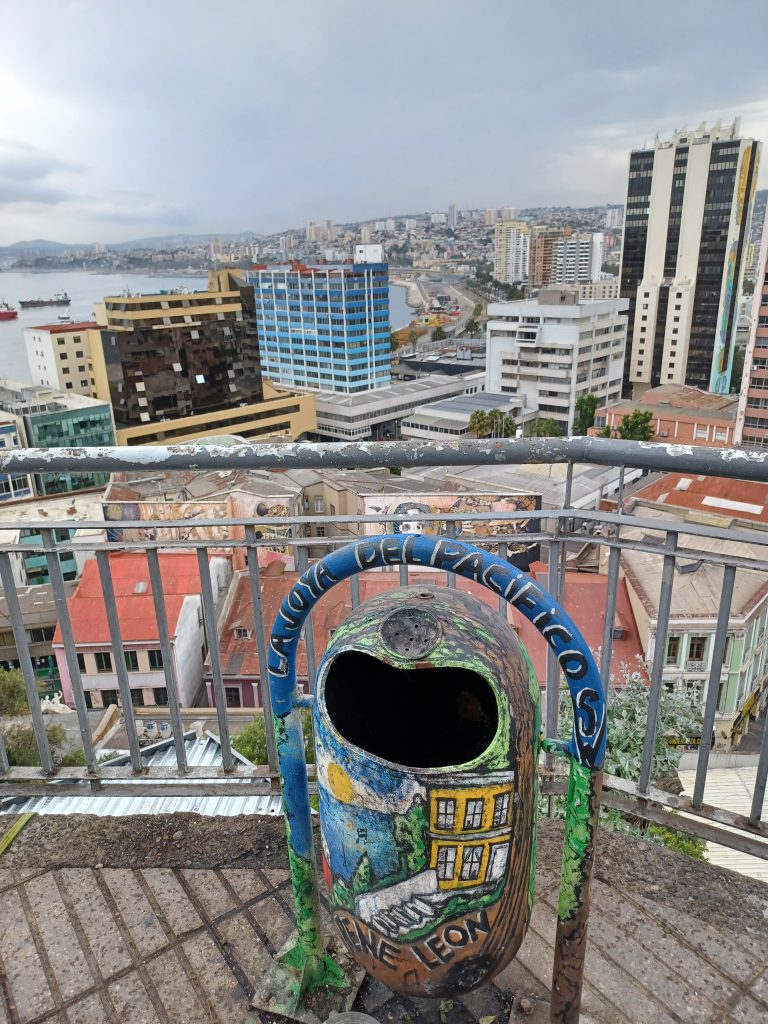
Before the Panama canal was built in 1914, Valparaiso was the first port at which ships arrived after their passage around Cape Horn, we are informed, and the city thrived on the export of saltpetre for fertiliser and gunpowder. Darwin also came along this coast in 1834 and 1835 on the good ship, HMS Beagle, after exploring the islands off Cape Horn and carrying out his scientific investigations. Darwin also visited the Falklands (see The Falklands). However, once the canal had been completed, other ports took priority. Valparaiso is still an important port though and houses at least some of the Chilean navy fleet, which we can see from above. The city is also known as the ‘Jewel of the Pacific’.
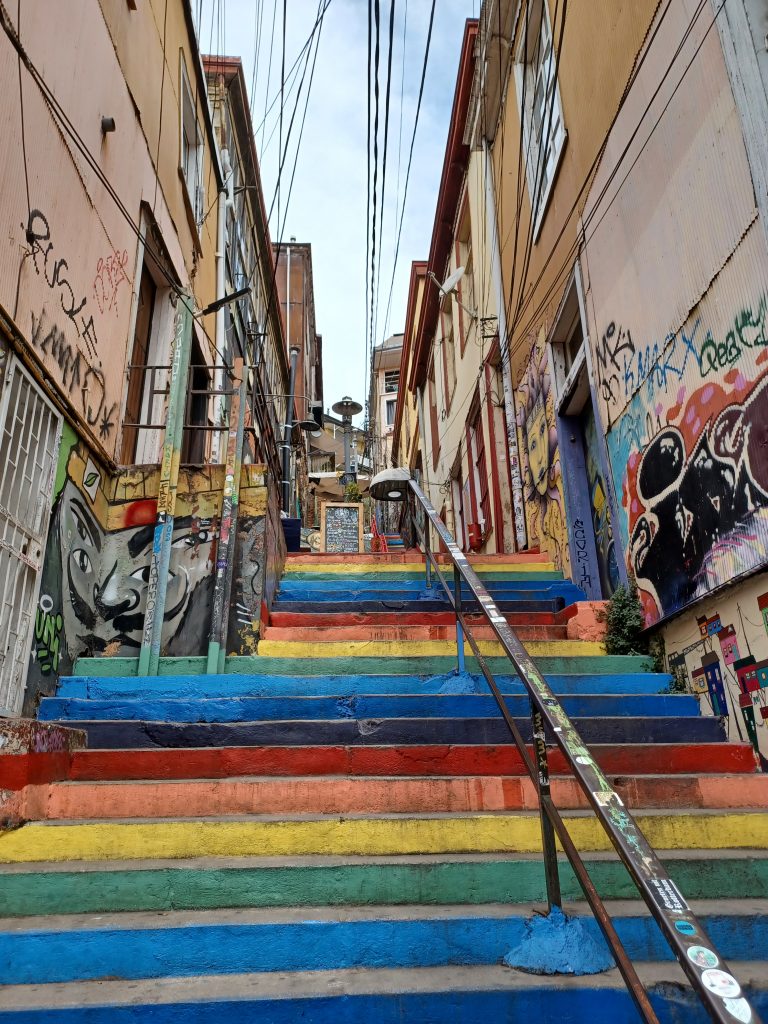
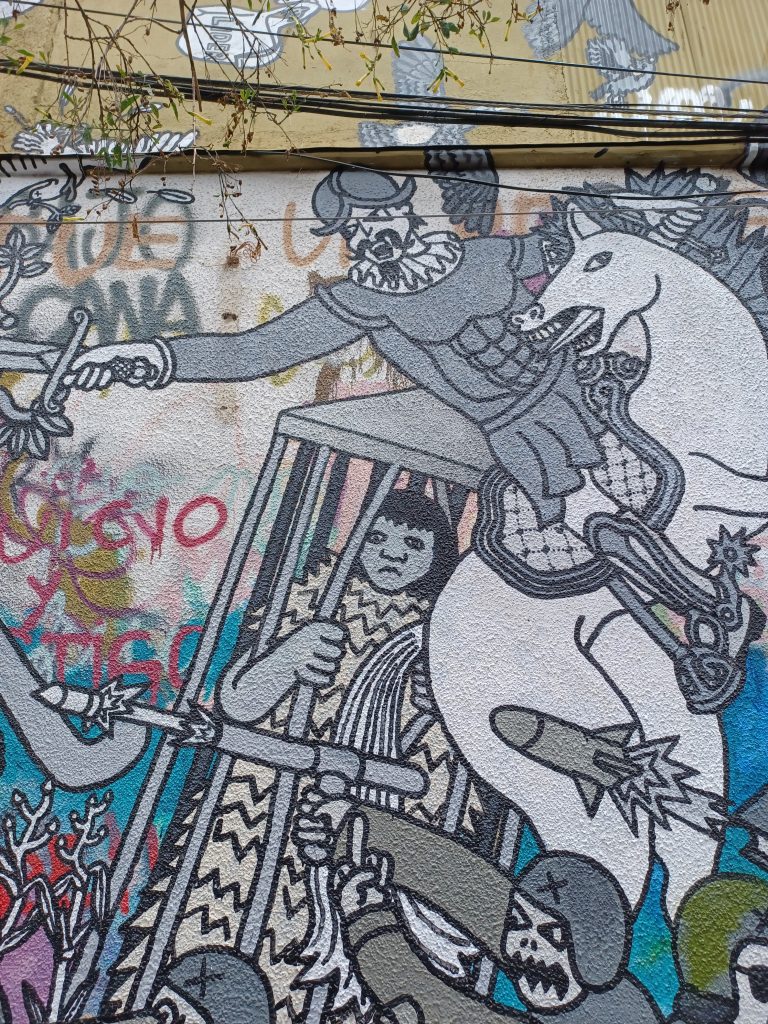
We head down to the lower town via the road this time rather than the funicular. Pass the longest flight of painted stairs in town and another mural showing a conquistador on a horse attacking the locals, and an indignant Mapuche in a cage behind him.
Our driver is now summoned by phone and soon the white minibus hoves into view. “Now we are going to Casablanca!” To a winery to be precise, located in the Casablanca valley. This should finish the day off nicely.
Indomita Winery, Casablanca Valley
The Indomita winery sits bang in the middle of Chile’s Central heartland area of wine making. We wind up a hill on a rustic track atop which is a bright white building with a tower on one side and a terrace in front. The Casablanca valley is affected by morning fog, as we witnessed this morning as we drove north. Thus it is a tad cooler here. By the time we get here, though, the fog has long since dispelled and it is warm and breezy. Perfect for wine tasting al fresco. The winery’s most renowned wines are the white and zesty Sauvignon Blanc and Chardonnay, along with reds such as Pino Noir, Merlot and Cabernet Sauvignon.
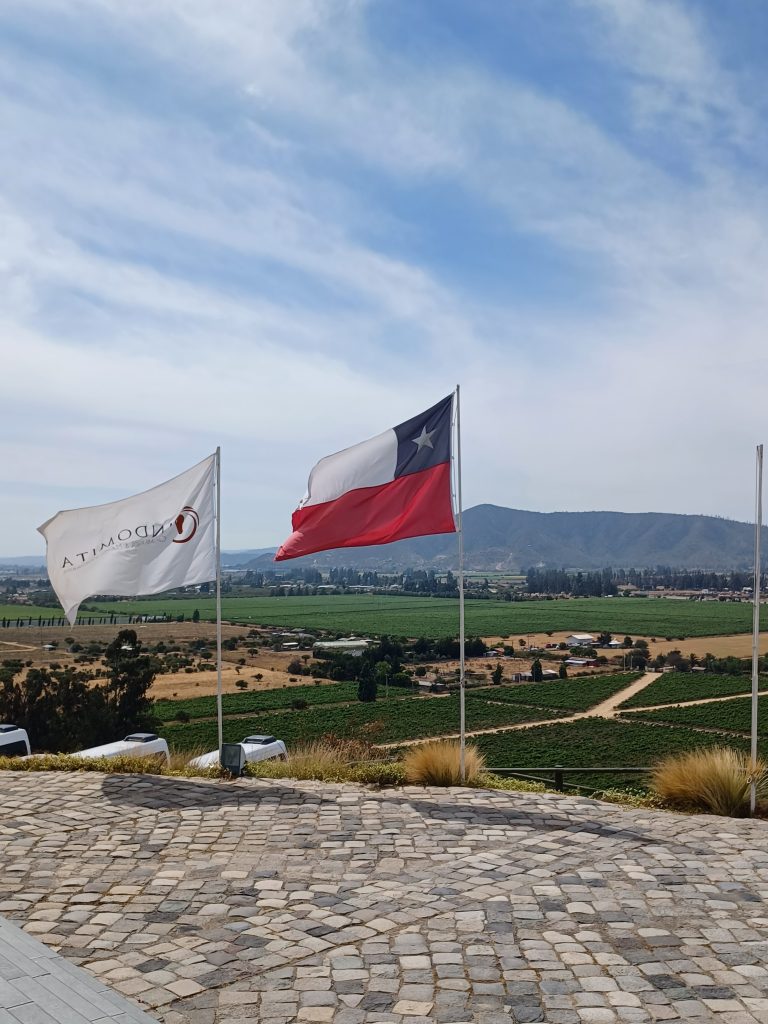
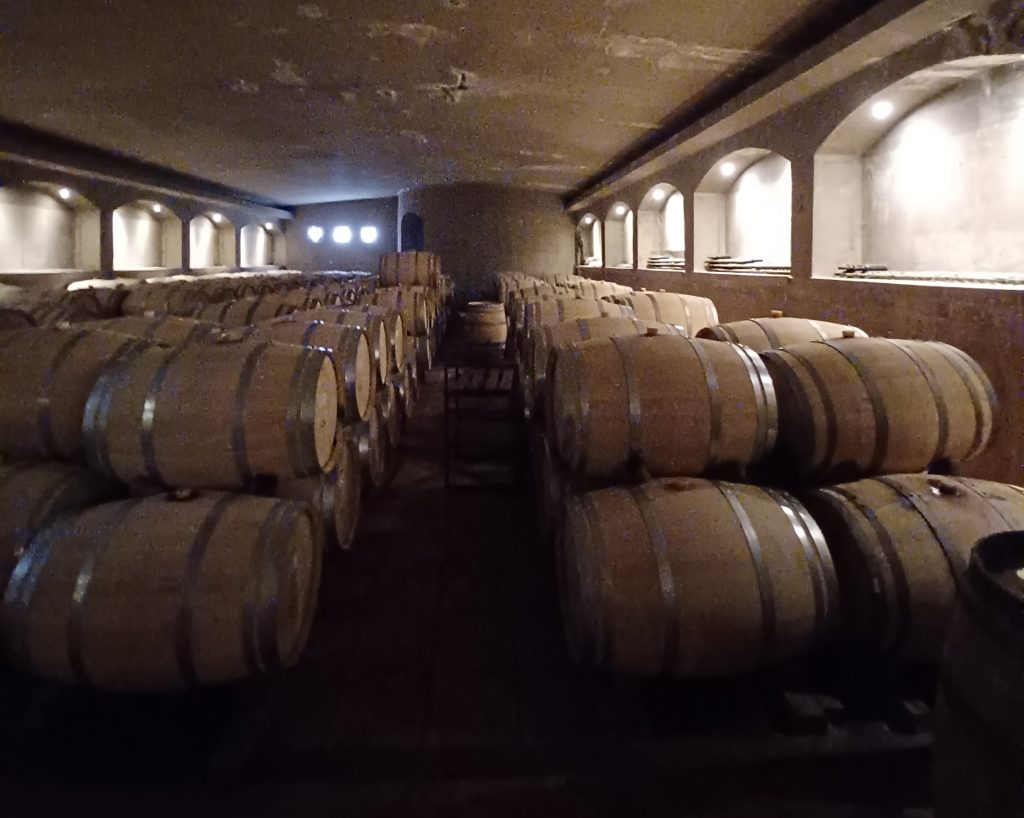
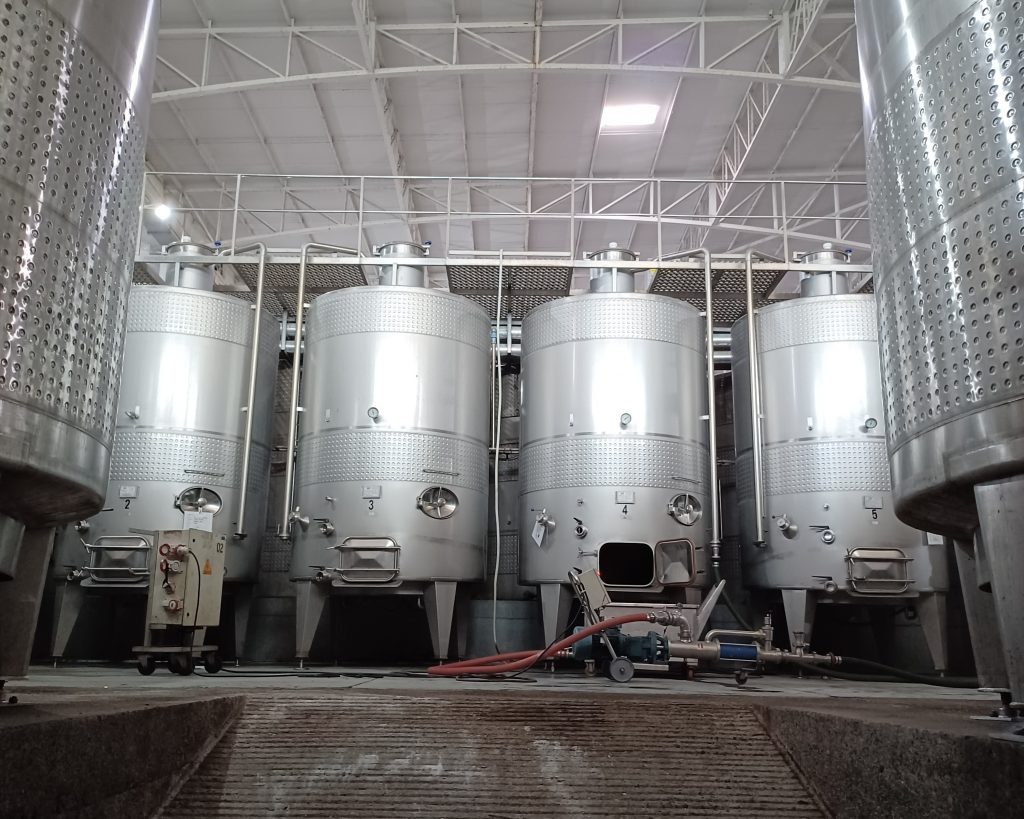
Lovely view from the terrace where the flags of Chile and the Indomita Winery fly jauntily in the breeze. Mosey around the interior for a bit, perusing the info before our guide invites us to “come and have a look down here.” Clearly he has been here with tour groups many times. Knows everyone. Nip down to the cellars therefore, to see the barrel room, full of barrels of the old tradition in one area and newer steel containers in another.
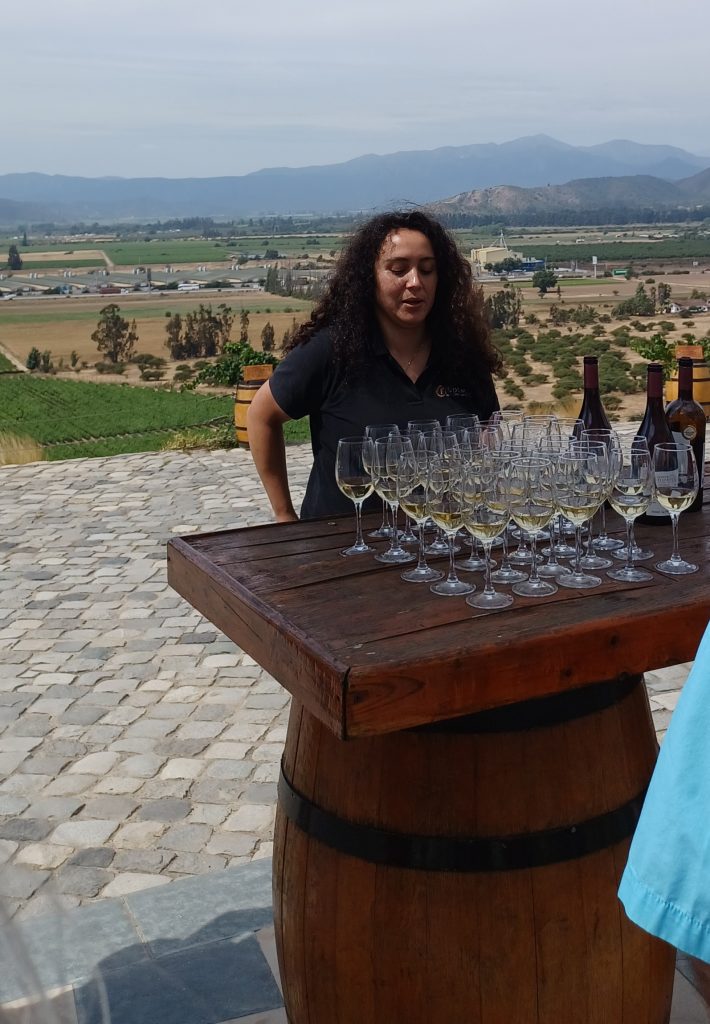
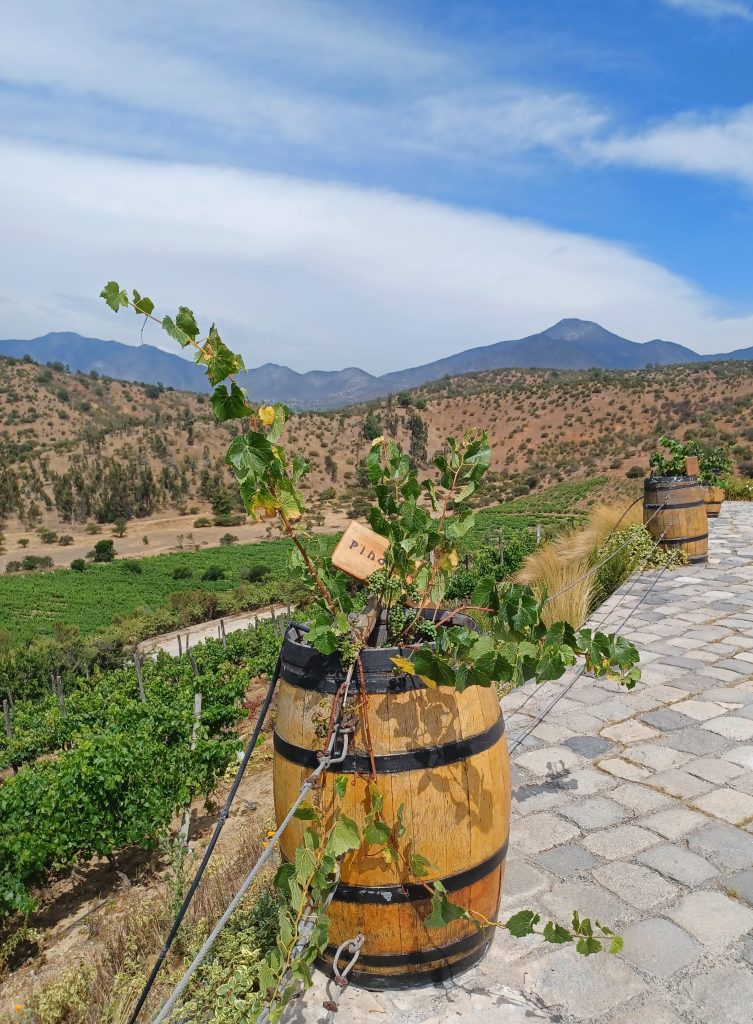
Then out on the terrace to listen for a moment while a young female employee presents the wines for tasting today. Glasses semi-filled and we amble about the terrace sipping or slurping, whatever one’s preference. Rather impressed with the wines, it has to be said. Usually shun New World wines, gravitating as a rule to the rows of French and Italian bottles in the supermarkets. Reminds me to be more flexible in my choices. Wander about the terrace in the sunshine, observing old barrels growing vines and the distant mountains beyond. By now, some of our party are drooped in chairs in restful pose, while I find another glassful of white for the grabbing atop the table. Beginning to feel somewhat mellow. A suitable finale to the day.
Santiago
Bellavista
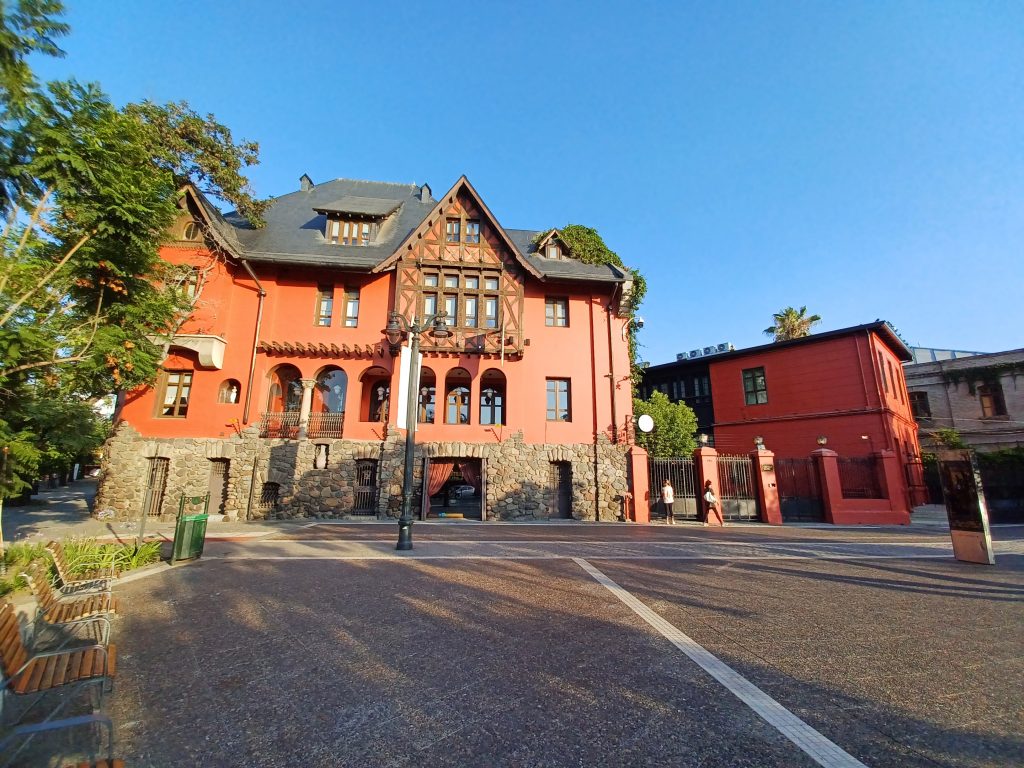
I’m staying in a different hotel in Santiago now. The city has several barrios or neighbourhoods. Makes sense to explore a couple of these from different bases. Anyway, I am now staying in ‘Castillo Rojo’, the Red Castle, in the Bellavista barrio. Rather gorgeous looking red mansion, designed in 1923 by Federico Bieregel Binge as a merchant’s residence, with a couple of steep pitched rooves, three floors and an attic. Now a boutique hotel. It is fortified like a castle too, actually. Swipe card to get through wrought iron entrance gates, swipe card to enter reception area, swipe card, swipe card. No lift, stone steps. Find a bottle of Chilean fizz in the minibar in my room. Gift from the hotel. How nice.
San Cristóbal Hill
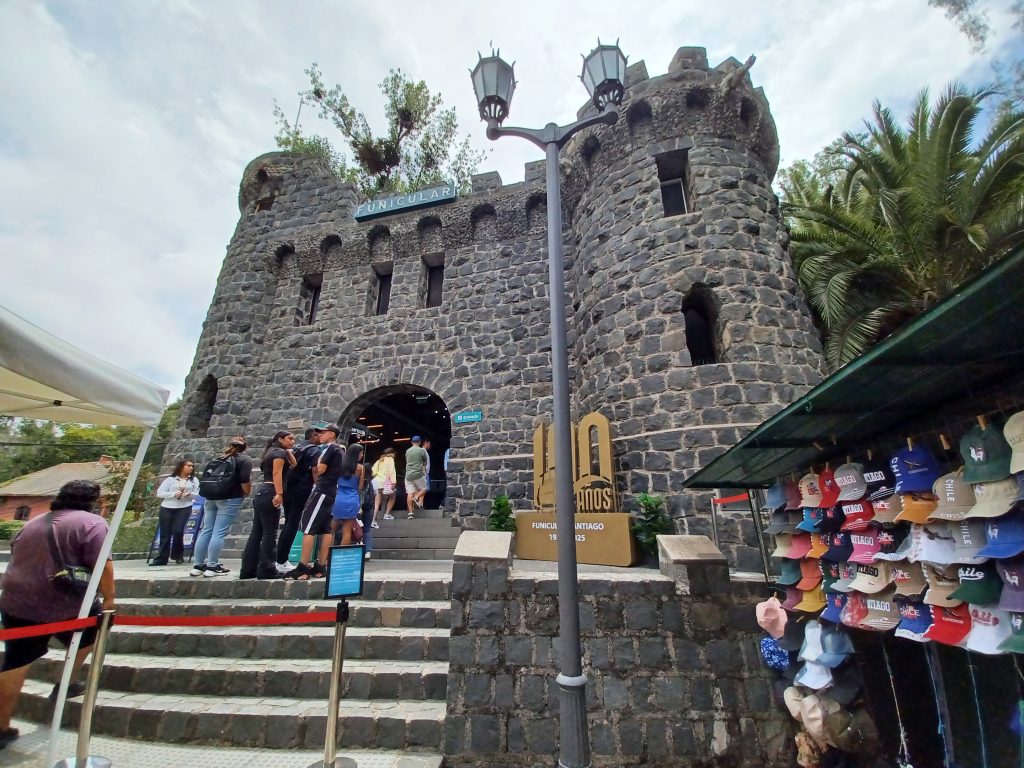
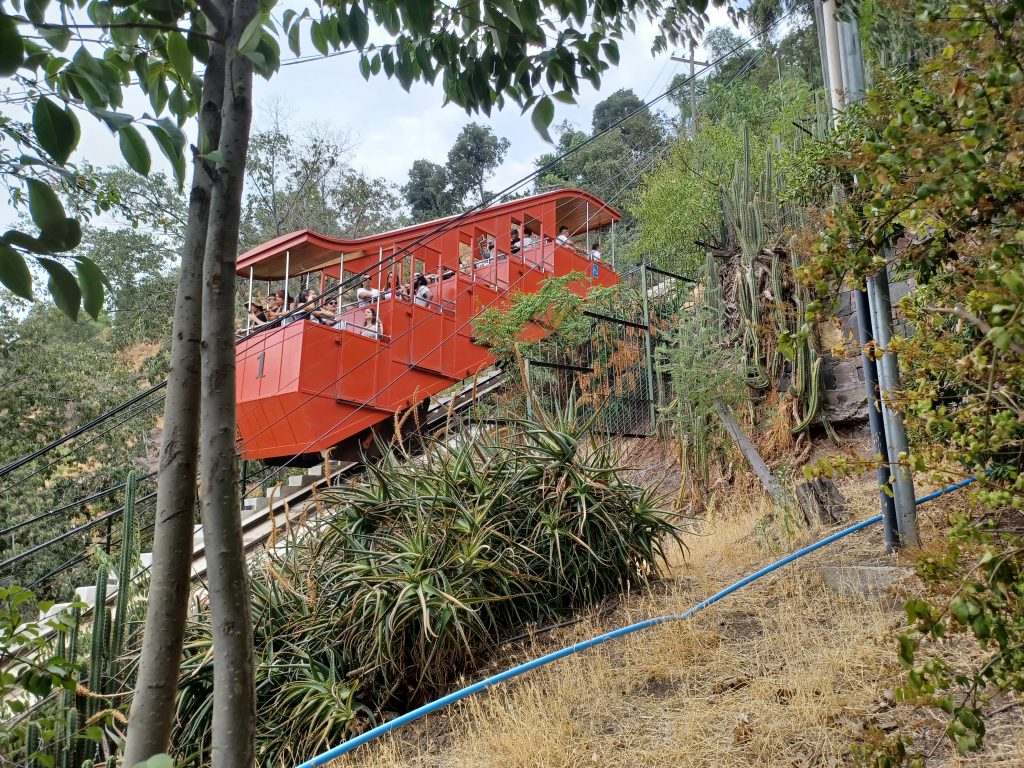
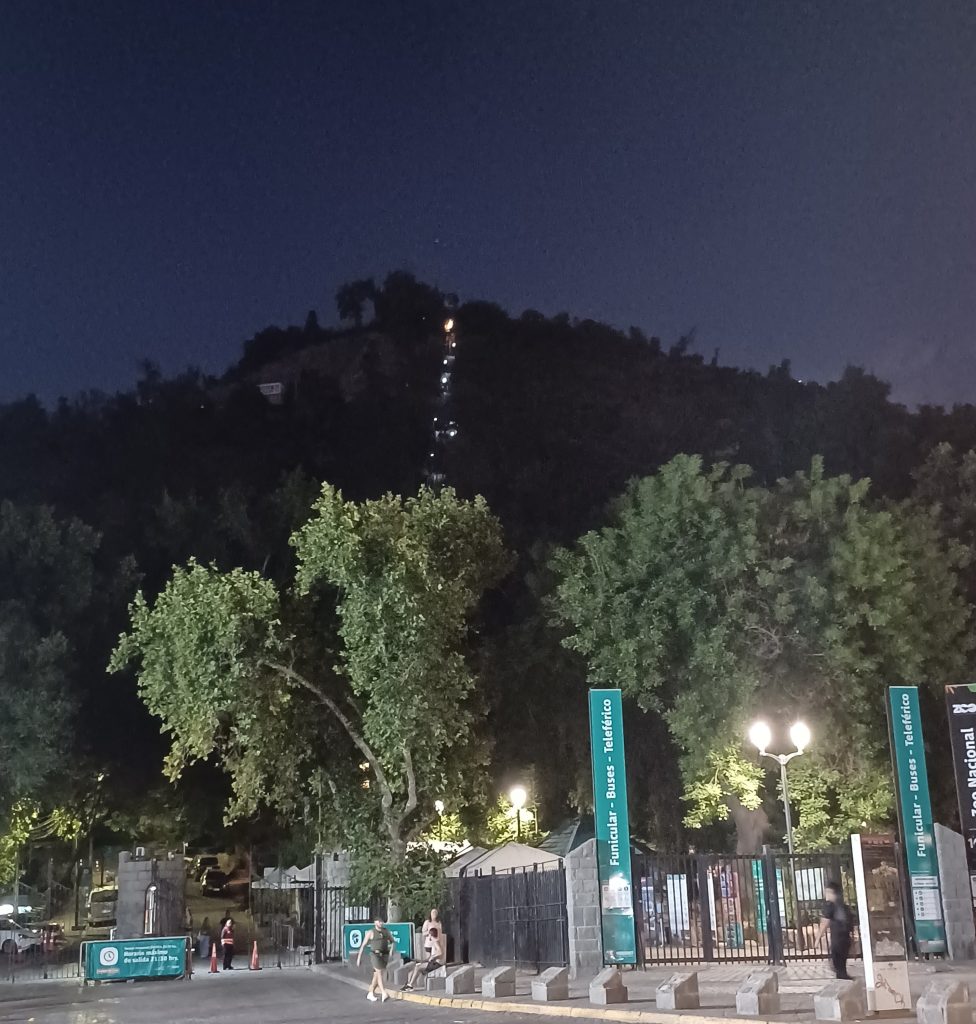
No visit can be complete without a ride up the funicular taking passengers up Cerro San Cristóbal very close by my hotel. Built in 1925. The entrance to the funicular is through a thick stone wall with an arched gate. Purchase a ticket and step into the funicular’s large rusty red coloured carriage and ascend in leisurely fashion, passing the National Zoo, to the top. There is only one track, until one gets to the middle section, when the two up and down carriages veer to separate tracks. Timed perfectly.
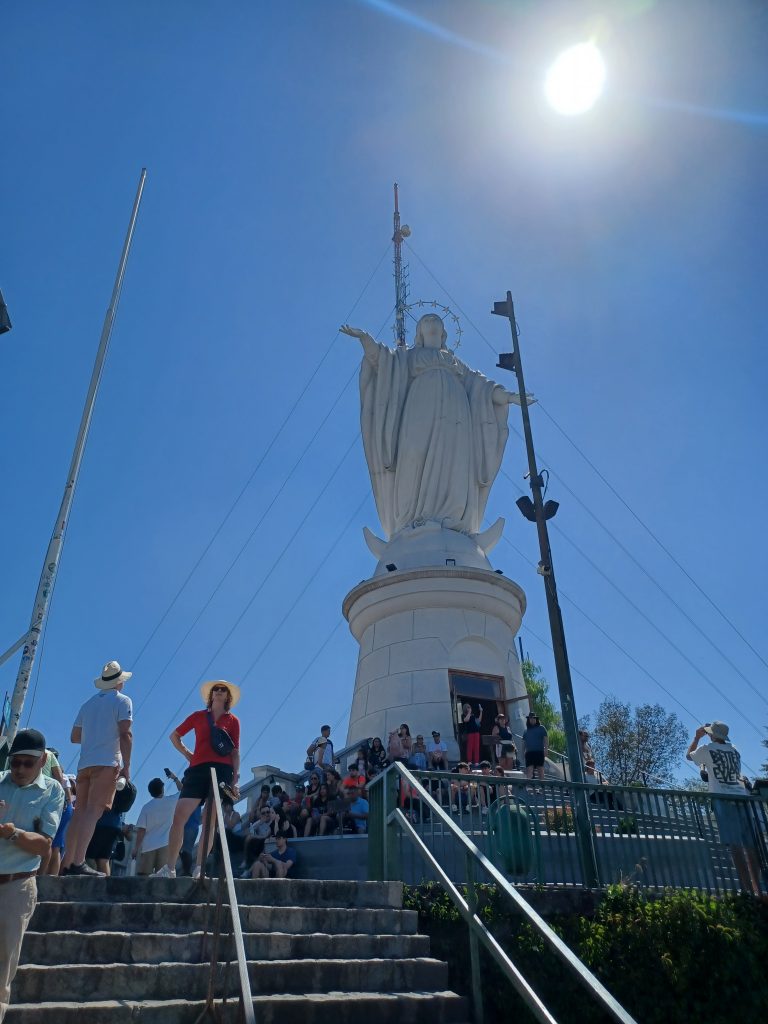
On top of the hill and visible from most of the city, I should think, is a bright white statue of the Virgin, the Sanctuary of the Immaculate Conception. The carriage pulls in to the station and I alight. Sweeping views of the Andes from here, albeit a touch hazy today. Above, the Virgin shines down upon the onlookers, most of whom are taking photos of her, while a female voice sings sacred words transmitted through large loudspeakers. So loudly that one cannot miss it. A notice board says ‘Silencio’. Not much chance of that.
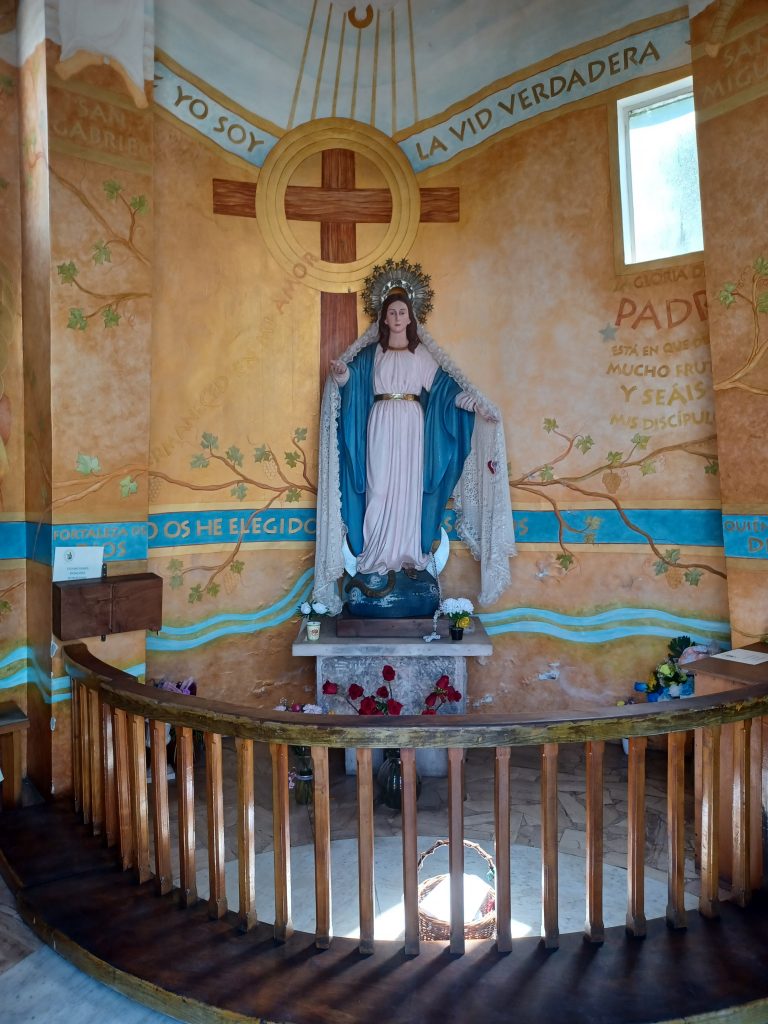
Wander up some stone steps to the Virgin, which looms in front of me. Donated by France, apparently, in 1908, and built of bronze. 45 feet high. In the pedestal underneath her is a doorway into a tiny chapel. Pope John Paul II came here in 1987, I gather, and blessed the city. Frescos on the walls. A major place of Catholic pilgrimage. Worshippers get down on their knees and cross themselves. I feel a bit of a fraud, lurking in the doorway. Soon descend a few steps down and close by where there is another larger chapel, in which devotees can spend time in further spiritual contemplation, if they so desire. I wander in here too. Rather nice.
San Cristóbal Hill is part of the large Metropolitan Park of Santiago, the largest in Latin America, apparently, which hosts two swimming pools, play areas for kiddies, as well as the National Zoo. A cable car takes interested folks up and down to another two stops. Desirous of having a quick flit over the park, I visit both stops, have a quick scout about and get back in again. Splendid view from the cable car over the largest tower in Latin America, the Sky Costanera. Impressive. Designed by the architect of Petronas towers fame in Kuala Lumpur. Big mall inside, if that sort of thing rocks your boat. Not mine.
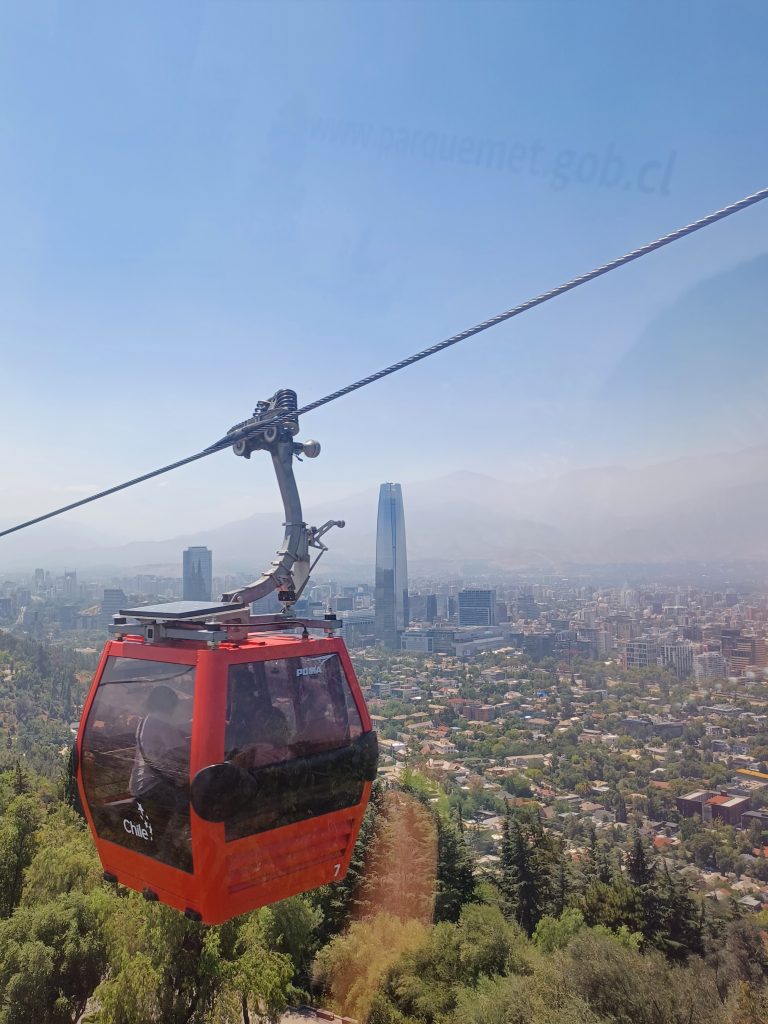
Travel back in the cable car with a pleasant Santiago family. My Spanish is inadequate, albeit I can make myself understood, but they all prefer to speak English anyway. After taking my leave, “Adios”, I head back down the funicular. Pope John Paul II was once a passenger in this red carriage, taking in these same views over the city in its haze, perhaps wondering whether the two carriages would pass each other without incident and contemplating the National Zoo alongside.
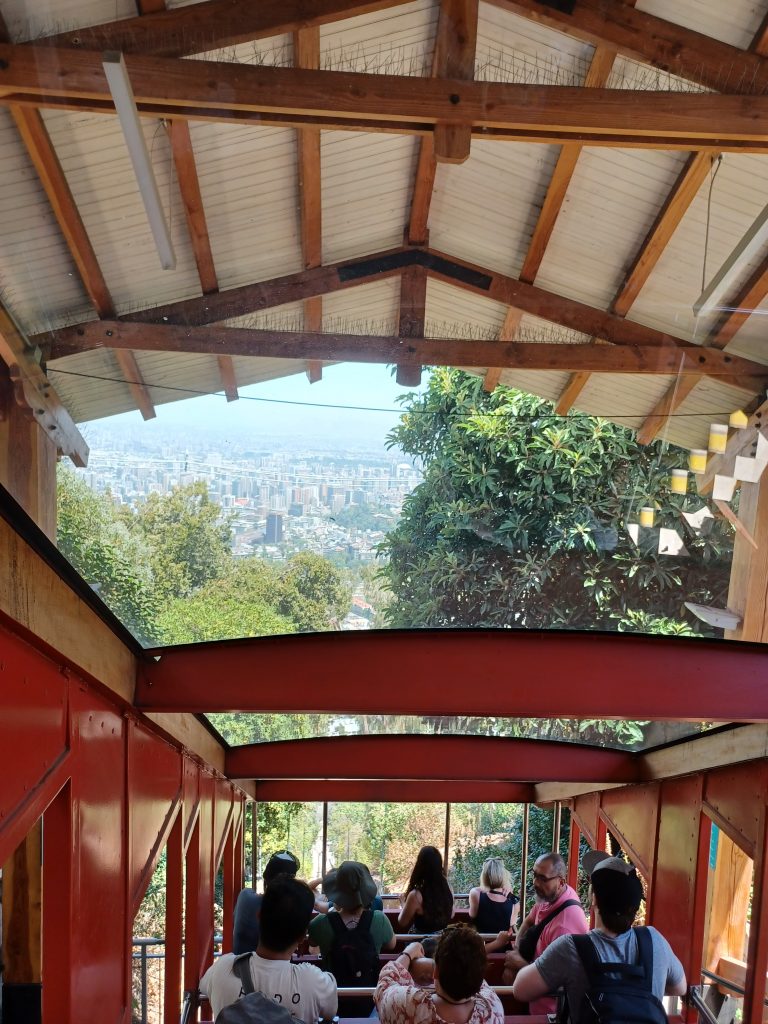
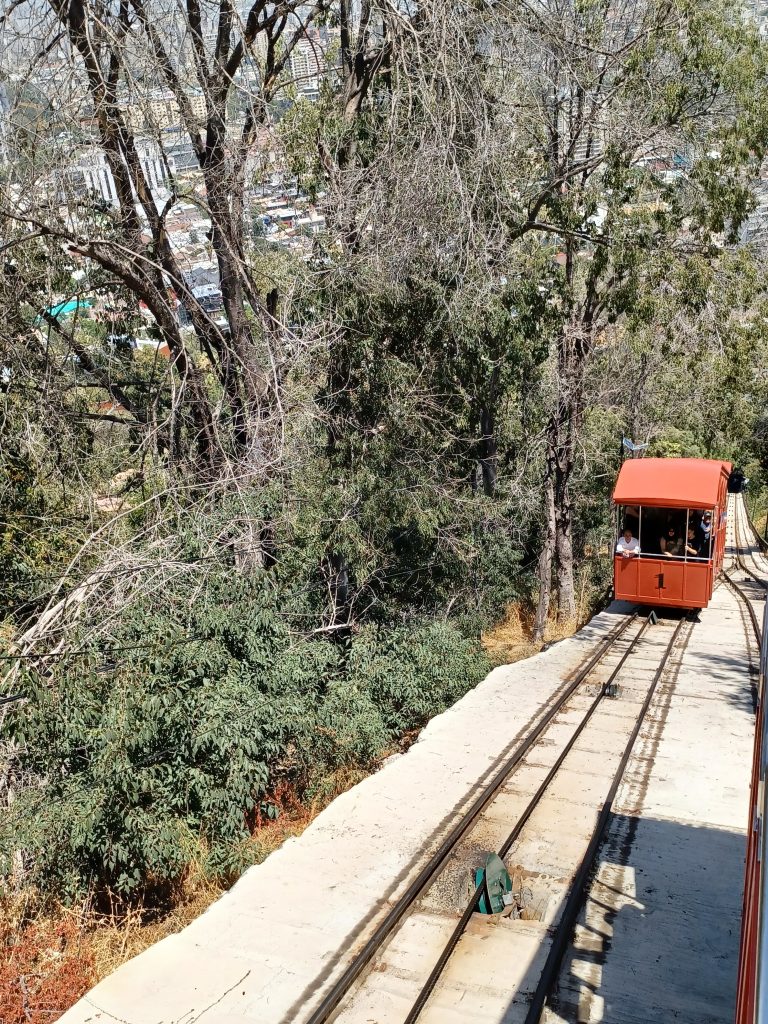
I take lunch in an Italian restaurant. Attractive eatery with murals of the leaning tower of Pisa, a strange looking gondola and the coliseum on the outside walls. And outside tables with red and white checked tablecloths. The waiter doesn’t speak Italian. Choose cannelloni. Tasty but clearly been in the microwave a few seconds beyond the necessary as slightly stiff and stodgy. Accompanied by Chilean red. “Cab Sav”. Take my time.
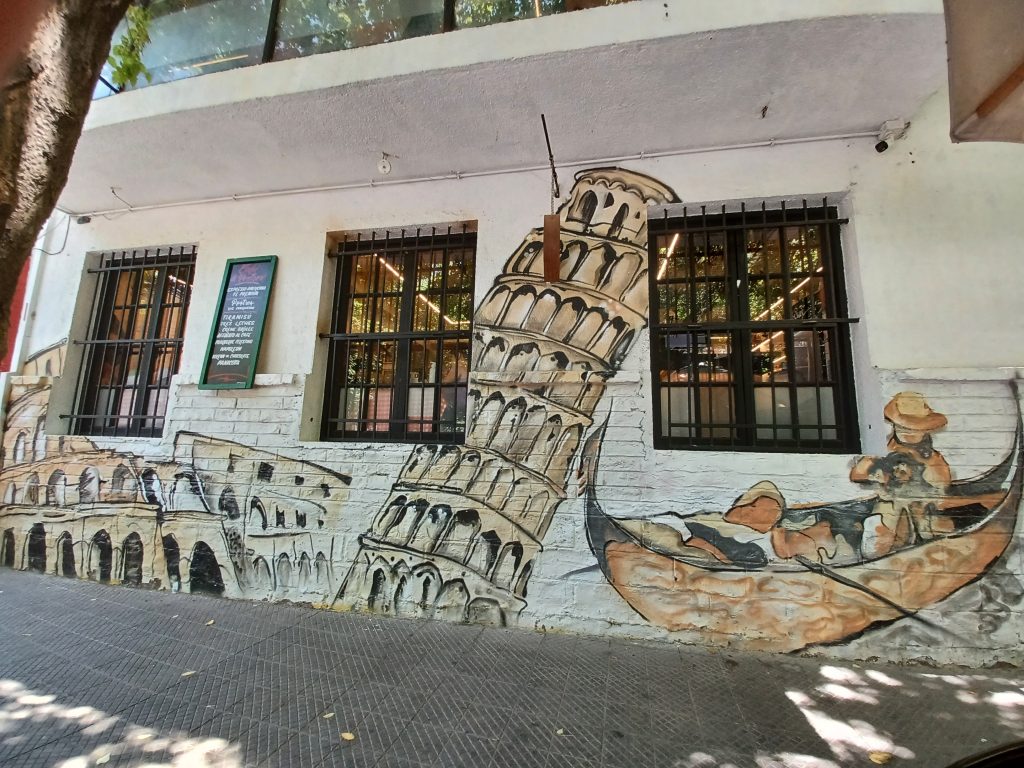
Pablo Neruda house – Museo La Chascona
At the foot of San Cristóbal hill very close to the funicular station and my lunchtime stop, is a quirky house, one of three that the late poet, Pablo Neruda, built. Neruda is highly regarded in Chile. Born in 1904, he grew up in the south in Temuco. As well as being a poet, he was a diplomat and was ambassador/consul to several countries, the last being France. He became a communist after his experience in the Spanish Civil war shaped his political opinions. Salvador Allende, the first democratically elected president of Chile, was a friend. Allende killed himself after Pinochet’s coup. Neruda himself died in 1973 and the perpetrators of the coup trashed his house. His widow, Matilde Urrutia, herself a brave and bold woman, restored it. At Pablo’s funeral in 1973, people were out in force to witness it despite the hostile military presence. Neruda won the Nobel Prize for Literature in 1971.
I buy my ticket to visit La Chascona. Just me. A good time of day then. Presented with an audio guide and told not to take photographs inside. OK. The house is built on a sort of series of staircases between small buildings, such as the small cabin with a ship’s bar and dining table lower down, to a sitting room mid-level, to a bedroom, thence along little pathways outside to his library. Here is his desk, his writing implements, and several medals, including his Nobel Prize, displayed in a case.
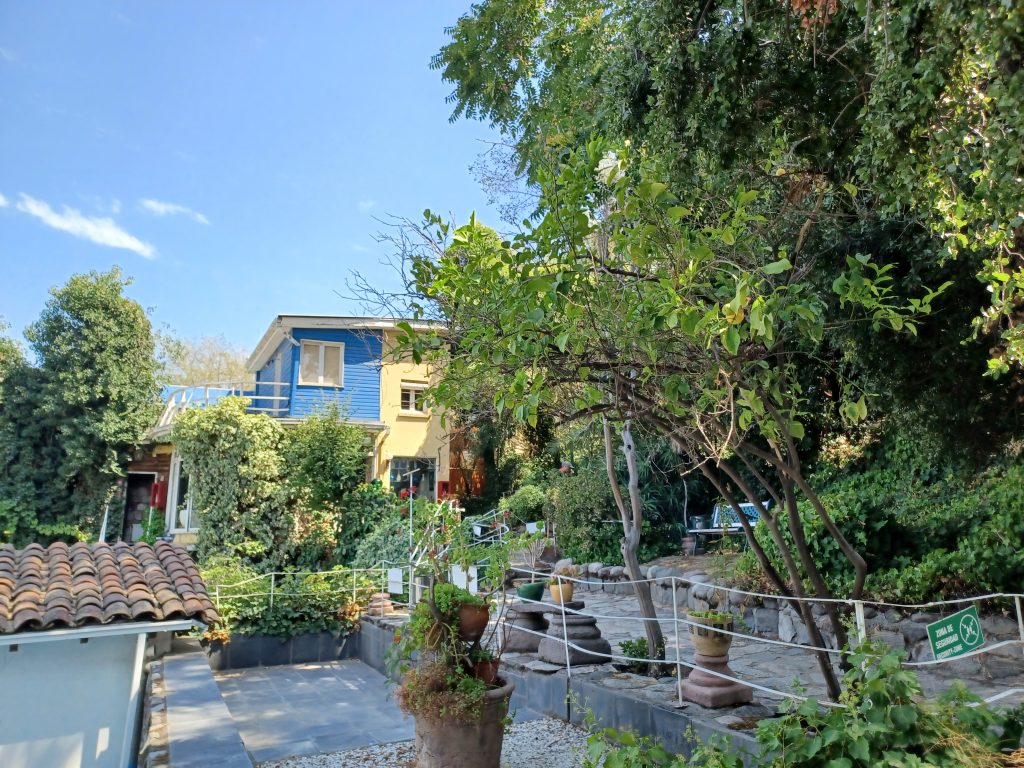
Packed full of artefacts and pictures picked up from his travels around the world, the house is adorned with Chinese paintings, local pottery, Mexican glasses, Rapa Nui (Easter Island) carvings, old maps and ship’s astrolabes. Eclectic mix. Pretty gardens. The site for the house was originally chosen for its views over the Andes, but these views are now obscured by modern buildings of acute ugliness.
In the souvenir shop, I buy a book of his poems, ‘Stones of the Sky’. Interesting. ‘An extended hymn to metamorphosis’, according to James Nolan, who wrote the introduction to the book. Whatever that means.
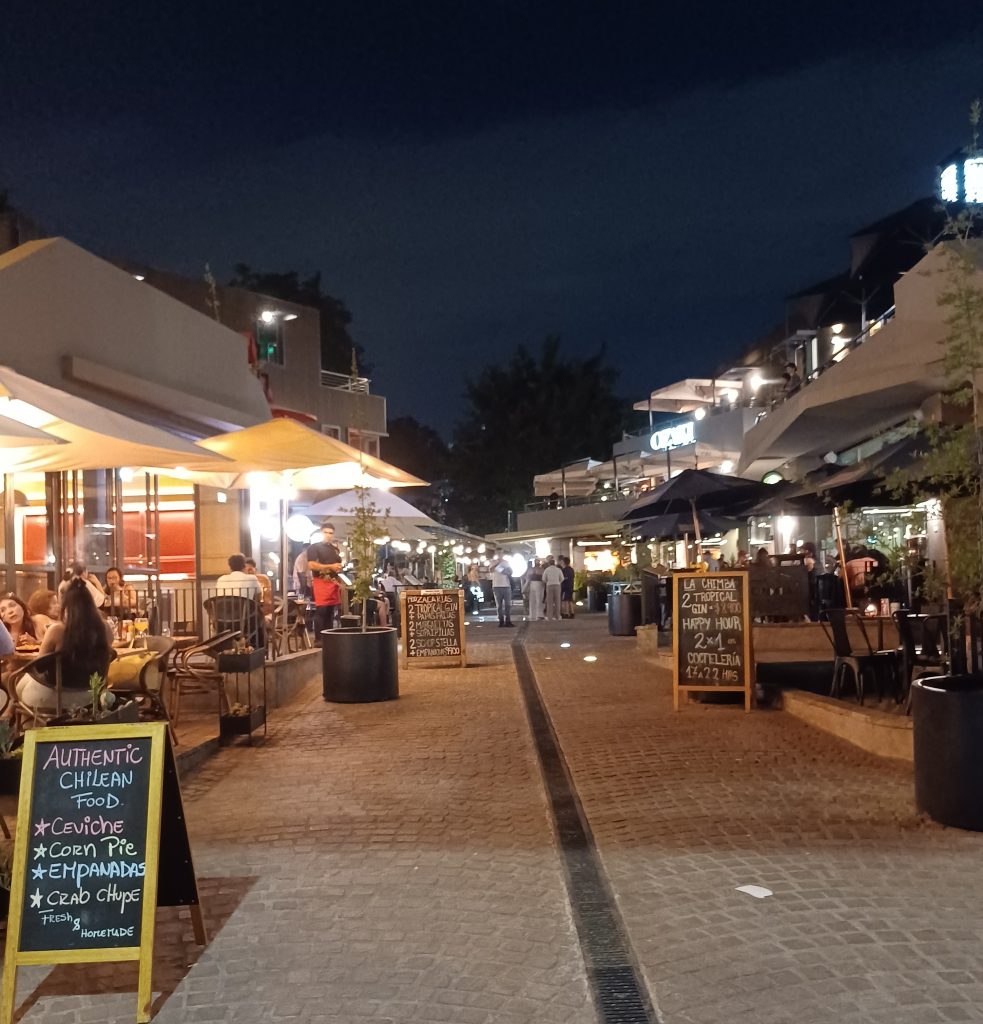
Amble the short distance to relax in my hotel before heading out into buzzing Bellavista in the evening cool. While sluggishly hot during my daytime exploration, I now feel energised. May be partly due to the free gift in my minibar. Had two glasses of that excellent Chilean fizz before emerging from the hotel. I walk smartly along the streets, now full of people occupying bars and restaurants, clubs with black dressed bouncers outside, loud music blaring from loudspeakers. Karaoke. Some queueing for a show or other, some dog walkers; an old chap lying on the pavement. He was there at lunchtime, I remember. Nobody takes any notice of him. Murals on facades of buildings are lit up. I find myself back at the funicular. Lights shine on San Cristóbal hill. Cars. Enter the square where sits my red hotel. Swipe my card. Into a haven of peace.


Leave a Reply