
Battlefield tour
I am joining a battlefield tour today with the same knowledgeable chap, who we soon find out, has guided several TV crews and military experts and veterans. We are going to go up as far as San Carlos, where the troops were landed, back past Darwin, Goose Green, various memorials around those places, and Fitzroy.
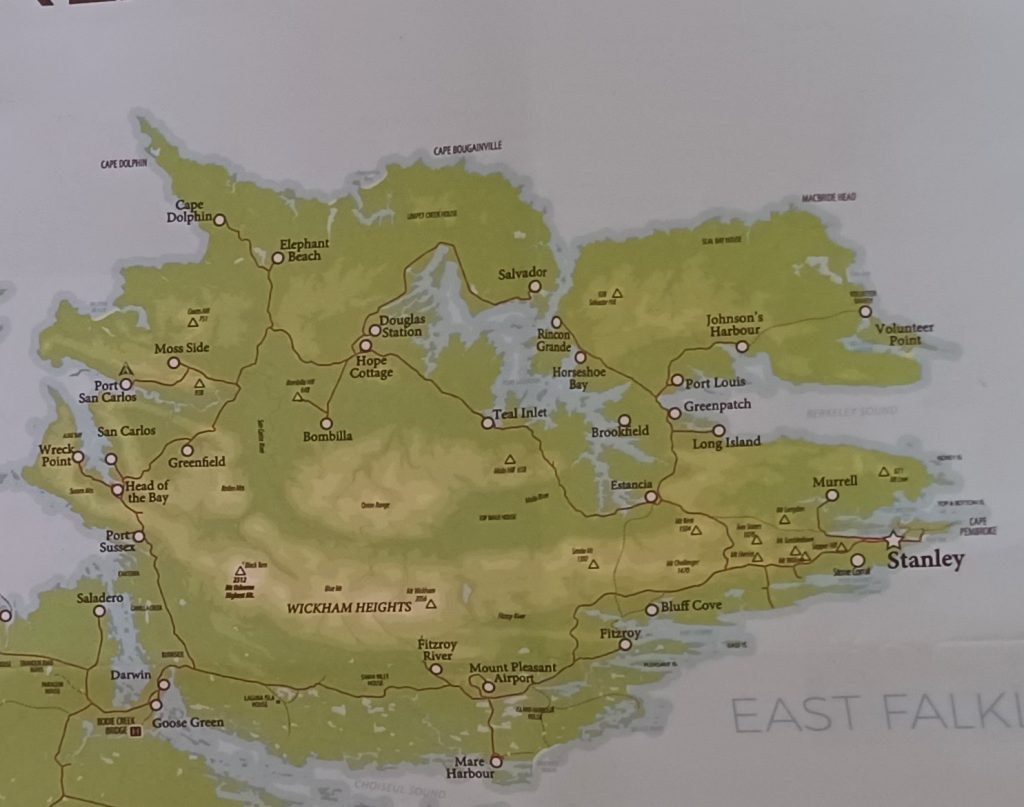
We follow the road west from Stanley, passing some of the hills which the commandos and paras held during many freezing nights. Upland geese are chomping the grass on the lower hills. Sheep, some cattle, the odd horse. And some of those stone runs cover some hills. These were mentioned in Julian Thompson’s book, ‘No Picnic,’ as being a nightmare to cross, especially by troops fully laden with kit at night. Brigadier Thompson it was who commanded 3 Commando Brigade during the war.
San Carlos Water
Beautiful San Carlos Water, an inlet in Falkland Sound, appears ahead. This was the spot where the South Atlantic Task Force entered at night to begin the mammoth disembarkation of troops and equipment. The inlet ‘formed a natural sheltered mustering point for the British troops’, who established beachheads, e.g. Blue beach 1 and Blue beach 2. On these beaches the 2nd Battalion the Parachute Regiment (2 Para) and 40 Commando Royal Marines dug in before their various battles with the Argentines. It was not long before the Argentines were alerted to the presence of the ships and the troop landings.
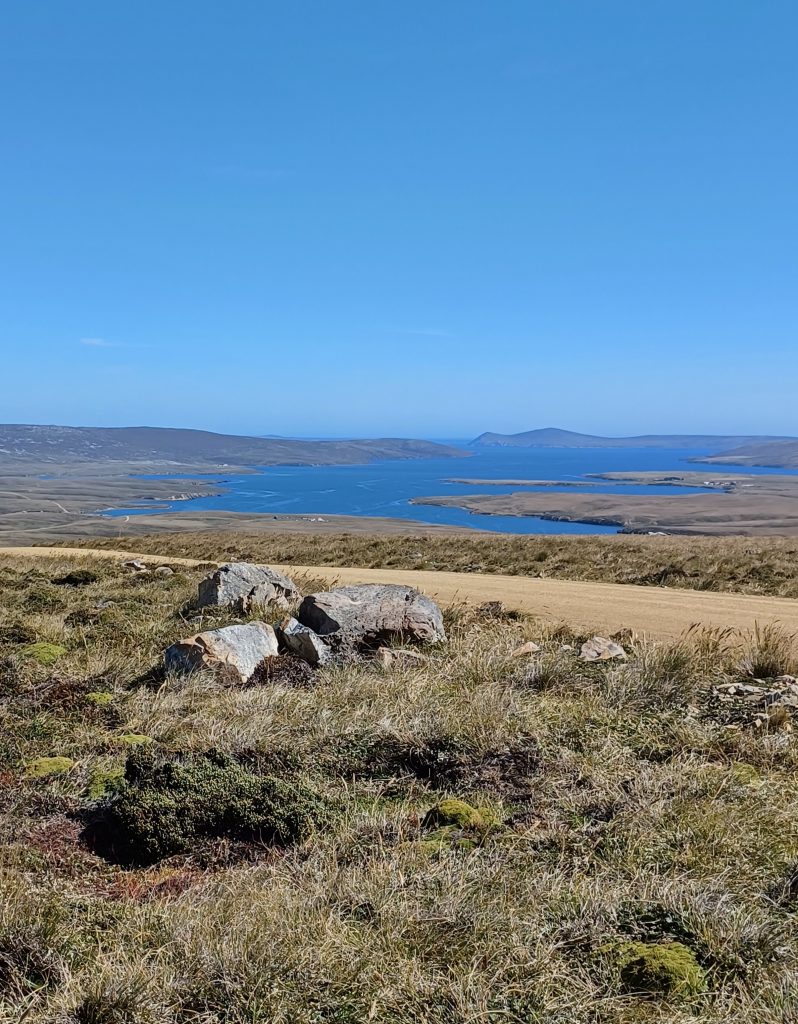
There followed five days of bombing and strafing of the ships. San Carlos Water became known as ‘Bomb Alley’. HMS Ardent was one of those that eventually sank here. Many sailors went down with their ships and ‘have no grave but the sea’. The wrecks have been subsequently designated as official war graves. Serene and silent now. Just bird song.
San Carlos Cemetery
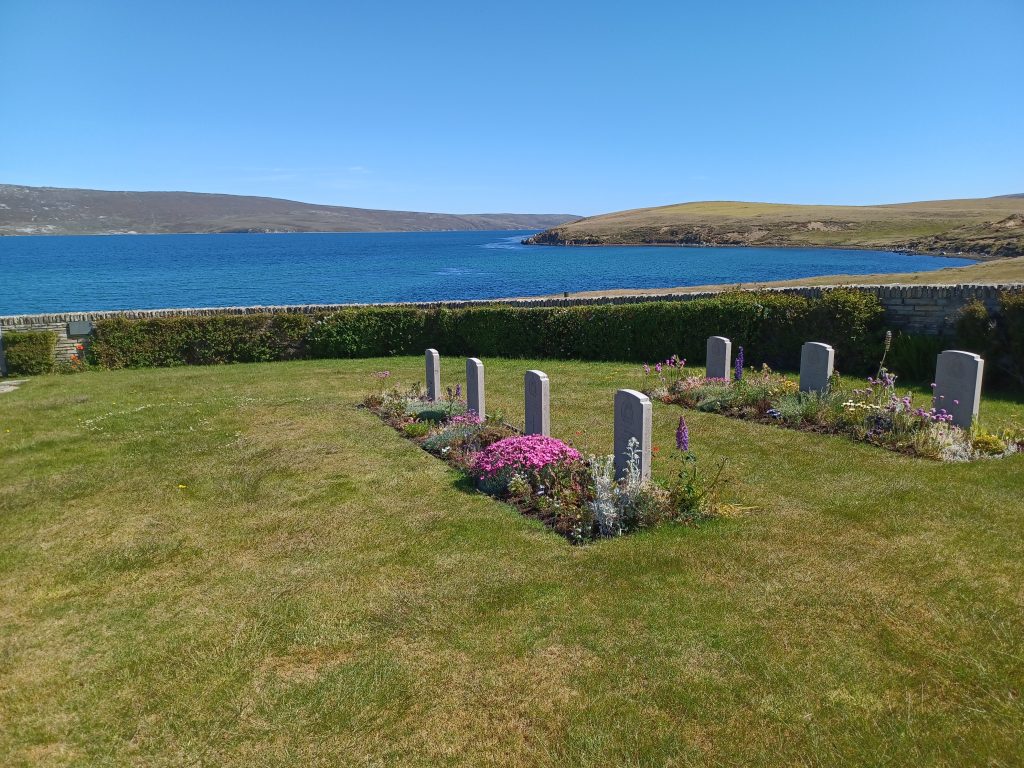
There is a cemetery at San Carlos, built to honour the soldiers, airmen and sailors of the South Atlantic Task Force who gave their lives. While some families requested repatriation of their sons’ bodies, others were buried here. We approach the cemetery. The graves of fifteen soldiers are here, including those of some Marines and Paras. One of their number is that of Lieutenant Colonel H. Jones, commanding officer of 2 Para, who died during the battle for Goose Green. Another is that of a young helicopter pilot, Lieutenant Nunn, Royal Marines, who was on his way to casevac the Colonel, and was shot down.
The cemetery was built by the Royal Engineers and others. It resembles a corral, not unusual on the Falklands. Corrals were first used for keeping cattle, later sheep. Remarkable circular sandstone structure – dry stone walling – with an entrance at the front. Not a bad resting place with its stunning view over San Carlos Water. Maintained by the Commonwealth War Graves Commission.
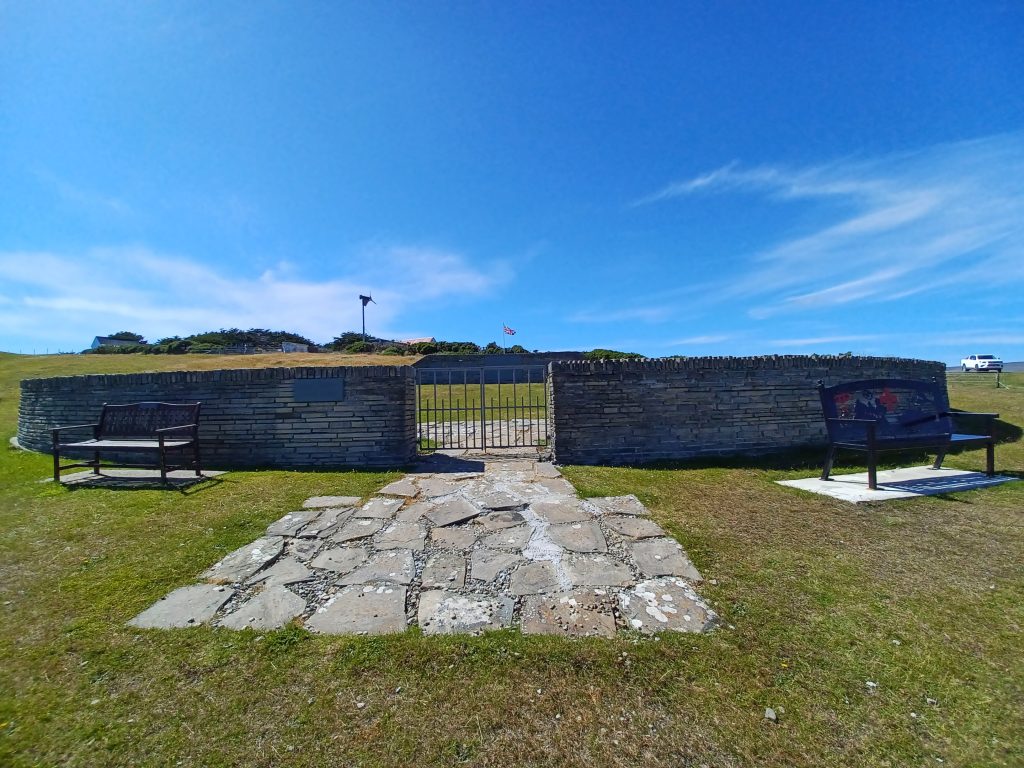
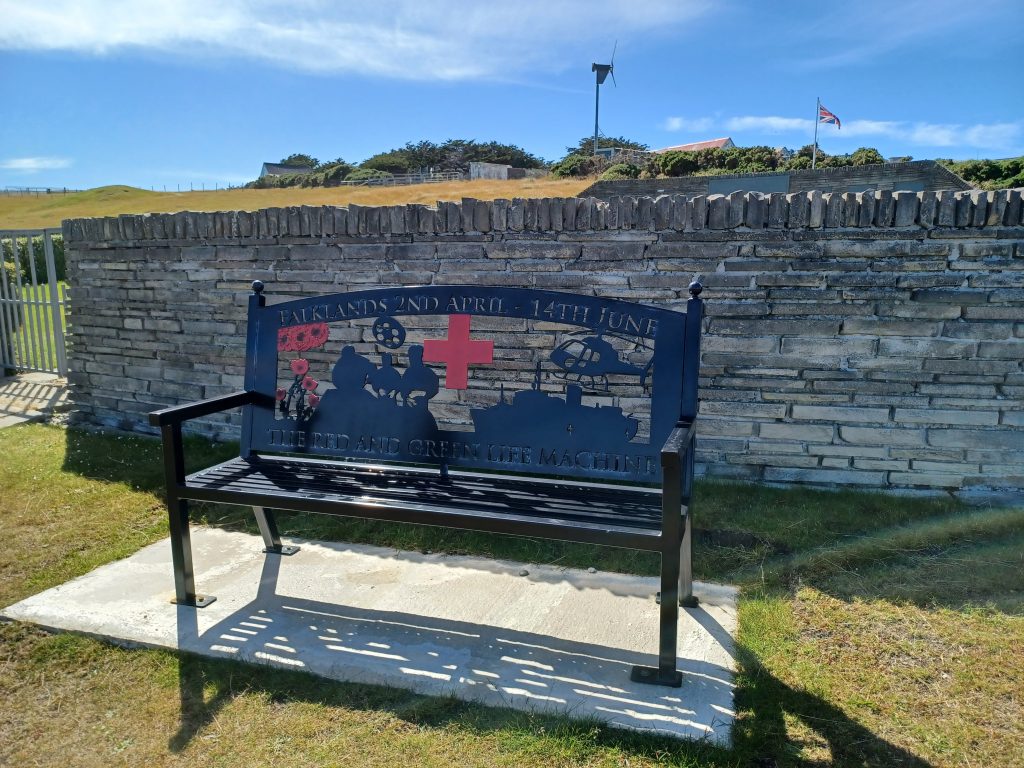
Two seats sit in front of the cemetery, one with the words ‘The Red and Green Life Machine’ with a red cross depicted on the back of it. A field hospital had been set up by Surgeon Commander Rick Jolly in a disused abattoir in Ajax Bay near San Carlos. Known as ‘The Red and Green Life Machine’ because the Para medics wore the red beret and Marine medics the green beret. In this field hospital they cared for the wounded and saved the lives of everyone who passed their way. Here too many of the Welsh Guards were treated. They suffered horrific burns after the ships they were on, the Sir Galahad and Sir Tristram, were bombed in Fitzroy.
Thence we head south towards Darwin and, on the way, stop at the Argentine cemetery with its bright white crosses. Our guide tells us that he regularly visits and removes plaques with abusive language thereon, which some visiting Argentines have placed there. These visitors still believe that ‘Las Malvinas’ are rightly theirs. 649 Argentines lost their lives in the conflict.
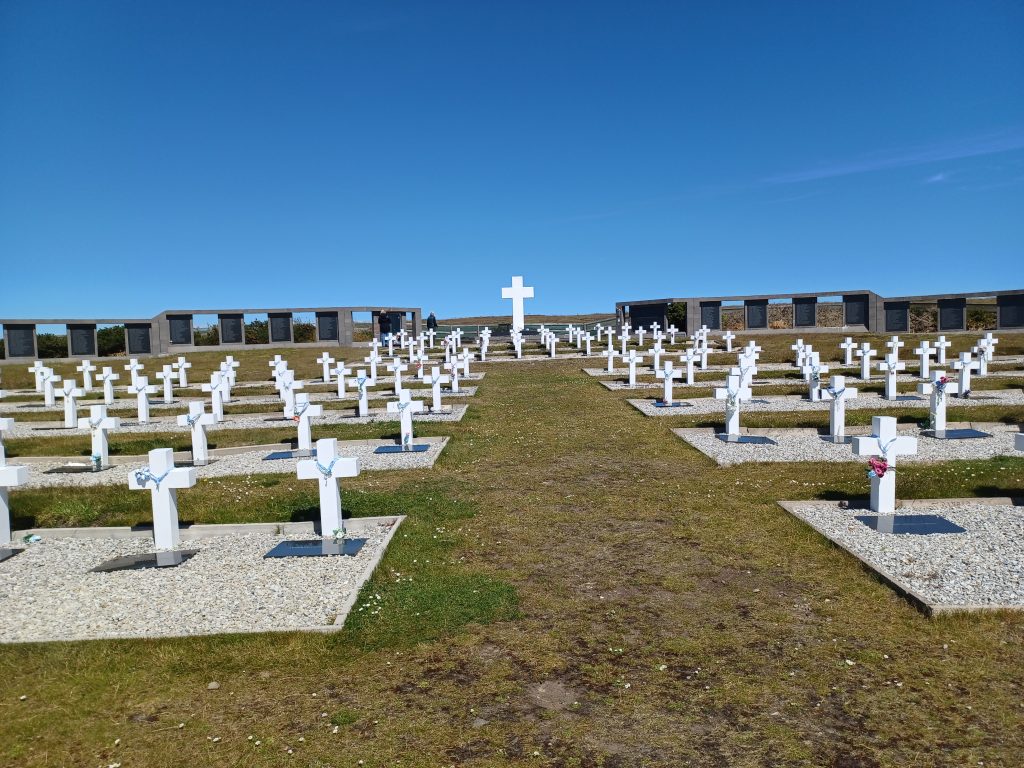
Some of those lives, however, were lost after the sinking of the Belgrano, rather than on the islands themselves.
Goose Green
It is a short distance by a road, which didn’t exist at the time of the war, from here to Goose Green. It is lunch time and located here is a café. Not worth emphasising you might think, but cafés are jolly scarce outside Stanley. This is the only watering hole within myriad square miles of camp to grab refreshments. The downside is that merely one man is preparing drinks and food for the multitudes. Takes a while thus. He gets the orders mixed up. But the victuals are good when they arrive.
Anyway, here at Goose Green a major battle took place. Victory was eventually achieved, a badly needed victory for the British and a turning point in the war.
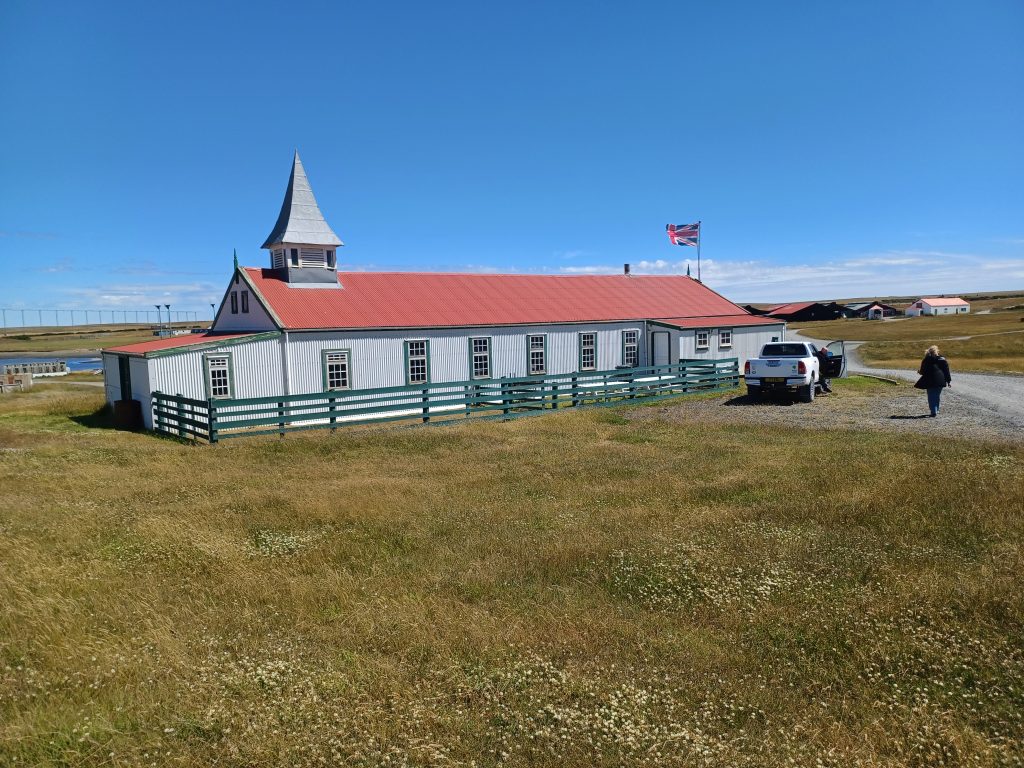
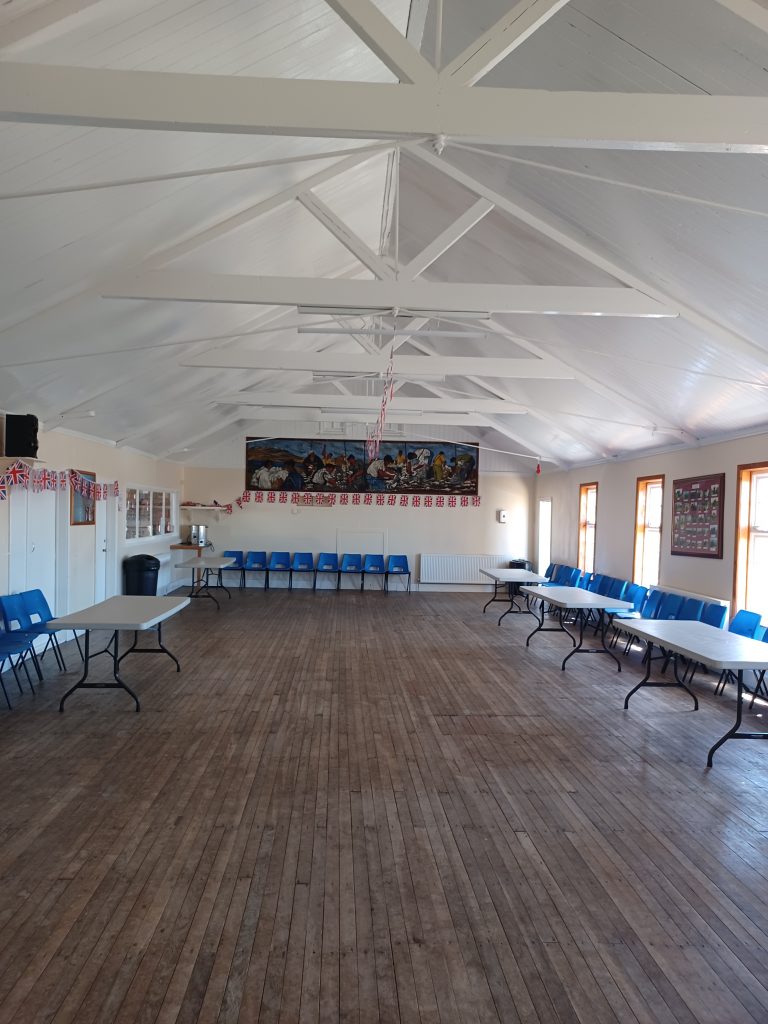
The Goose Green community of one hundred and twenty inhabitants had been cooped up in the community centre for a month by the Argentines before 2 Para were able to release them on May 29th, 1982. The community hall has resumed its intended function now and there is a small museum here. We enter in and peruse the info here assembled.
Margaret Thatcher visited here on 14 January, 1983, and was warmly welcomed. There is a framed photo of her in the museum. There is an assemblage of weapons too, including a Rapier surface-to-air missile, used by the British, an SLR, and Argentine rifle, mine and a mortar case laid out on a table.
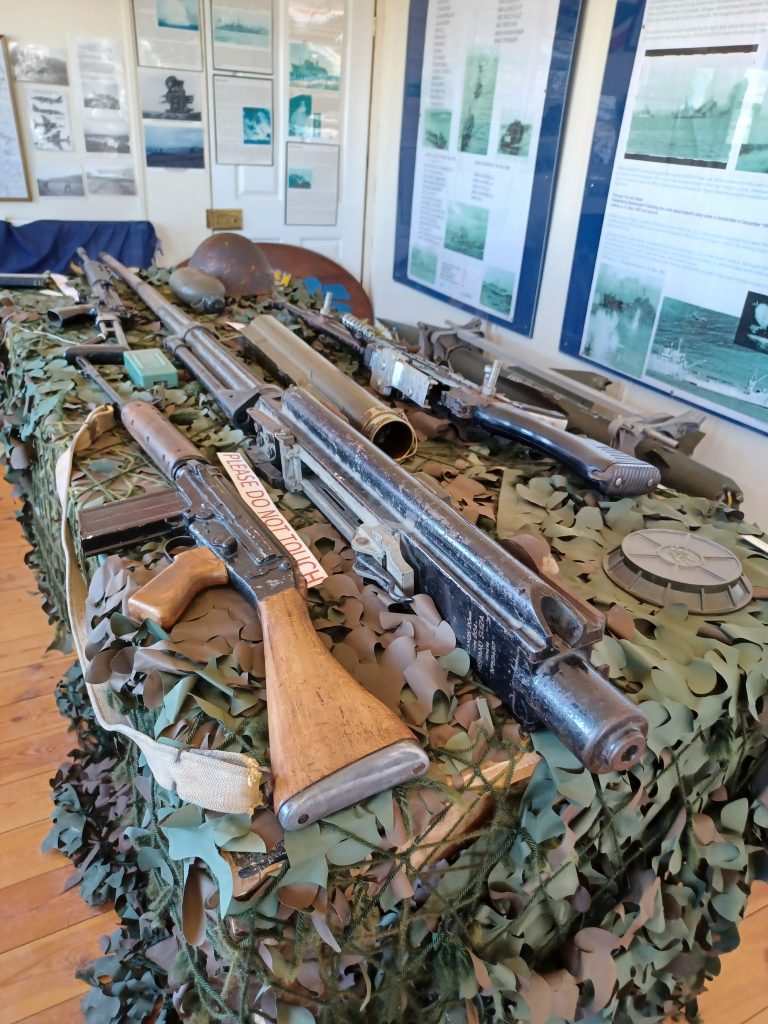
During the war, the Argentines laid mines all over the place. After the war, according to our guide, it was thought best to clear these without the aid of the Argentines, who might not be trusted to clear them properly. The British brought in experts from Zimbabwe to do the job. Some Zimbabweans stayed on to work here afterwards, as before mentioned. Hence the interesting mix of peoples here, which I didn’t expect.
Outside the museum are some sheep sheds painted black. At one time, the sheep shearing shed here was the largest in the world. It can hold 1000 ewes, and the first sheep was shorn in 1925. I have noticed a lot of recently shorn sheep as we have driven round, scurrying over the diddle dee as we pass. The land here is divided into several farms: Goose Green, Fitzroy, North Arm and Walker Creek.
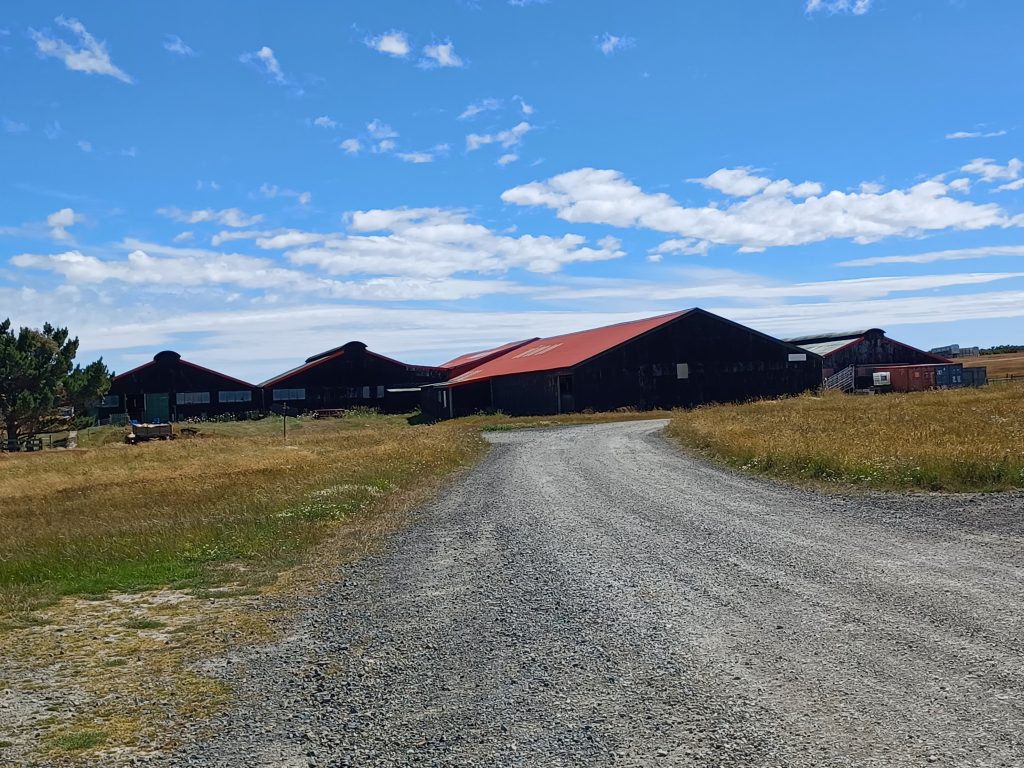
Owned by the Falkland Islands Landholdings Ltd., which is owned itself by the government. Anyway, according to the info here, these farms were later subdivided into smaller farms, totalling 308,000 hectares and holding 150,000 sheep.
Darwin
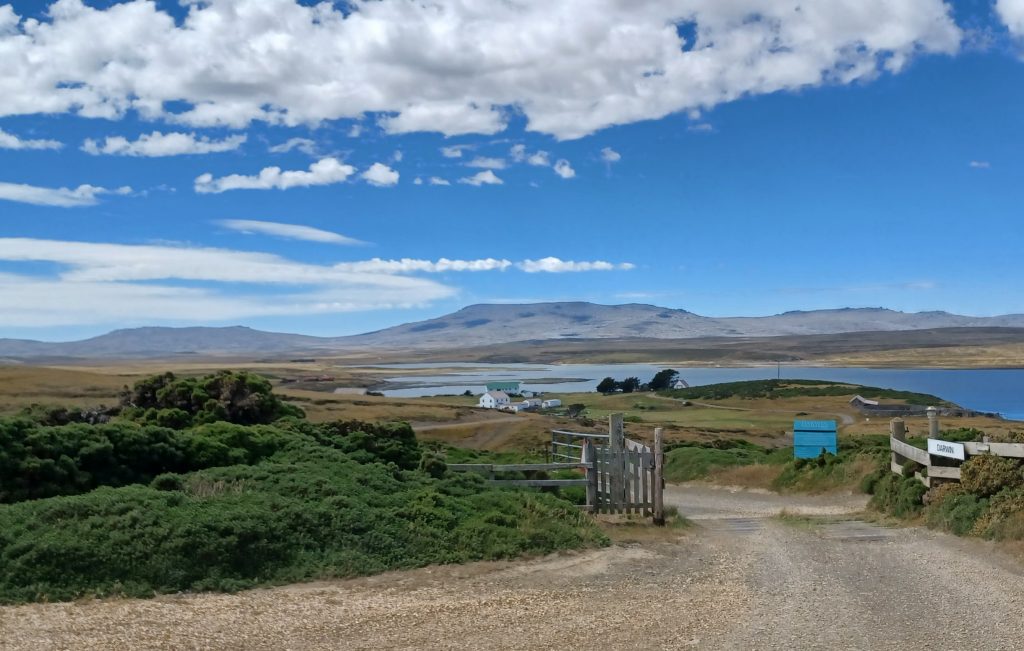
We retrace our steps a bit now to view the small settlement of Darwin, named after Charles Darwin, who was supposed to have stayed here. Pretty place. Initially used for cattle ranching, before being taken over by sheep. Some gorse bushes, brought in by Europeans, are wearing their gold coconut scented flowers. The gorse is spreading fast and can be a fire hazard, according to our guide. It also threatens native plants. North east of Darwin is Mount Usborne, the highest peak in the Falklands at 2,312 feet high.
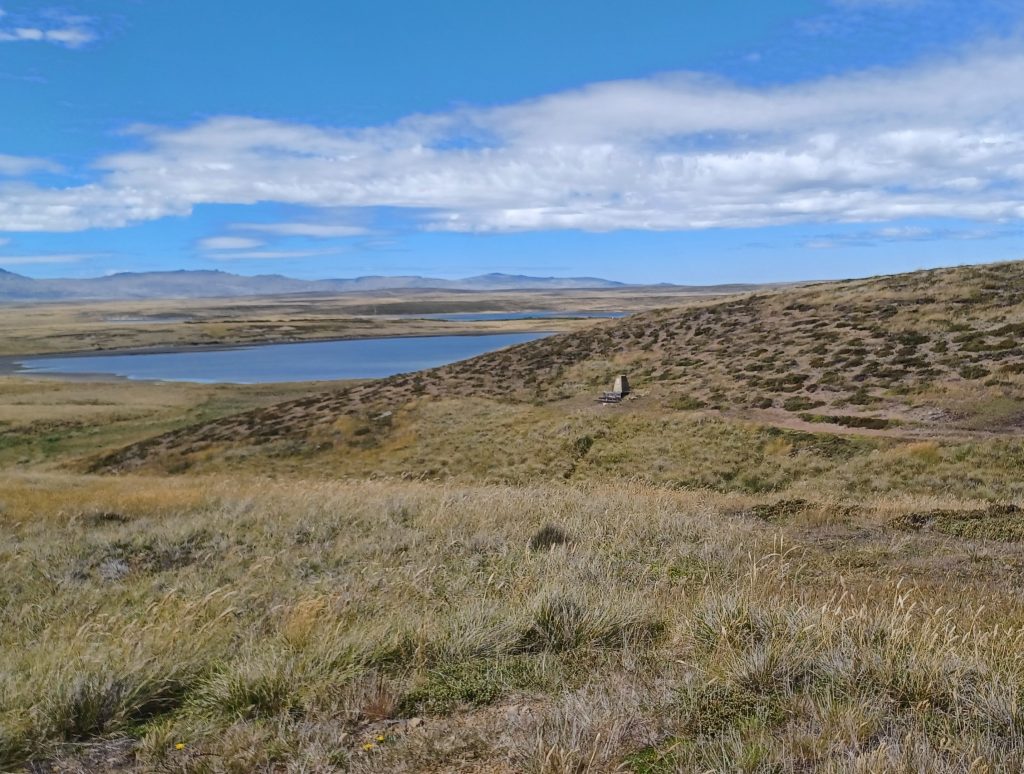
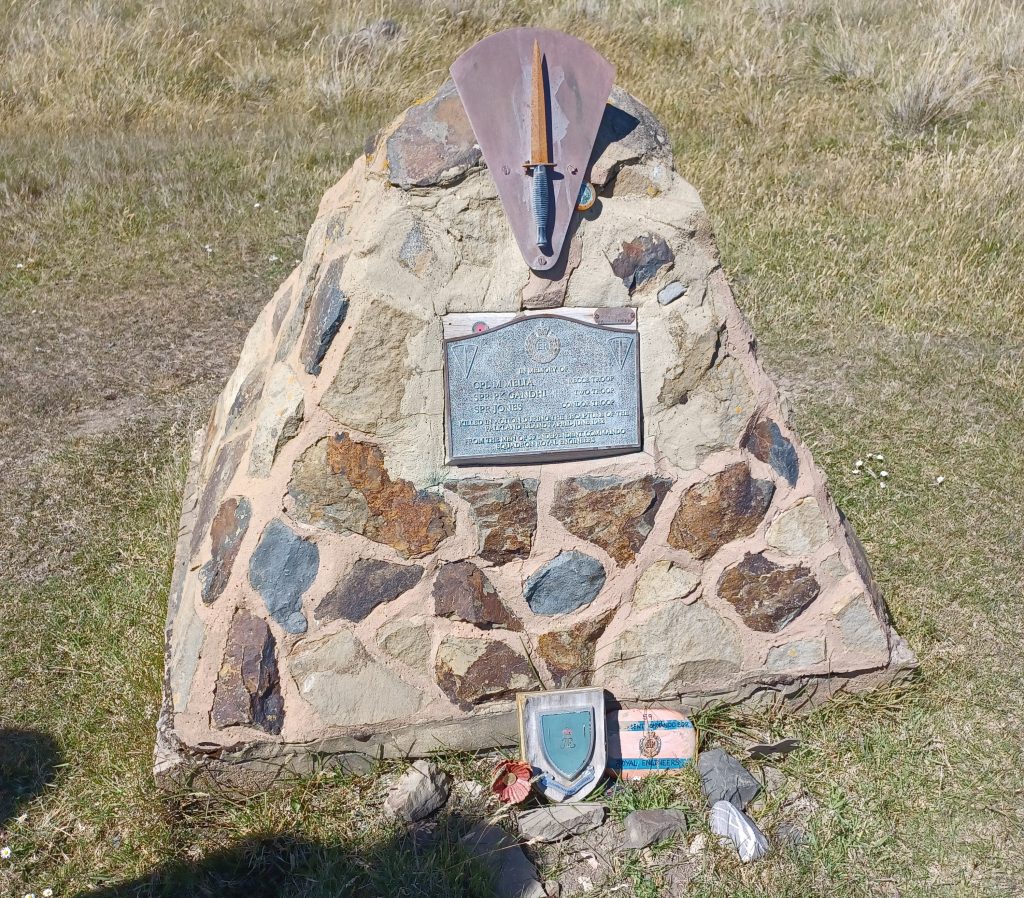
From here it is only a short walk to the cairn on Darwin Hill, marking the spot where Lieutenant Colonel H. Jones was brought down. A controversial figure, it turns out. H. Jones won the VC posthumously but info about the incident has since emerged, which doesn’t put him in the best light. Our guide enlightens us. Responsible for the deaths of several in the unit, he perhaps felt the need to redeem himself and impetuously rushed to attack an Argentine gun post. Not something a senior officer should be doing. Anyway he got himself killed. He was the highest ranking officer to lose his life in the conflict. His cairn is in need of a bit of TLC in my view. Close by is another cairn commemorating the lives of some men of 59 Independent Commando Squadron Royal Engineers.
Fitzroy
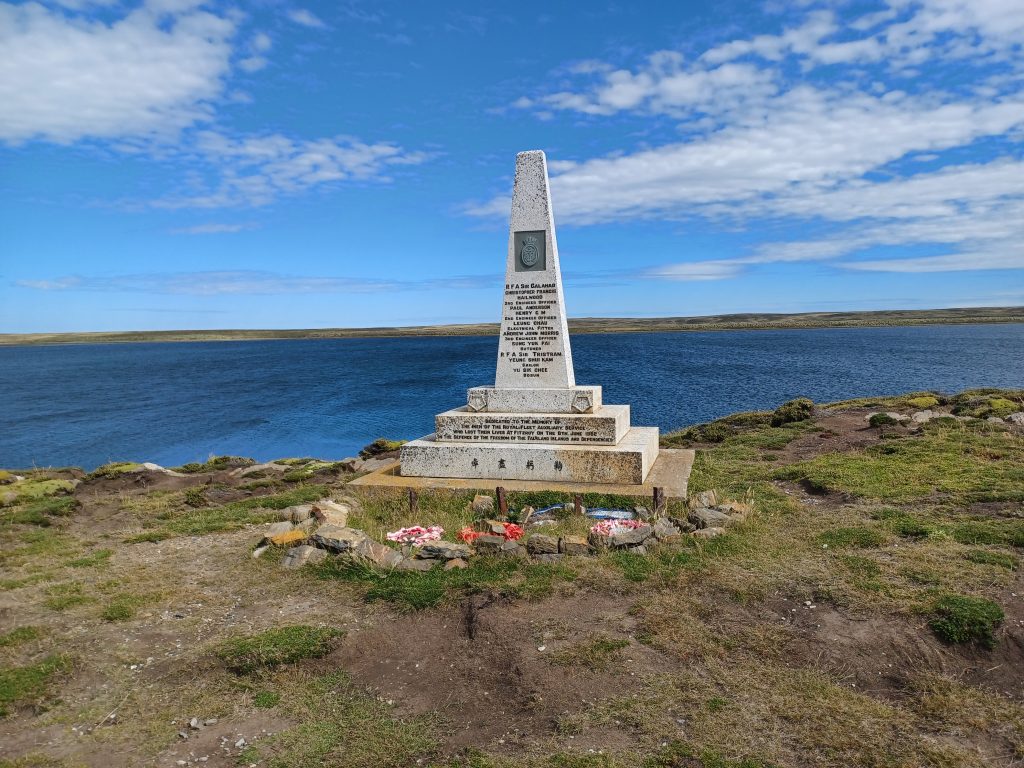
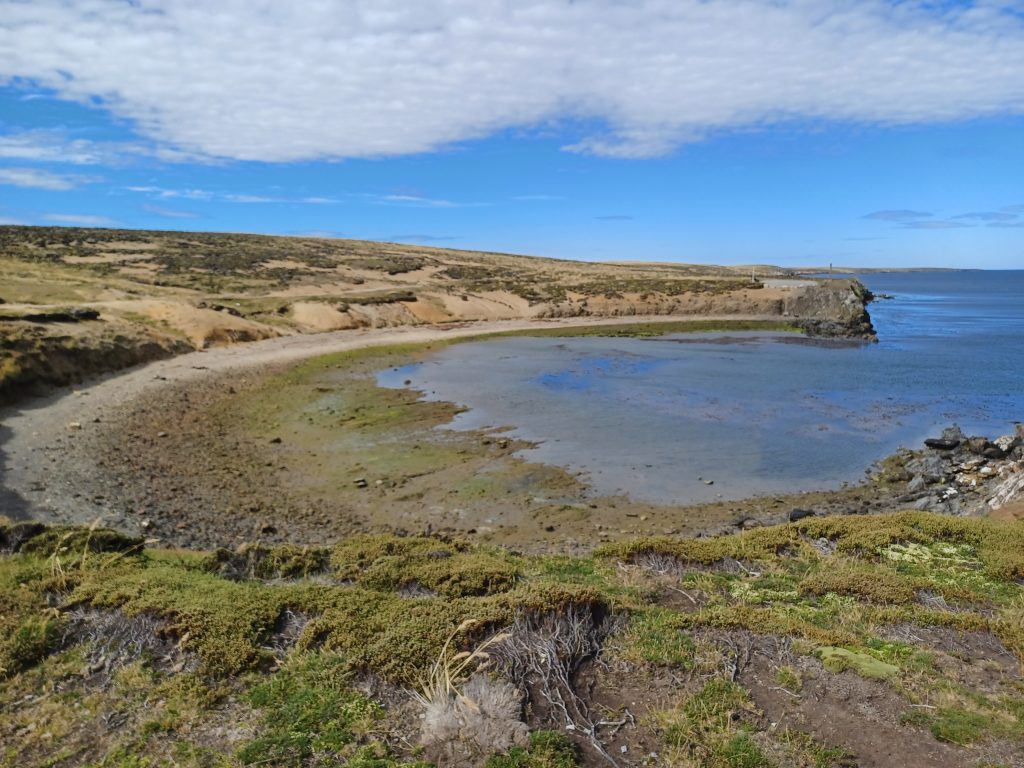
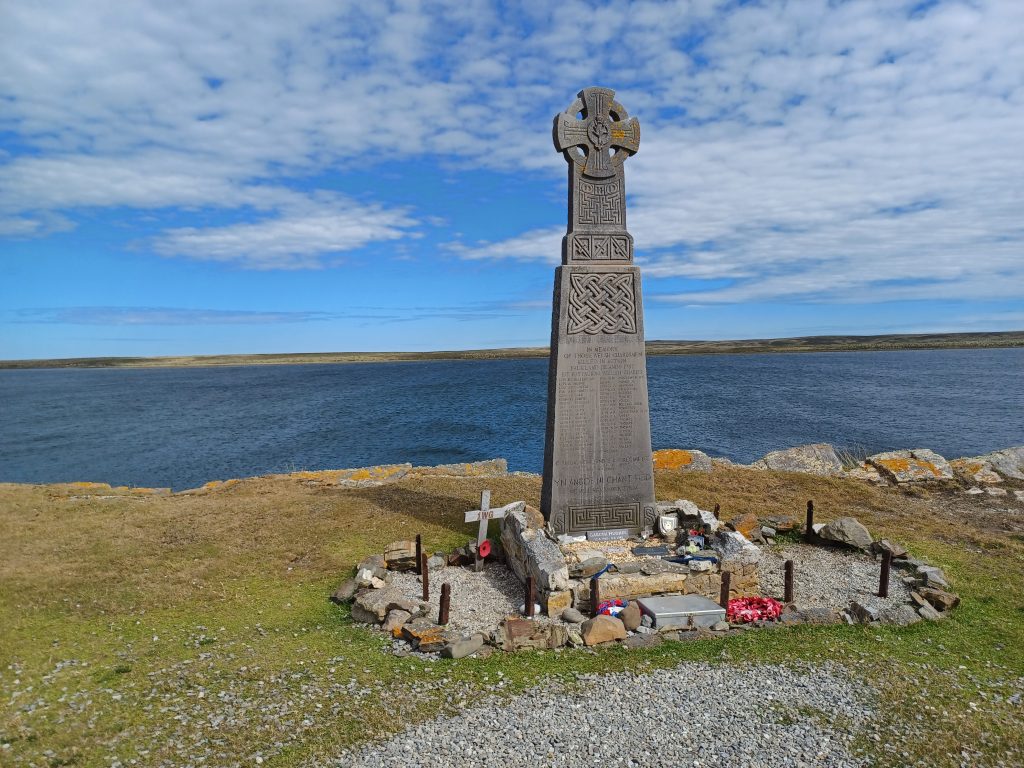
From here to Fitzroy, where the RFA (Royal Fleet Auxiliary) Sir Galahad and RFA Sir Tristram were sunk by bombs dropped from Argentine Skyhawks. Fifty personnel from the 1st Battalion Welsh Guards were killed, others horribly burnt during the attacks on these ships, which were sitting ducks. Fortunately, at least the medics had left the ship, our guide tells us, in the nick of time, and were able to tend to the wounded Guards on a little sheltered beach where they were brought ashore. Another lovely setting but sobering association. There are six memorials in this location, some with inscriptions in both English and Welsh, commemorating the Welsh Guardsmen as well as some Royal Engineers and Royal Army Medical Corps personnel.
Head slowly back to the capital. It has been a fascinating day. One more tour later in the week. Tomorrow is a day of rest.
Port Stanley
Today, I plan to meet up with a new friend, whom I met in Easter Island – as you do. She is an author of several books. Bought one. Thriller based in Burma. Anyway, she is voyaging aboard the ‘MS Fram’, an expedition ship heading to South Georgia and the Antarctic, but stopping at a few places in the Falklands, including Port Stanley. Shorty’s Diner is the venue for refreshments. I head up the steepish hill behind the waterfront to the rendezvous. Smashing weather. One of those bright bedazzling mornings, flighty clouds, tranquil waters.
Good catch up with my author friend. Have said it before but when one travels one meets all sorts of interesting folk, folk who have seen much of the world and achieved many things. These are the people who inspire me to continue roaming the globe. Tennyson’s Ulysses it was who said ‘… all experience is an arch wherethro’ Gleams that untravell’d world whose margin fades For ever and for ever when I move.’ ‘How dull it is to pause’, he persists, and continues: ‘And this gray spirit yearning in desire To follow knowledge like a sinking star.’ Hmm. Something in that. My friend has to be back aboard for 1530, so we part company, she her way and I mine.
There is a Memorial wood close by Shorty’s, into which I wander afterwards. It is so delightful out, far too lovely to head hotel-wards and inside. Meander through the wood, looking at a few memorials of those who lost their lives in the Falklands war, downwards to the long grassy frontage on Ross Road East and head towards the FIPASS, the Falkland Interim Port and Storage System, where the Fram is moored. It is some way away.
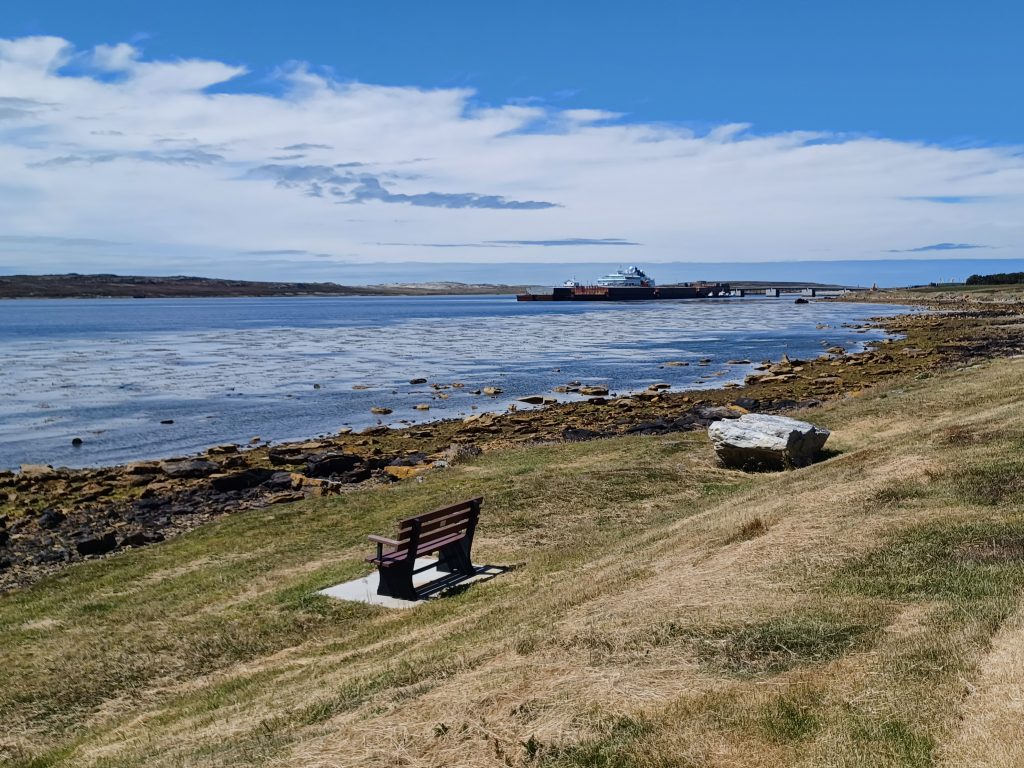
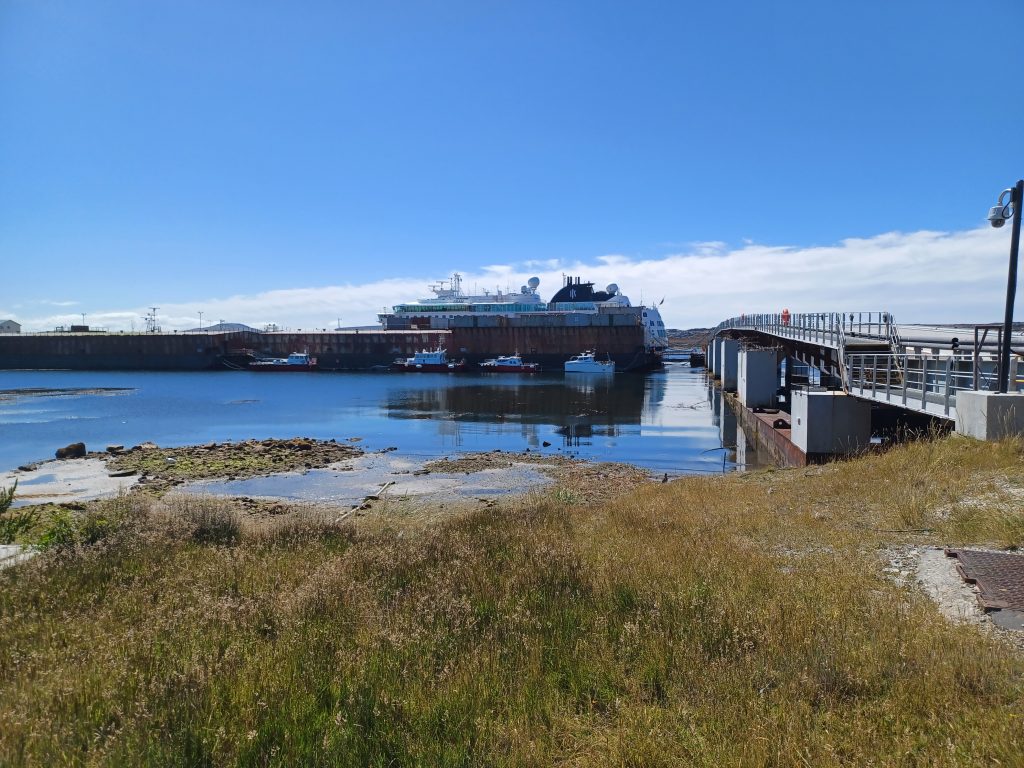
Was not intending to walk all that distance. But the afternoon is glorious. Carry on ambling along the seashore, keeping a good look out for birds camouflaged in the kelp on the rocky shoreline. Get closer, pass the Narrows Bar. Not open. Continue. Red hop-on hop-off buses pass me along the road with their passengers, some of whom are doubtless heading back to the Fram to meet the 1530 deadline. Anyway, I cover the final few hundred metres and stand at the foot of the longish bridge leading to the FIPASS. Floating pontoons enable berthing here for smallish ships. Not the large cruise ships. The Fram is 114 meters long with a capacity for 200 guests. Envious. Looks wonderful. Named after the original Fram, which conducted polar exploration under its Captains, Fridtjof Nansen and Roald Amundsen. Head back home in pensive mood.
Cape Bougainville
The adventure today comprises exploration of the second northerly most cape on East Falkland, Cape Bougainville. Named after Bougainville, who landed at Port Louis, as before mentioned, and established a French settlement here. We are the only vehicle on this route today. The only blot on the landscape. The odd pond with ducks and the ubiquitous upland geese. These latter were much predated too, and large flocks of them killed for their beaks and sold. They make good eating and still make up the main ingredient for goose pate.
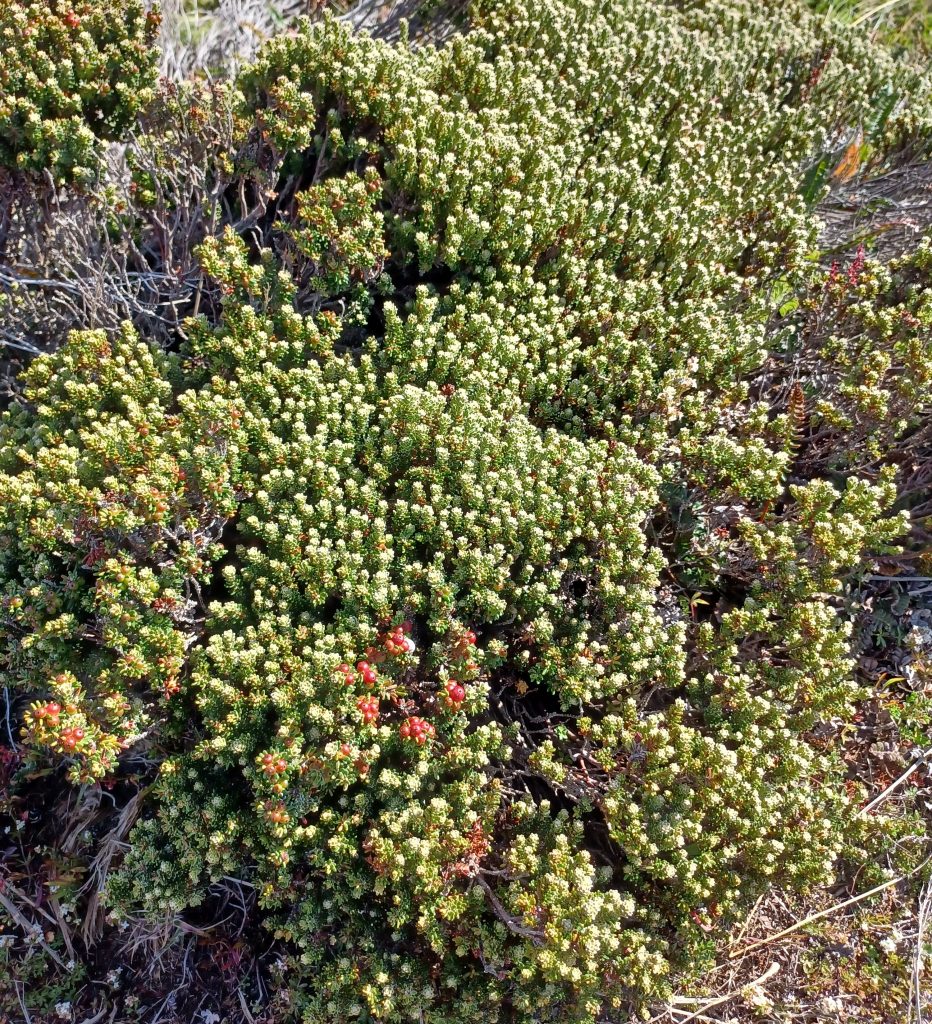
A few sheep too. Fences prevent them from causing erosion everywhere from their grass chomping. Much diddle-dee, our guide, the same one, laments. This evergreen shrub, also known as red crowberry, covers far too much of the ground out here, says he. Its red berries though are used for making jam. Some berries are out. We taste some. A touch bitter. There are actually quite a number of plant species on the Falklands. About 400, we are told including various daisies and grasses.
We reach the end of the road and open the gate to venture off piste again. Nothing like as lumpy as the ride out to Volunteer Point though. Actually smooth flat grass in places, though one or two soft peaty bits, which vehicles can sink into if not careful. The peat in some parts of the islands can reach over 15 feet in depth.
Reach the lovely Cape. Clumps of tussac cluster round the edges. Our guide is pleased about the tussac as it needs to spread. Uncontrolled grazing by sheep had previously devastated it, along with other native grasses and shrubs. Tussac also provides a habitat for bird species, many of which have declined due to the diminishing quantity of the tussac. Some kind of sorrel stands out rusty red amongst the grasses.
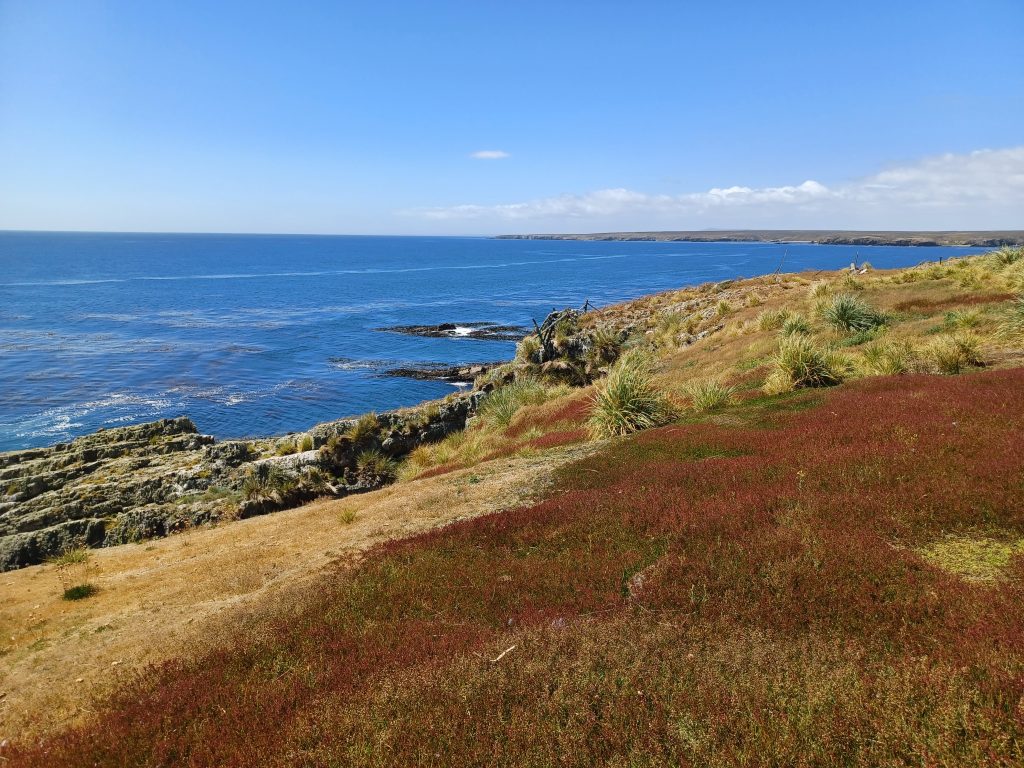
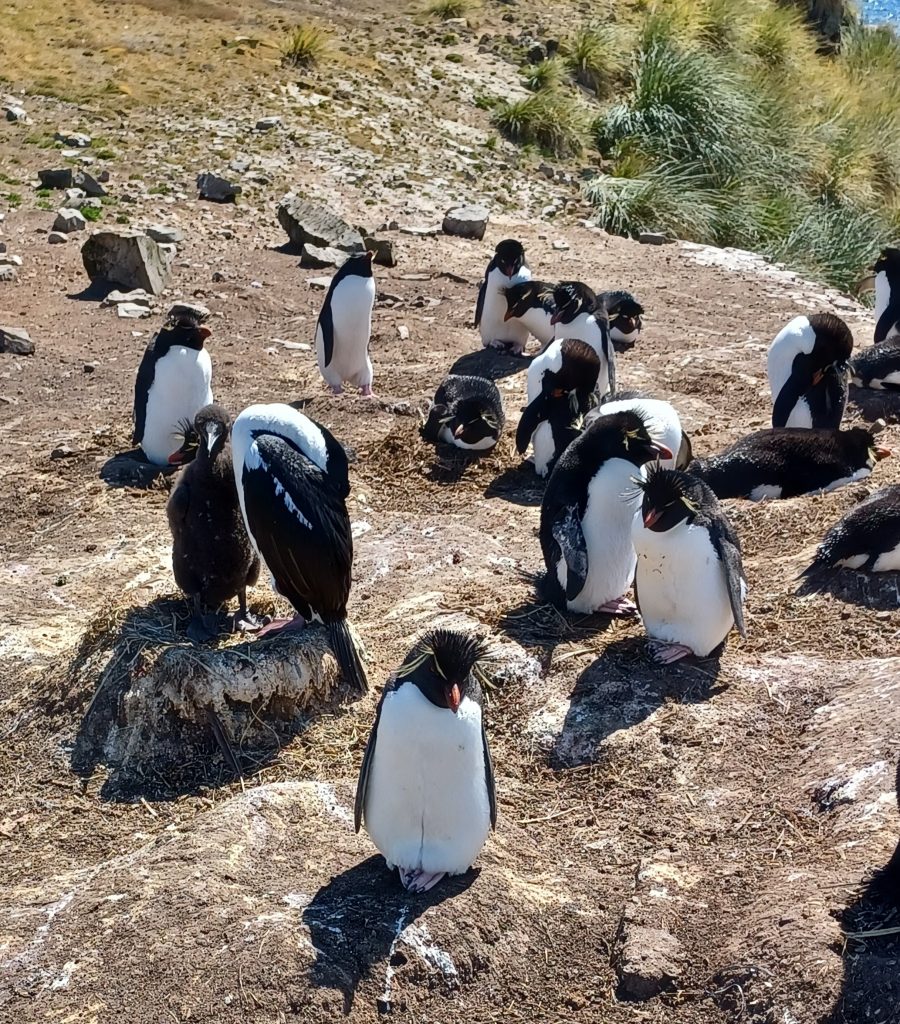
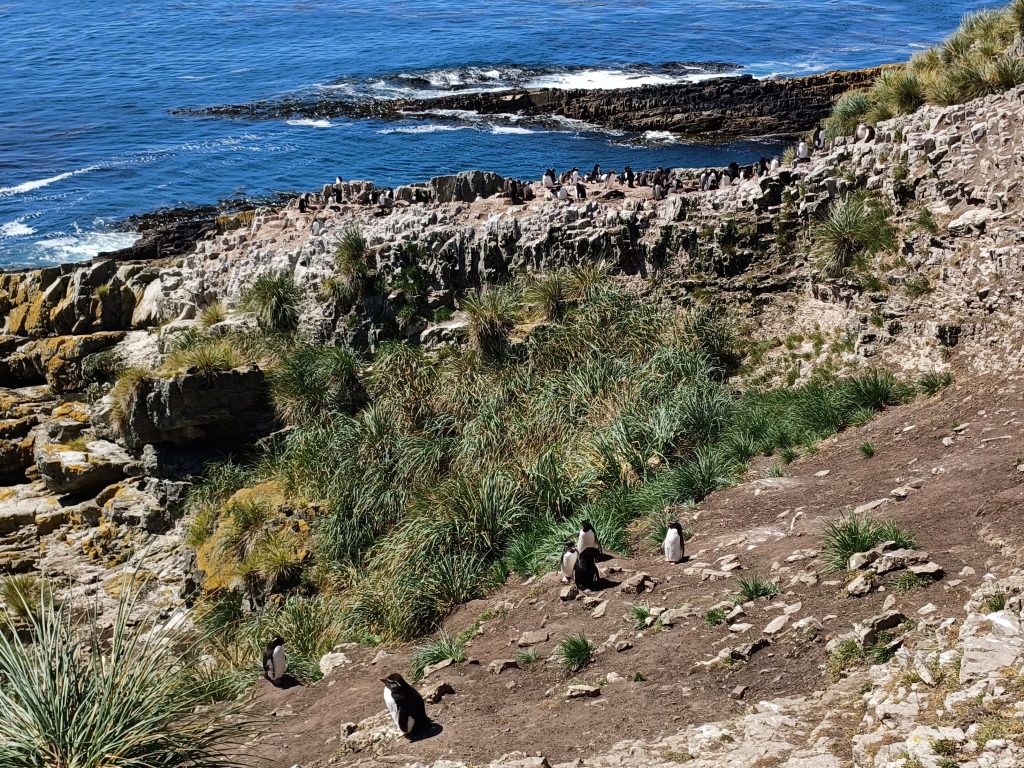
Our guide leads us down onto the gorsy area atop the cliffs to point out the penguins below. And frolicking about amongst the tussac and the rocks are rockhoppers, their eyebrows like long yellow whiskers. Smaller than the king penguins and gentoos but bigger than the magellanic. They consort with the imperial shag. “There should be some macaroni penguins amongst the rockhoppers’” our guide mentions. These have brighter and bigger yellow eyebrows. Larger too. I spot a couple squatting on a rock with the rockhoppers with my binoculars. Well pleased.
Free now to spend a couple of hours in the serene surroundings soaking up wildlife at leisure. Three sea lions are noticeable lounging on a flat rock below and a few rockhoppers are hopping up the cliff slope. Hence their name. No black-browed albatrosses though. Their colonies breed on a number of islands off West Falkland. None spotted here. Shame. Have to come back again and explore the west.
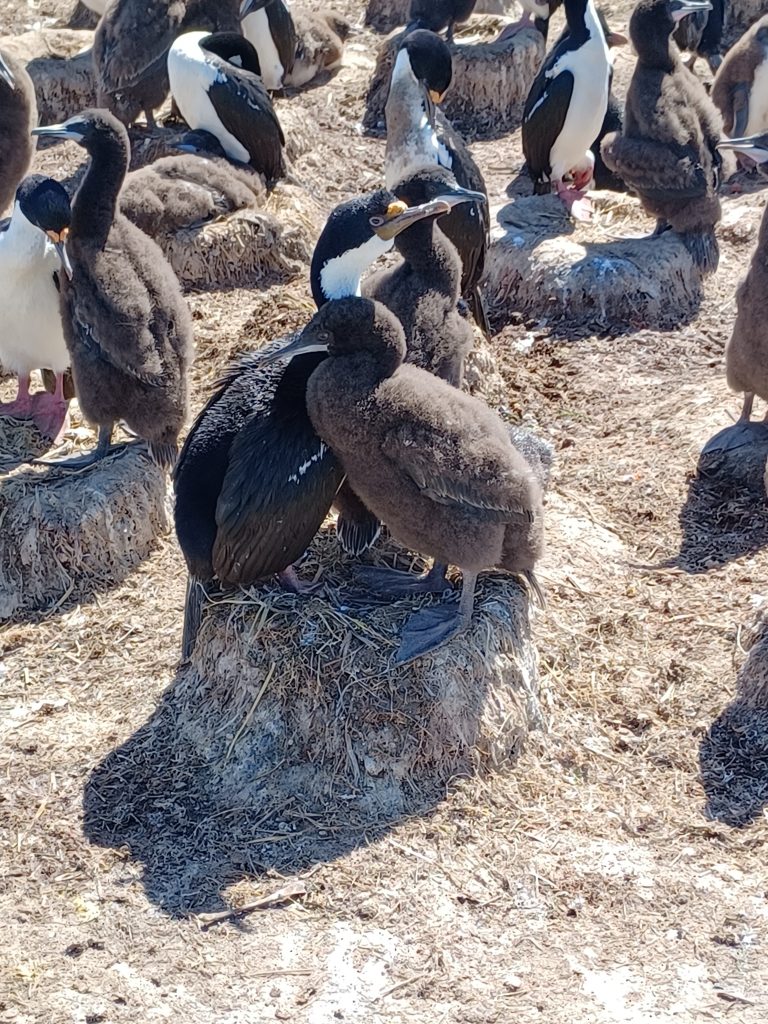
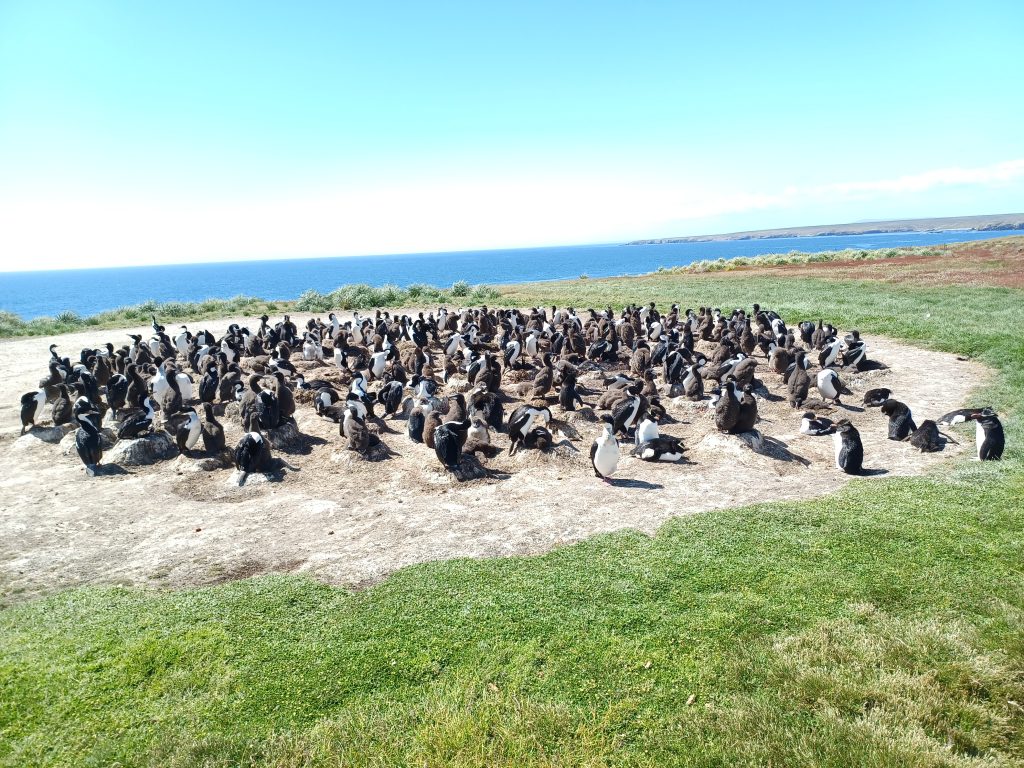
Atop the cliff is an oval shaped bare patch of scratched earth, full of nests with imperial shags with chicks and penguins with chicks sharing the space. And circling around above are southern caracaras with their black crests, dolphin gulls and the odd vulture. Rockhoppers stand sentry on the edge.
After our sojourn here on the glorious cape, we head back to Stanley, past the Two Sisters hills and Mount Harriet. Windy and cloudy it is in the capital. This does not augur well.
Port Stanley
Day of rest planned today. However, I soon find out that my flight back to Punta Arenas in Chile has been delayed. By three days! Rotor winds, severe low-level turbulence, are common here and, as a result, the military have closed the airport. OK. Wouldn’t be too perturbed but that I have to try to change my onward flights from Chile along with hotel bookings and all that stuff. All organised rather cleverly, I had thought, online by self before-hand. Day of rest becomes day of frustration. Make a note never to arrange flights, hotels, transfers or anything of that ilk ever again. Leave it to Trailfinders or similar. Anyway, I settle down to wait. As no flights can get into the Falklands either no new tourists usurp our hotel rooms. A redeeming feature. Secure then for the next few nights.
I soon brave the storms and wander out onto the windy waterfront. A couple of yachts are anchored off it. Wouldn’t want to be in that exposed position with the strong winds and white caps buffeting the boats. Not sure how the yachtsmen get ashore either. There are spaces for yachts alongside the pontoon in the harbour, I notice. A cameraman with large camera with a very long lens perched on a tripod is photographing something in the waters close inshore. I stop to enquire: “Anything interesting to be seen?” Had heard there were hump back whales in the inlet yesterday.
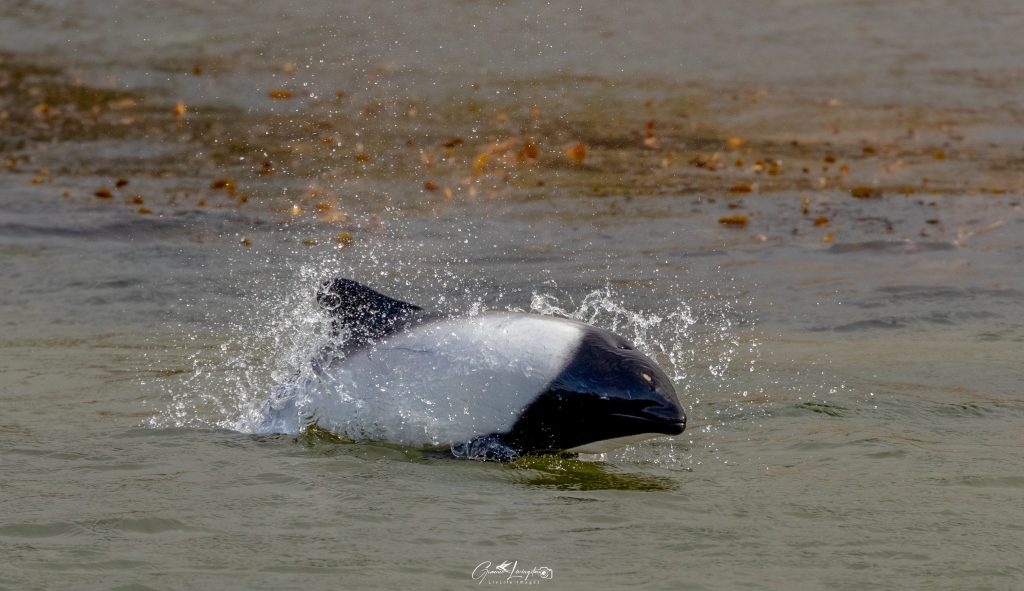
“Oh yes”, says he. He saw the humpbacks but today has been snapping a group of dolphins. Sends me some pictures. Commerson’s dolphins they are. Thought I saw some movement in the waters. Anyway, these stocky black and white dolphins are regular visitors to Stanley.
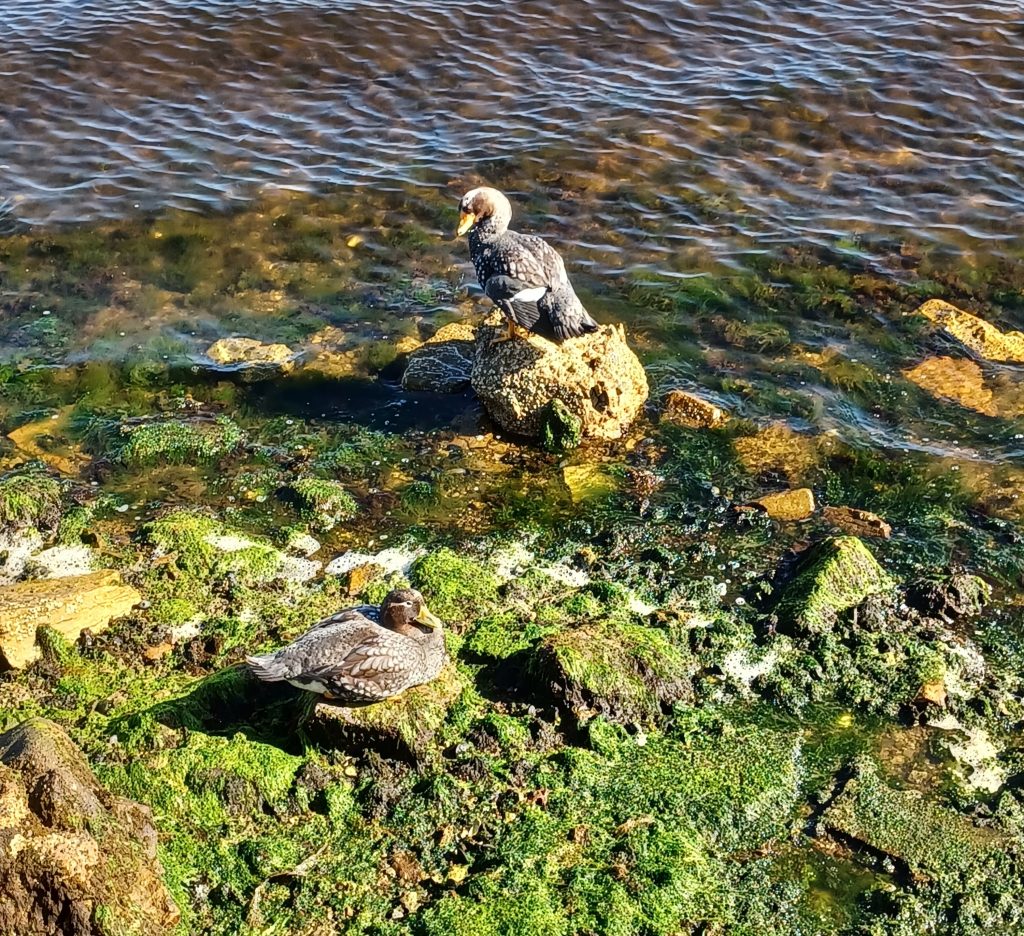
The wind has calmed down a bit this evening and I slip down to the waterfront again. I spy there, perching upon stones in the shallows, a pair of Falklands Steamer ducks, the male of which has a large whitish head and massive orange beak. These are flightless birds, endemic to the Falklands, which ‘steam’ through the water, using their wings and large orange feet as paddles. Locally known as the ‘Logger.’
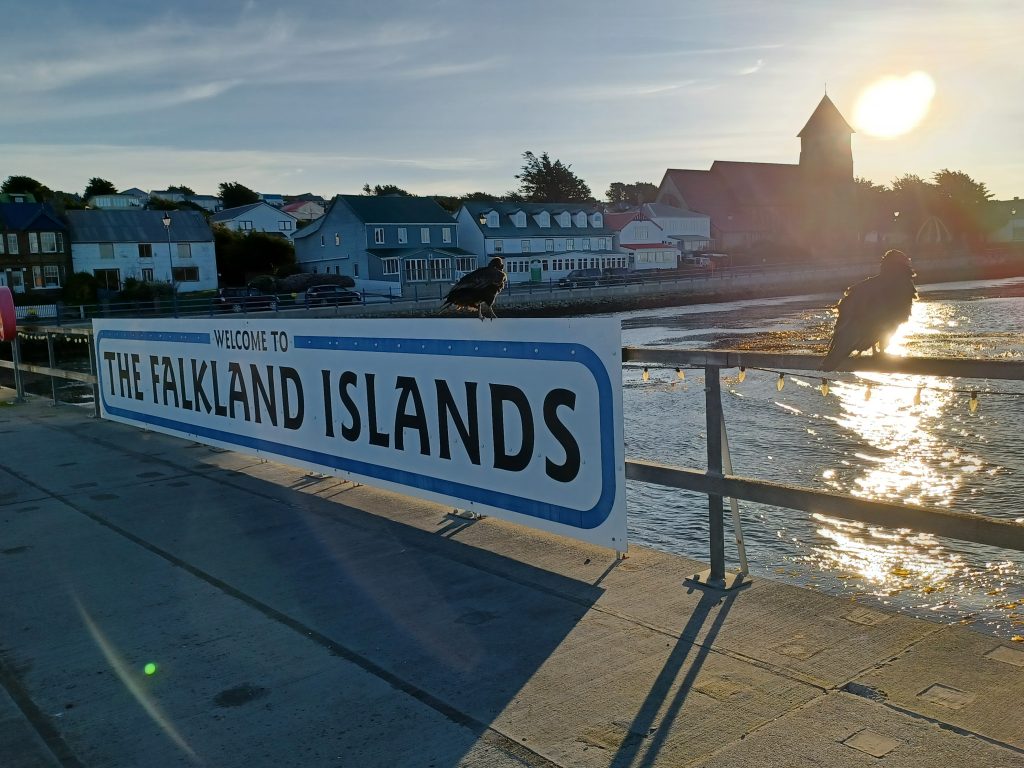
Lot of other birds here too: kelp geese, kelp gulls, dolphin gulls, rock shags, imperial shags, terns, the South American one I think, as well as the stinker. I now make my way along the waterfront towards the jetty where the cruise ship tenders drop off their passengers. On the railings of the jetty are a couple of vultures deep in thought. One is standing upon the ‘Welcome to the Falkland Islands’ sign post.
Sun is setting. Glowing light. Wonder why flights are still cancelled. It transpires that another day’s cancellation is added to the three already announced. Four days delay then. The only way to contact LATAM Airways is via Facebook. Believe that if you will. The local LATAM agent with office close by the hotel is ‘unable’ to help. Unimpressed. My contact on Facebook sorts it out. OK. The system works.
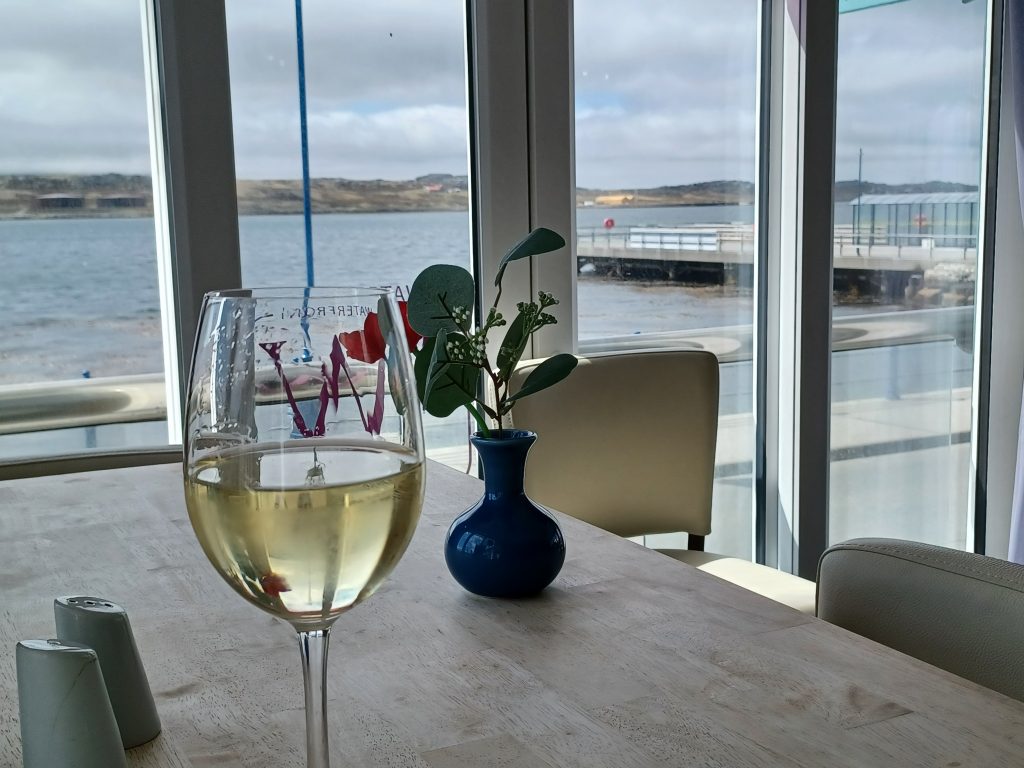
Spend the extra days wandering along the waterfront, perusing more memorials and info about wrecks in the harbour and watching the birds. More lunches in the cafés. More dinners in the hotel. Wine. Lots of it. Chilean nectar, mostly. Toothfish and other fish, mostly. And I have that new book to read, the thriller based in Burma. Very absorbing.
The wild weather hasn’t prevented the local airlines flying I notice, nor the cruise ships from anchoring and motoring their orange tenders full of tourists into the harbour. The souvenir shops are full. Roaring trade for the merchants. I buy a mug with a king penguins design adorning it. The small cups provided in my hotel room are thus replaced by this larger one. Jolly good.
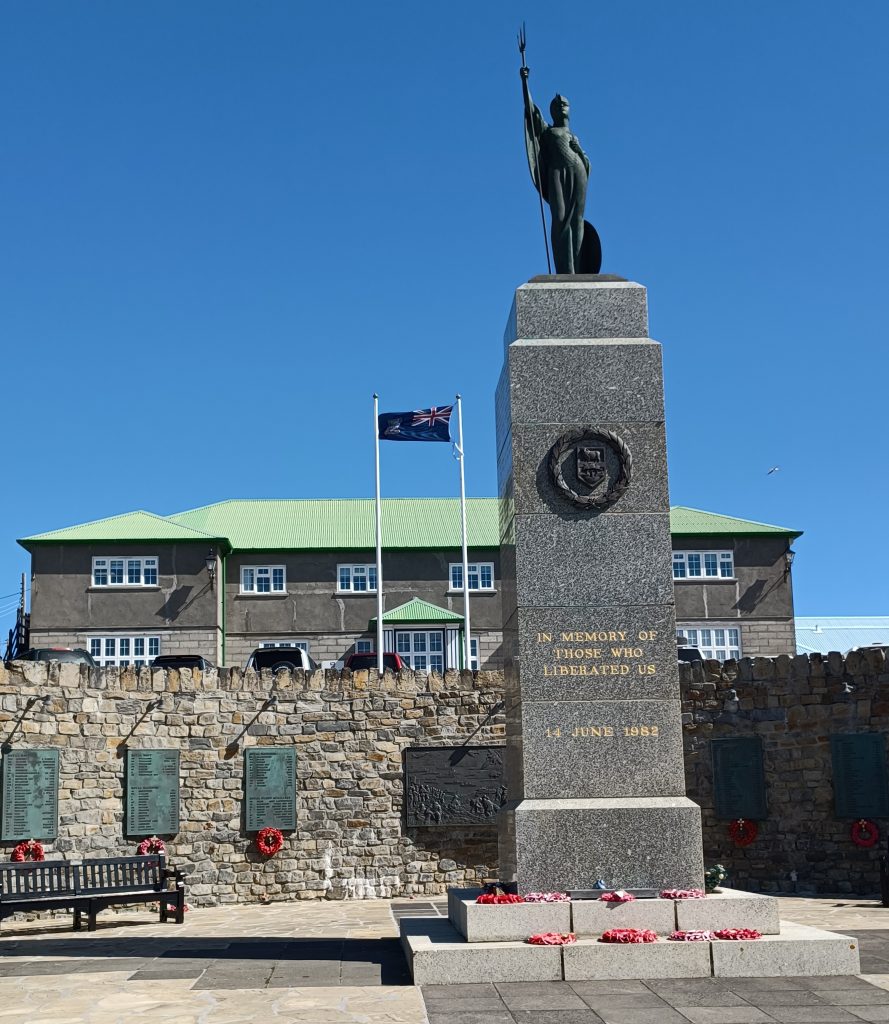
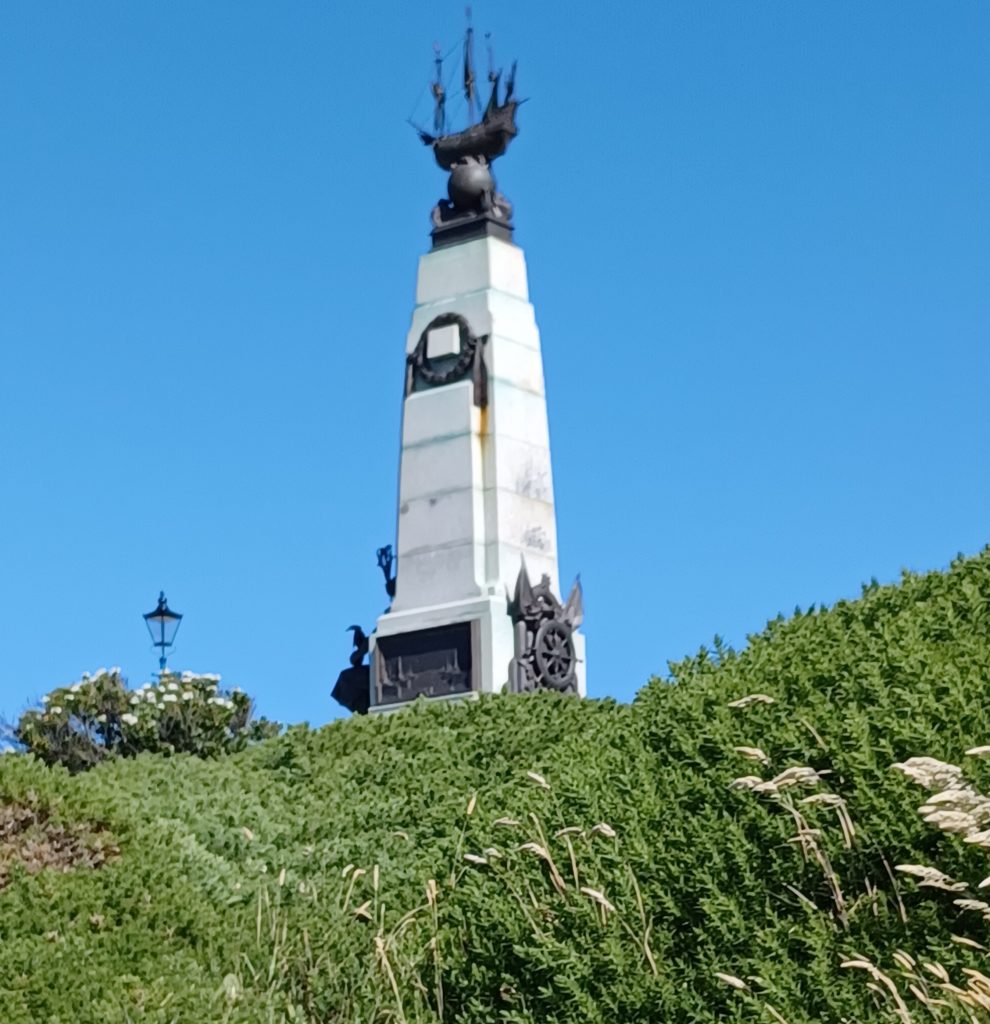
I wander westwards from the hotel past the Liberation Memorial, commemorating those who liberated the Falklands in 1982, and further along overlooking the harbour, a large white stone column with a black ship atop commemorating the Battle of the Falkland Islands in 1914, when a British squadron destroyed a German squadron, ‘thereby saving this colony from capture by the enemy’. These islands are clearly worth fighting for. Uplifted, hanging on to my hat and buttoning up my windproof, I head back to my haven.
And, eventually, finally, the military open the airport at Mount Pleasant and I take my leave of these beautiful islands. Sure to be back again.

Leave a Reply